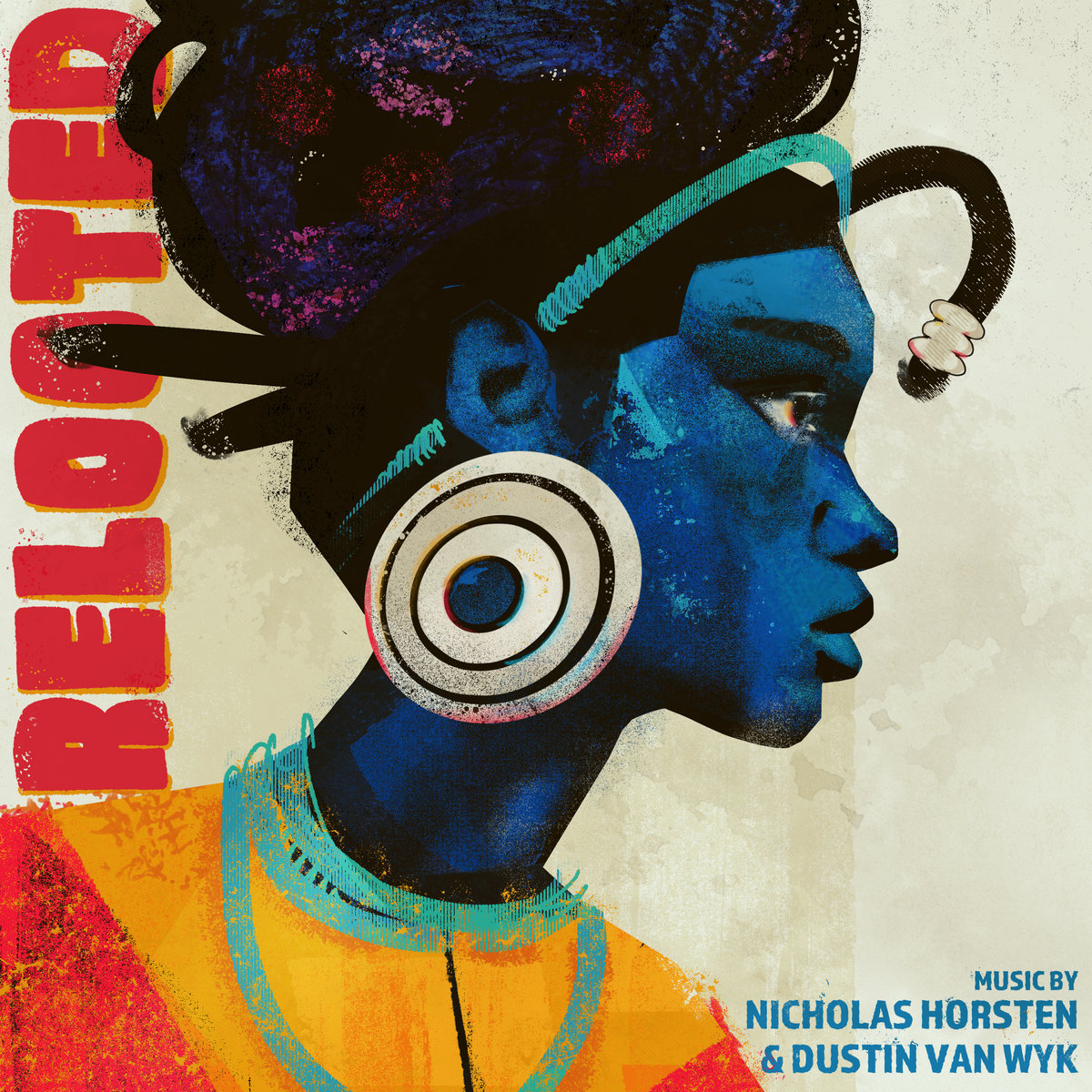
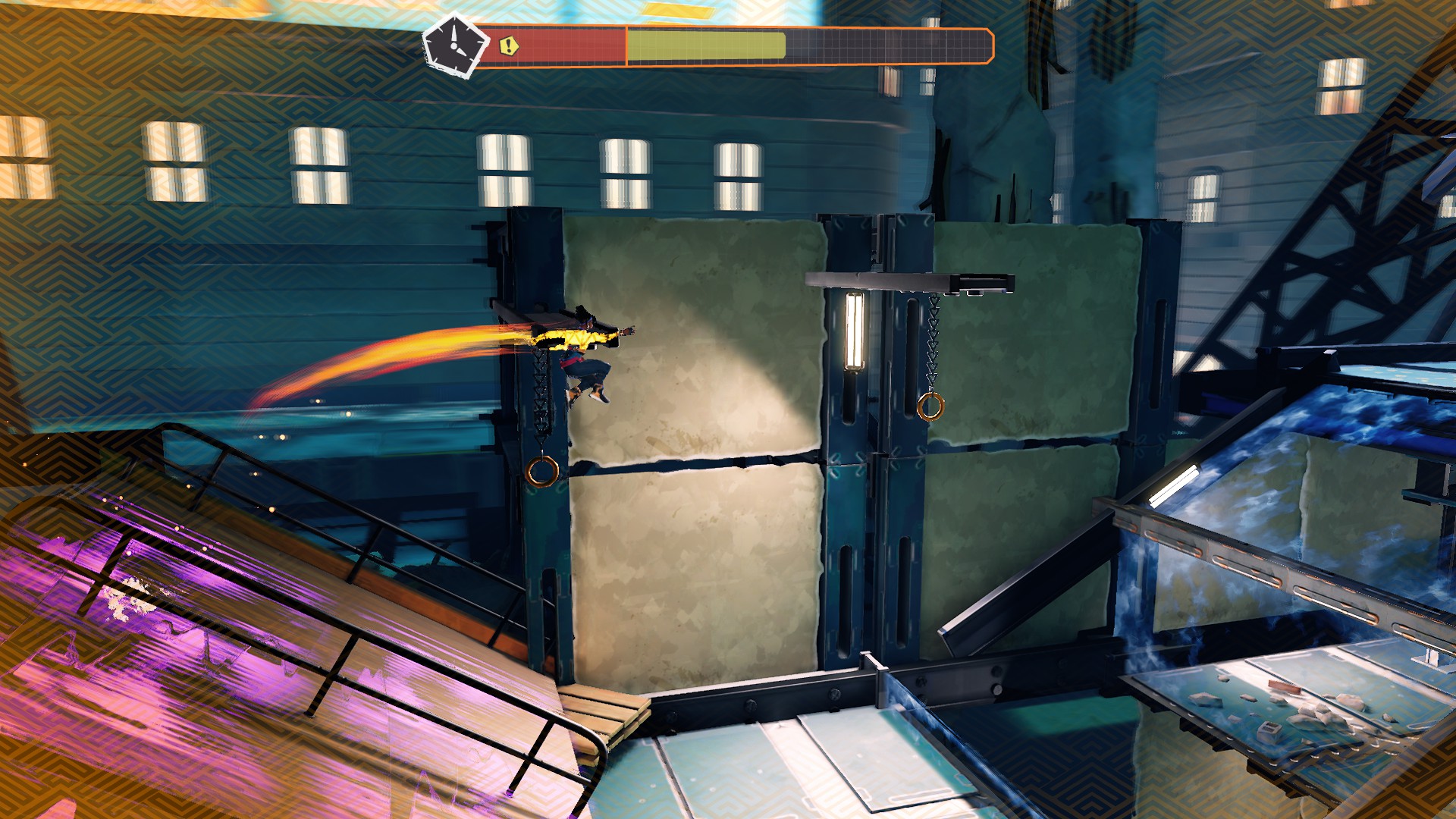
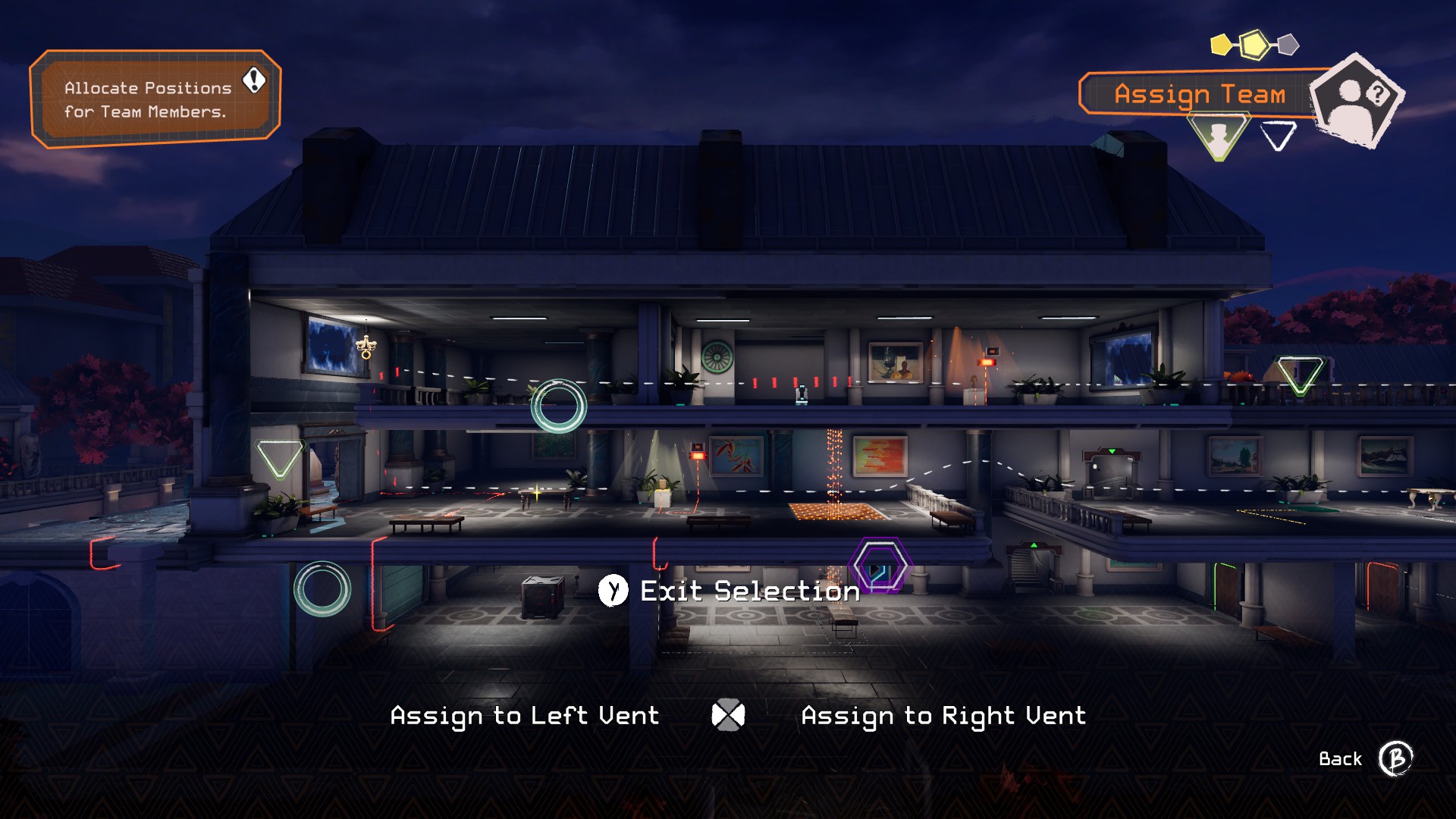
Heist games are usually about stealth or shooting guns, but Nyamakop’s Relooted designs its heists primarily around preparation, taking inspiration from Teardown’s unlimited setup time. You carefully case the joint, you puzzle-platform to create your escape route, and when you’re finally ready to set off the alarm, you grab the goods and parkour for the exit before the guards can catch you. The quality of your plan is immediately apparent by the smoothness of your escape: if you plan poorly, you will be forced to endure agonizingly inefficient paths. If you plan well, player character Nomali can speed to the exit in seconds like Sonic the Hedgehog. (She even yells “WHOO!” after building up enough speed, like she’s in Sonic Unleashed.)
Relooted introduces new members of the heist team every few levels, and makes sure that you feel the problems that they’ll solve for you. Trevor, who has the power to open and close doors, did not initially impress me during his tutorial mission. He’s a little slow to activate, he can only keep doors open before the alarm goes off, and he seemed to self-consciously embellish his unimpressive skill by announcing his self-given epithet “The Locksmith!” every time he was activated. I took Trevor for granted and failed to prepare him in the right position before my escape. I scrambled to call on him to open a door as the alarm blared and the timer ticked down, and he smugly highlighted my mistake: “It would have been faster if you had me ready!” I finished the heist in time, but Nomali had to bear the indignity of letting her chuuni little brother embarrass her.
That kind of clever narrative design kept exciting me throughout Relooted. Immediately after a level where an otherwise lightning-fast Nomali must break the momentum of her escape by slowly jogging up and down stairs, she echoed my thoughts in a cutscene: “We have to do something about those stairs.” Then came a tutorial sequence for the acrobat Ndedi, who swings and grapples Nomali across large vertical and horizontal gaps that would otherwise have to be cleared by taking stairs or pushing tables around. I smiled as I felt the dozens of seconds Ndedi was shaving off my run, precisely because Nyamakop made me use the stairs so much in the previous level.
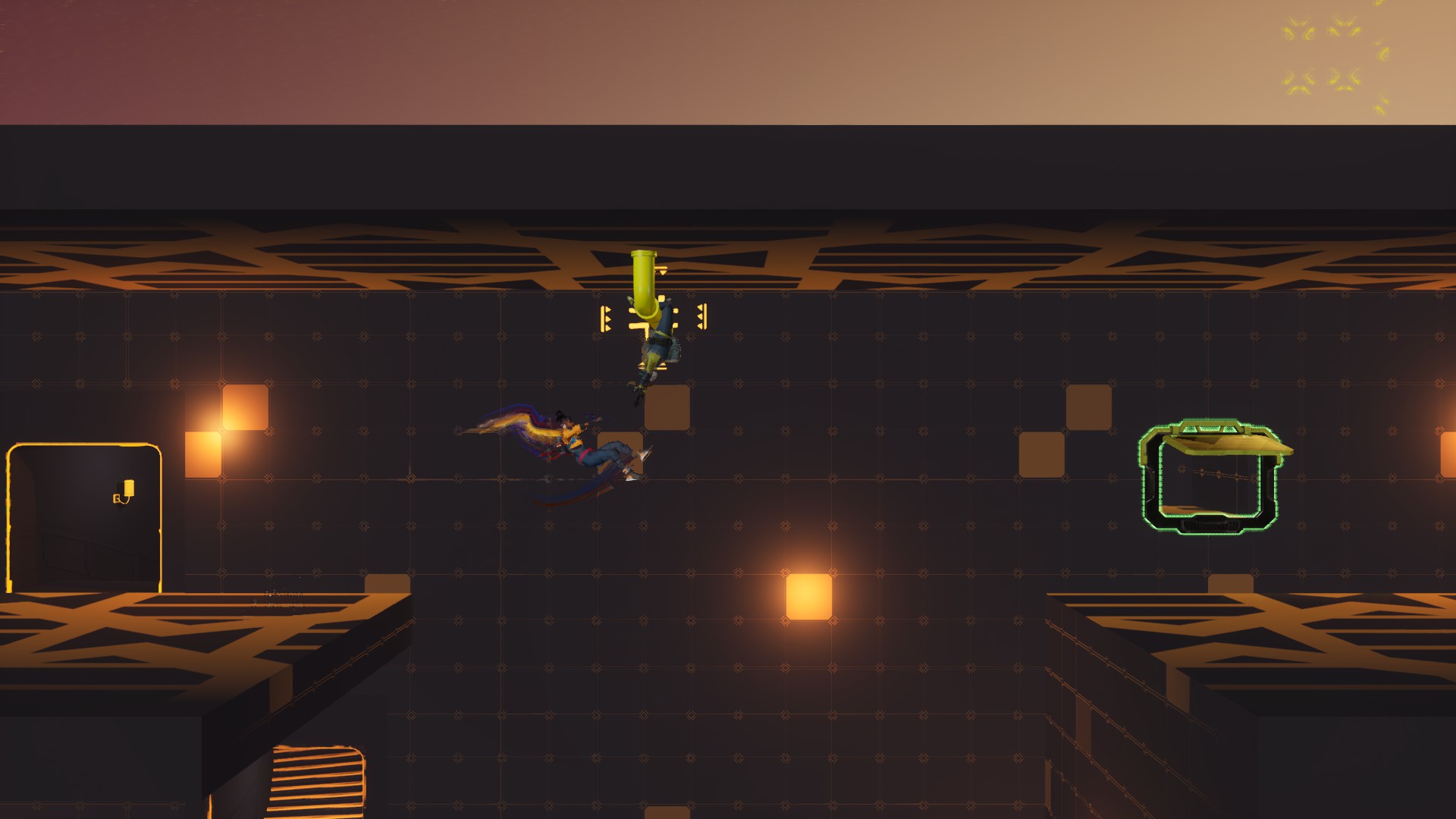
So it is with additional team members Fred the Inventor, whose drone lets you case the joint, Cryptic the Hacker, who neutralizes robotic guards and turrets, and Luso the Muscle, who throws Nomali through glass barriers. Each of them facilitates one of the most fundamental satisfactions of video games: getting from point A to point B in as little time as possible. Even with a perfect plan, the escape sequences require technical execution from the player to maintain Nomali’s top speed, but Relooted never let me forget the value of each team member. Sometimes, a team member will be unavailable for a heist, and I always felt their absence while constructing my well-oiled platforming machine.
Higher difficulty settings decrease the time you have to escape, more severely limit the locations that team members can be assigned to during the prep phase, and reduce the amount of information that Fred’s drone Nunu shows you. The first two features demand even greater appreciation for your teammates and more careful planning, but I preferred to receive detailed information from Nunu, especially the recommended route which shows problem areas that need to be solved. Getting unsolicited advice from my team members made me feel more like part of a team, and not just an omniscient being that orders my pieces around. In real group projects I always cherish when someone takes care of a problem before I even notice it. Who wants to make every decision all the time?
The heists are organized by Nomali’s grandmother Professor Grace and her protégé Etienne, who provide information on what you are actually stealing: African artifacts (and some from other colonized regions) stolen by colonial powers long ago, and kept in museum basements and private collections to avoid an international treaty that demands the repatriation of any publicly displayed artifacts acquired illicitly. Loopholes like these have challenged the Professor’s decades-long campaign to repatriate this stolen cultural heritage with by-the-book methods, and she can’t bear to reach the end of her life having accomplished so little. Thus, she devises a plan to reloot stolen artifacts, and ultimately return them to their proper homes.
Indiana Jones, the fictional archaeologist who the most despicable character in Relooted compares himself to, once said “That belongs in a museum!” Complicating the claim of some reviewers that Relooted is opposed to that maxim, Relooted does believe in the value of the museum. More precisely, it believes in the value of The Museum of Black Civilizations in Dakar, Senegal. That is where the relooted artifacts get dropped off. Yes, the Museum of Black Civilizations will only hold the artifacts temporarily before sending them to their proper homes, but it is the Museum that is trusted to appropriately foster and distribute the cultural heritage of Africa.
In the case of the Akan Drum, its proper home is identified as an African-American History museum. But for the most part, Relooted carefully avoids the complicated question of where exactly the “proper homes” of these artifacts are, which does not necessarily have a straightforward answer in theory or in practice. That’s for the scholars and bureaucrats to figure out. The immediate victory is that those discussions happen in Africa, by Africans, without any conditions imposed by colonial museums. When 90% of the material cultural legacy of sub-Saharan Africa is found outside of the African continent, just getting 64 artifacts to Dakar is a triumph.
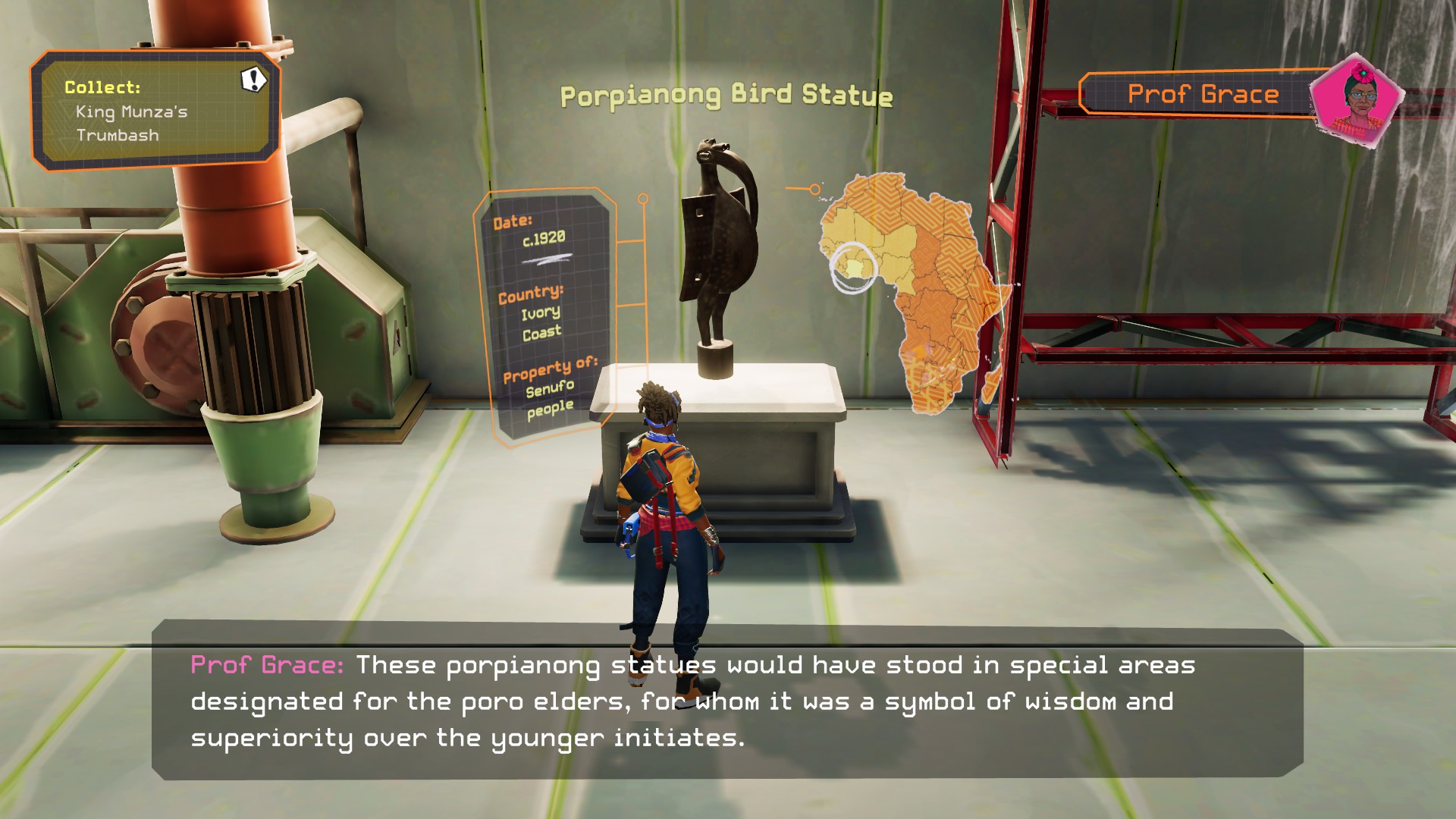
The movement to repatriate stolen African artifacts has seen momentum since Felwine Sarr and Bénédict Savoy’s 2018 report, as well as sympathy from popular culture. What sets Relooted apart from other pro-repatriation media is that the targets of your heists aren’t elven artifacts, they’re not from a fictional country, and they weren’t stolen by the Villains’ International League of Evil. Relooted is set in a sci-fi future with comicbooky characters, but the artifacts in the game are digital representations of real, physical objects that were really stolen from real human beings that really breathed air on this Earth. I’m emphasizing this point because it’s so rare to find a video game with a historical perspective that isn’t clouded by metaphor and artistic license. Assassin’s Creed will always bend history to fit its metaplot, Dragon Age will always flatten the complexities of political struggles to better suit a heroic narrative. Relooted’s Africanfuturist storyline is always anchored by real history, and might even spark you to look up more details than its quick art history lectures can give you.
Relooted takes a Pan-African perspective, but takes care to highlight the cultural diversity of Africa: the heist team is audibly multicultural, and artifacts are always traced not just to a general region but to a specific indigenous group. This is in contrast to games like Far Cry 2 and Resident Evil 5 that create fictional African nations as an excuse to deploy stereotypes of Africa as backwards, corrupt, and dangerous. As a bit of cheeky payback, Relooted refers to its late 21st century Europe as The Old World and the United States as The Shiny Place, except when recounting real historical details.
Nyamakop took a “thrones, not teacups” approach to selecting which real artifacts would be represented in Relooted: it’s not just that these artifacts happened to be objects made by African indigenous groups, but that they carry deep meaning to the people they were stolen from. It should be obvious why it’s unacceptable for funerary statues plucked from Mijikenda homes to exist in Andy Warhol’s house, or the skull of anticolonial leader Mangi Meli to sit somewhere in the archives of a German museum.
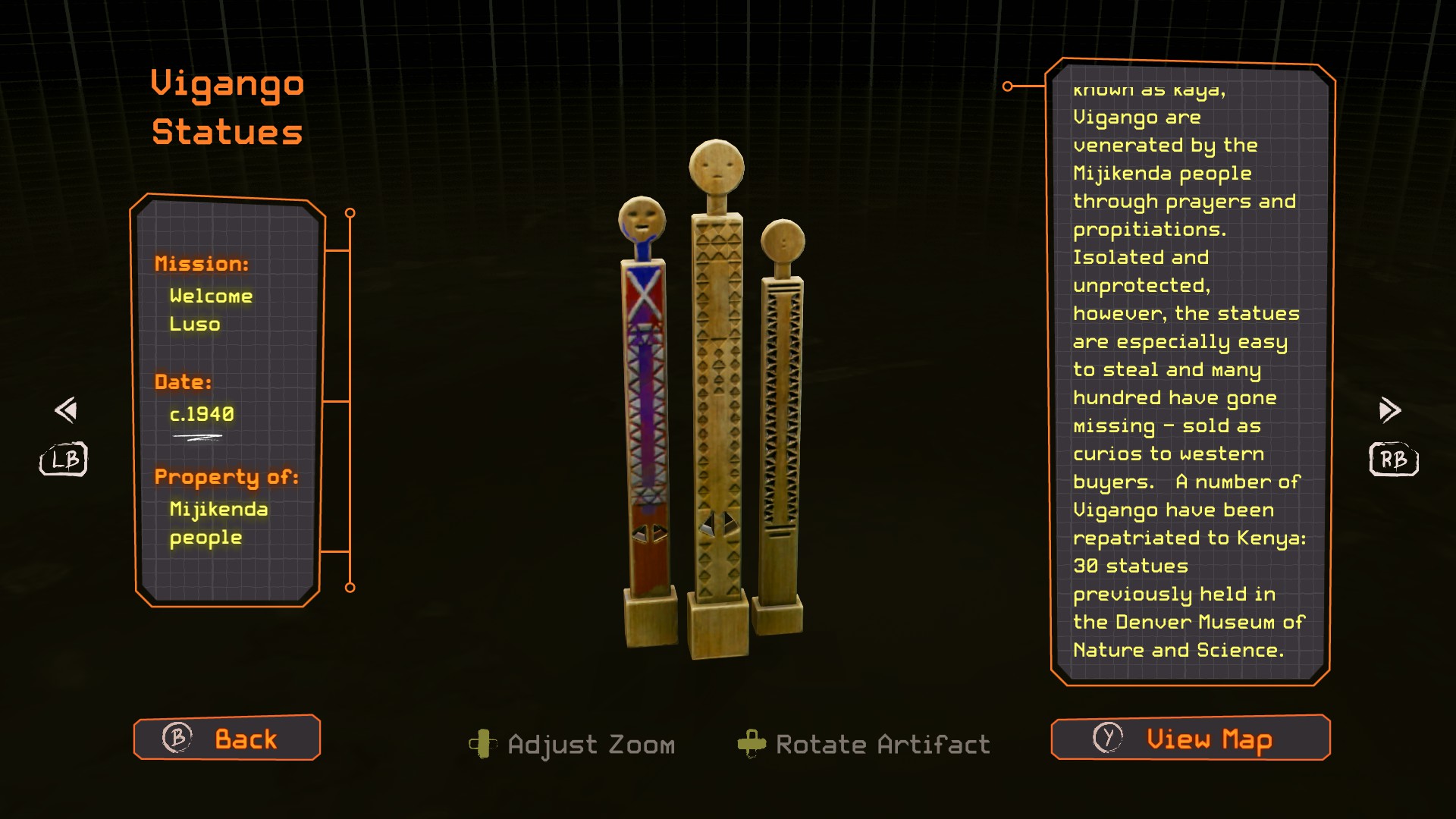
Despite the scope and cruelty of the colonial looting of Africa, Relooted takes a deliberately soft approach to the issue, and largely maintains a cheery atmosphere where the most destructive thing the heist team does is break a few windows. Without indulging in shocking depictions of violence, Relooted is still capable of clearly communicating colonial injustice and anti-colonial justice. Most importantly, Relooted can be enjoyed by all ages, and is particularly attractive to guardians who want their kid to learn puzzle-solving and history at the same time.
Nyamakop’s first release, Semblance, avoided distinctively African themes in order to appeal to Western markets. This is a common trend for South African games, even as developers elsewhere in the continent, such as Nigeria’s Maliyo Games, Ghana’s Leti Arts, and Cameroon’s Kiro’o Games consciously develop games that are immediately recognizable as African. As for why South African games tend to blend in with Western games, I’ll quote some members of Broforce’s developer Free Lives, from a 2016 Gamedeveloper.com interview:
“As white South Africans, our culture is Western,” says programmer Ruan Rothmann. “It’s not like we have a unique and segregated white South African culture that’s isolated from America or Europe. We watch the same movies, listen to the same music, speak the same language.” Most other South African indies are the same. “South African game development is something like 92 percent white male or something along those lines,” adds studio director Evan Greenwood.
In a 2024 Gamesindustry.biz interview, Nyamakop CEO Ben Myres affirmed the whiteness of the South African game development scene, and shared Nyamakop’s long-term goal of creating a more diverse generation of South African game developers:
“There are a lot of studios in South Africa [but] there are only really six major ones, and all of them are run and owned by white men. And I think that has a large knock-on effect of the inability to take that risk. I’m not going to tell their stories, but a lot of my ability to do Nyamakop is based purely on privilege and generational wealth, and the crazy safety net you have. I think the South African games industry, last time we did a survey, is like [80%] white men.”
Looking at South Africa’s 2022 census, Black Africans represented 81.4% of the population, followed by Coloureds at 8.2%, white people at 7.3%, and Indian/Asian people at 2.7%. The games industry in the country is in a sharp contrast with this reality.
Nyamakop is trying to bring some balance, with Myres estimating that around 80% of the studio is people of colour.
“Our leadership team is very diverse at least,” he says. “If you aren’t able to take the risk to start your own studio, how are we ever going to make the industry more diverse? And the only way you do that is by allowing stable employment for diverse folks to get into the industry. Because really, in the long term, where we need to be is PoC-owned-and-run studios. But if there’s no way for you to enter the industry stably and get good at making games, we can’t just jump there automatically.
“[When] a person of colour leaves Nyamakop to stay in the industry, that makes me happy. We haven’t really had anyone leave and not stay in the industry. It’s very sad to see them go, obviously, but the fact that they leave to stay in the industry means Nyamakop can become a place that’s stable, safe, and fun [for South African people of colour to enter the industry].”
Relooted is the largest single project by team scope, size and budget in Sub-Saharan Africa to date, perhaps only rivaled by Kiro’o Games’ ambitious 2016 RPG Aurion: Legacy of the Kori-Odan. The African games industry is growing, and Relooted will likely be remembered as a milestone in future histories of the growth of African game development. The in-game heist team returns cultural heritage of the past to Africa, but the Nyamakop team is creating new African cultural heritage for the people of 2099 to remember. Perhaps more importantly than the status of Relooted as an individual artifact, it serves as the first project for a new generation of game developers who will go on to make something even better.
Superb
"Run Towards the Future"
Relooted elegantly combines thoughtful heist preparation, high-speed platforming, and historical perspective.

All right, on the wishlist with this one. I do love some thoughtful platforming backed by some thoughtful narrative