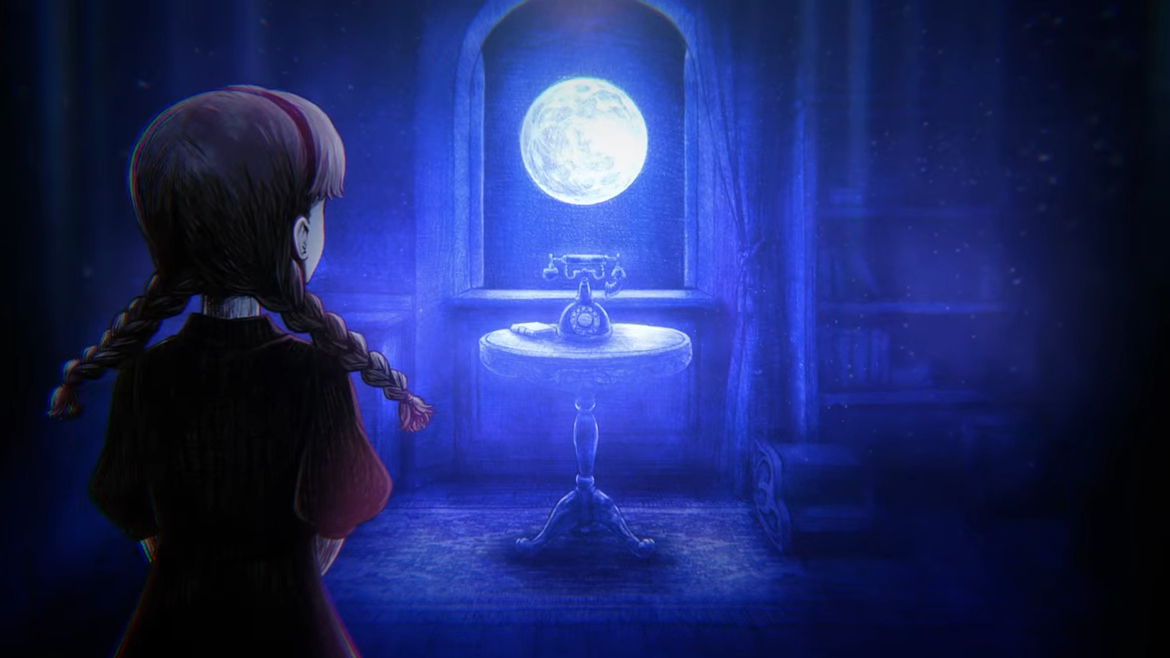
Earlier this year I read a promotional interview with Hanada Keika, the director and writer of my all time favorite game The House in Fata Morgana. The interview was done in tandem with a couple up and coming developers who had worked on a brand new Visual Novel called Schrödinger’s Call; among them a writer who cited Fata Morgana as one of their biggest inspirations.
As the Fata Morgana superfan, I was quick to dive into Schrödinger’s Call as soon as it was released, and similar to my experience with Fata Morgana, I made sure to establish an hour minimum reading period each night so I could ensure I’d get through it in a reasonable timeframe, something I’ve only done for visual novels I’ve truly resonated with such as Tsukihime or Muramasa.
I was immediately in love with the game’s scribbly yet defined art style, its cutesy interpretations of other characters as animals, and the way every line is delivered with the Animal Crossing “animalese” style of speaking (incomprehensible gibberish sounds strung together like a half-heard phone call). The chapter format echoing Fata Morgana’s doors with different people in wildly different situations was quickly recognizable, and as you progress through the game it becomes clear its creators understood exactly how to utilize its soundtrack the way that visual novels do best.
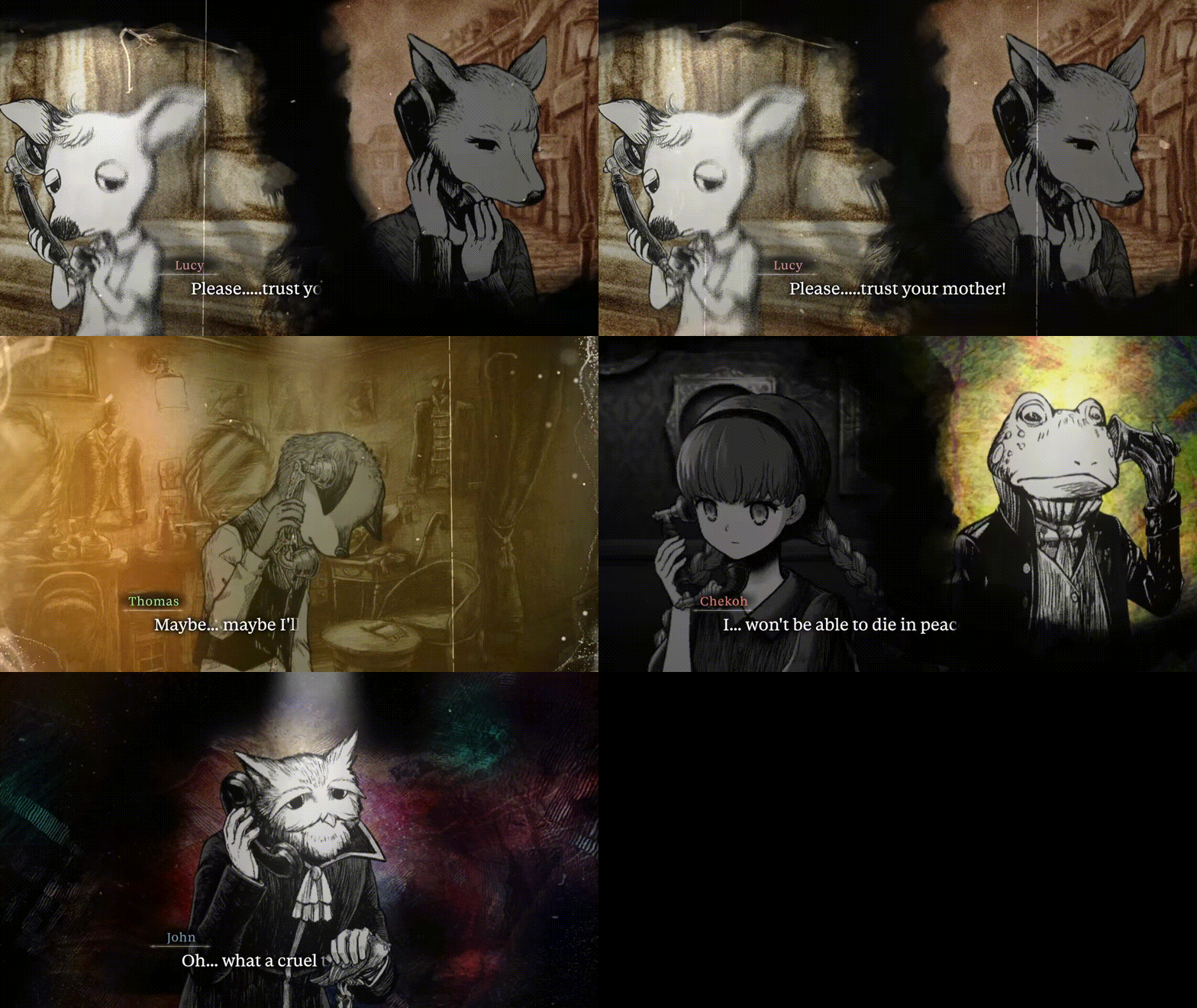
Unfortunately, that’s where my love for Schrödinger’s Call runs dry. Unlike with Fata Morgana, where my affection only grew over the course of my journey—and its conclusion cemented my adoration—Schrödinger’s Call was an experience of waiting for growth and coalescence that never came.
Schrödinger’s Call takes place within the confines of a single nondescript room. You, as the player, watch a young girl named Mary answer phone calls from ghosts, people who couldn’t move on from their death for one reason or another. You’ll see parents separated from their children, starcrossed lovers, and all the other archetypes you’d expect in your average tragedy. The twist? All of these people died at the same time, when the planet’s moon suddenly and inexplicably fell, killing everyone.
It’s a hell of a conceit; navigating the sci-fi underpinnings of this setting through the more mundane heartbreaks that make up our day-to-day lives is a stark contrast to the type of story you would normally expect from an apocalypse. When we talk about certain genres becoming oversaturated (i.e. superhero movies, coffee shop AUs), it’s usually predicated on an overreliance of formula over innovation. Humans are finicky pattern-recognizing creatures, and we’re most fascinated by that which breaks the molds our brains presuppose. The disparate nature of Schrödinger’s Call seemed fit to slowly build up to a slam dunk, or at least I had hoped.
Yet there really isn’t anything going on in Schrödinger’s Call to make good on the promise of its premise. Instead, we’re treated to a series of all too familiar narratives that are just as basic as they appear, and the moment things finally seem to be taking a turn towards the more interesting, it all suddenly ends.
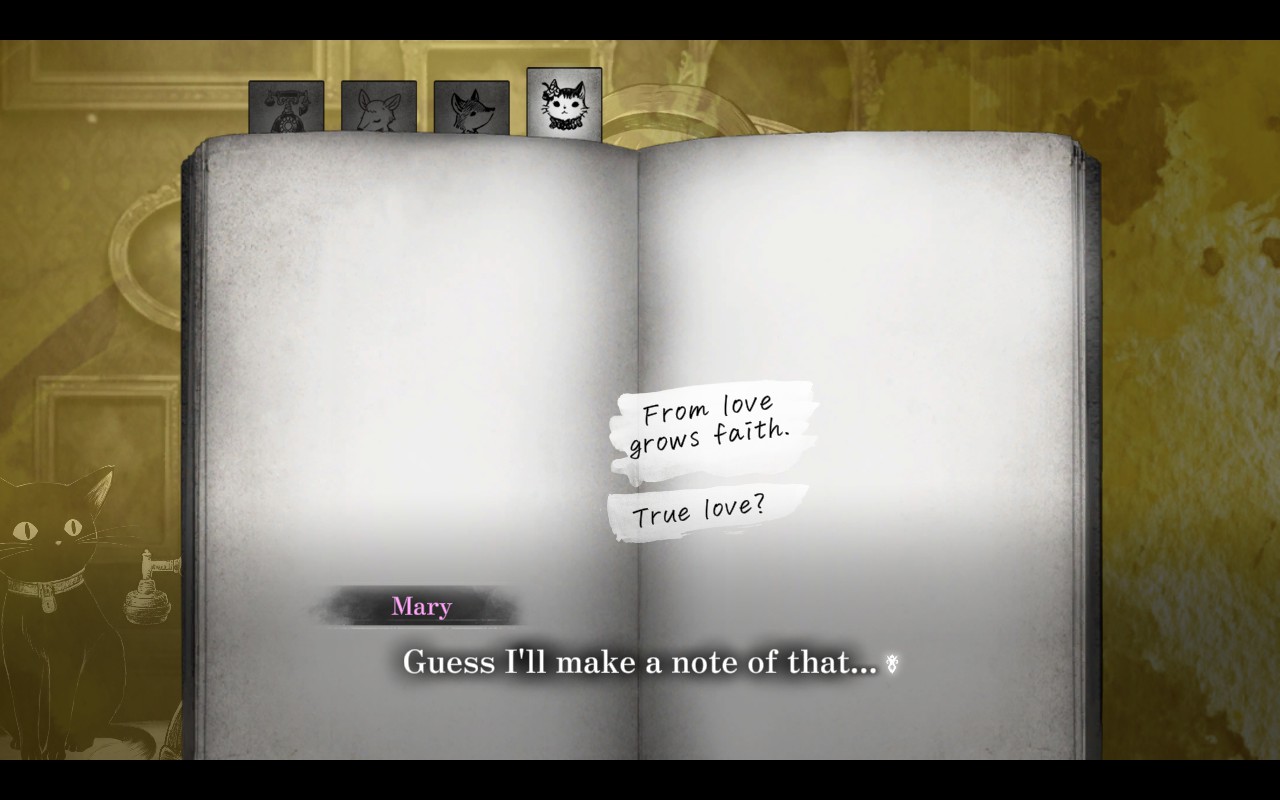
As an example; the first call follows the story of a mother, her son, and the final conversation they shared together before the moon fell. You discover the mother went to prison for murder, and was forced to let her son live with her former boss, with their relationship being forbidden from rekindling due to her criminal past. At every stage of this storyline, I was thinking to myself “well it’s pretty obvious what’s happened here”, but the game forced me to walk through every stage of the deductive process repeatedly over and over again, while regurgitating the same information over and over again to every character I interacted with, only to have the most obvious basic reveal delivered to me at the end like it’s a stunning revelation.
There’s a recent trend I’ve seen slowly work its way into story-focused games with the advent of the gacha game where the player is forced to hit a perfunctory “keep talking” choice prompt, and Schrödinger’s Call is inundated with it. You have to prompt someone to finish their thoughts with a “yes?”, you have to call them back to repeat the same thing you said to them last time but with greater emphasis, you have to manually enter each individual phone number on a rotary phone to call the one-note NPC who has the answer to whatever question you’ve already figured out an hour ago, only to then immediately hang up and deliver the same conversation to someone else. It’s tedious, exhausting, and honestly just plain lame.
When I opened this review by talking about that Fata Morgana interview, it wasn’t just to explain how I came across Schrödinger’s Call. Certainly that set the expectations I had, but more than anything as I progressed through the incredibly straightforward fables, I was shocked at just how obvious and surface level its inspirations from the game were.
The House in Fata Morgana, for those who don’t know, tells the stories of various residents of a cursed manor over the course of its long and storied existence. As the story goes on, you realize that all of the characters you’ve run into and seen, as well as the more basic struggles we’re privy to in their narratives, are in part metaphorical aspects of a much larger story. By the time you reach the end, you’ve had dozens of aha moments about the hidden natures of all you’ve seen, and it makes the whole work feel inconceivably well considered.
On the flip side, Schrödinger’s Call has no tangible payoff to the more basic nature of its storytelling. At best, the connective tissue between the core narrative of figuring out what’s going on with Mary in her room and the stories she listens to is that sometimes you hear a key word related to what you’ve seen. One could make the argument that the theme of the story is how empathy and sympathy can inform the understanding we have of ourselves but like…that’s it?
Even the format of the game apes Fata Morgana: three disparate stories of different people in different places punctuated by a fourth “core” story that reveals the true nature of the work. Most egregiously, the third call of Schrödinger, and the third door of Fata Morgana are so similar in tone and events that it’s comical, and you’d be forgiven for mistaking one as a parody of the other.
The biggest killer to Schrödinger’s Call is that it ends after its fourth call. Half of Fata Morgana’s narrative is hidden beyond its fourth door reveal, and it’s the part that makes its whole story work, so ending right as the ball gets rolling makes for an incredibly painful case of “what could have been”.
Which is exceedingly agonizing as that fourth call is the best part of the entire game! The presentation is amped up, the music hits a crescendo, the art is switching perspective and tone with new gameplay tidbits…and then it all just ends. The moon’s fall isn’t referenced in a meaningful way—despite being an obvious metaphor for a specific event—and none of the ghosts you’ve met along the way actually represent anything intriguing beyond the surface level stories they told you again and again.
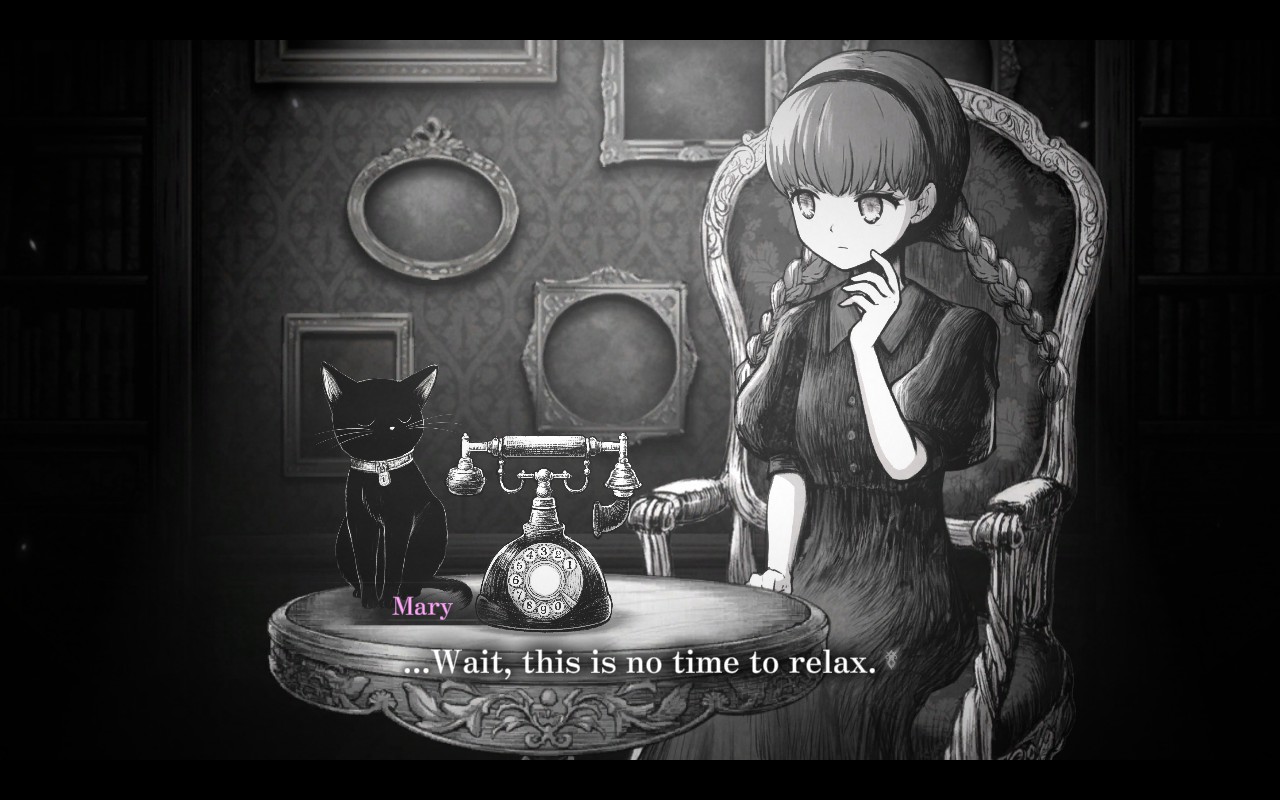
I don’t need to know why the moon fell—I’m not a TV Tropes page begging for the YouTube Explained of everything I read—but for such a compelling hook, it means absolutely nothing . There’s multiple interpretations you can come away with that make it seem as if nothing even happened at all, which isn’t as hot a story twist as it was for Bob Newhart in the 90s.
If you take away the conceit of the moonfall, what are you left with? Three stories you could find in the seasonal lineup of any long running procedural, told painstakingly slowly with forced choice sequences to break up the conversations in case you forgot you were playing a video game. I’m not one to opine about “depression porn” or media that feels like it’s designed purely to elicit an emotional response, but at the end of the day, that’s what it feels like everything in Schrödinger’s Call exists for: to make you feel sad. You’re not to think about or solve why you feel sad, but it’s all just for you, the player, to feel sad.
At its core, Schrödinger’s Call is a story about Mary and the situations that have led her to becoming the “world’s last confidant” at the other end of a telephone. The reason this happens is explained in great detail (just like everything else), but there’s no real purpose to it, or message to take away. The House in Fata Morgana resonated with me because it’s the story of several people, and it approaches each of them with an open mind and willingness to believe in the inherent good of humanity despite immense suffering and pain. It’s a story that works because it goes out of its way to go the extra mile every single time, even when you think it’s shown its hand. Schrödinger’s Call ends when it thinks it’s beaten you thoroughly into the ground with the emotion it intends.
My playthrough of Schrödinger’s Call took me around 6 hours, but your mileage may vary. Despite being less than ⅓ the length of The House in Fata Morgana or many other VNs I love, there were so many points during my read of the game where it felt like the longest story I’d read in years, just because of how redundant and dull its prose was. I feel bad about being so critical of something clearly made with a degree of sincerity and incorporates base themes of empathy and care, but those topics should mean something, and I always hope to come away from a work thinking of at least one thing new, instead of thinking about how it’s all just the same.
Disappointing
"A Missed Call"
Despite sublime presentation and an emotional finale, Schrödinger's Call tells incredibly straightforward stories in utterly predictable ways.
