“Sticks and stones may break my bones but words will never hurt me.”
On the list of archaic platitudes I’ve heard since childhood, that is the one that bothers me the most. A lot of life lessons can be truncated or adapted for comprehension by even the smallest child, leaving nuances or more complex concepts on the shelf for “when they’re older.” You do not have to look far or wide to see the material harm wrought by this adage at all levels of human society. Words have an exceptional capacity for infliction and damage, and they should not be underestimated or dismissed.
The goal of this proverb is to teach kids to avoid becoming disproportionately upset when another child mocks them, typically through ignoring the problem. It idolizes a very “stiff upper lip” mentality, and in some cases it’s a valuable approach and a worthy skill to teach kids. However, that’s not true in all cases. I’m sure we’ve all heard revisions or corrections to sayings like this in the past, with one example being “blood is thicker than water” being extrapolated out of “the blood of the pact is thicker than the water of the womb,” which flips the meaning of the shortened form entirely. Yet, I’ve never heard a revised variation for my least-favorite of these old sayings, so I shall endeavor to rectify this now:
“Sticks and stones may break my bones, but bones can heal just fine. Words written with hate and scorn will scar me time after time.”
———————
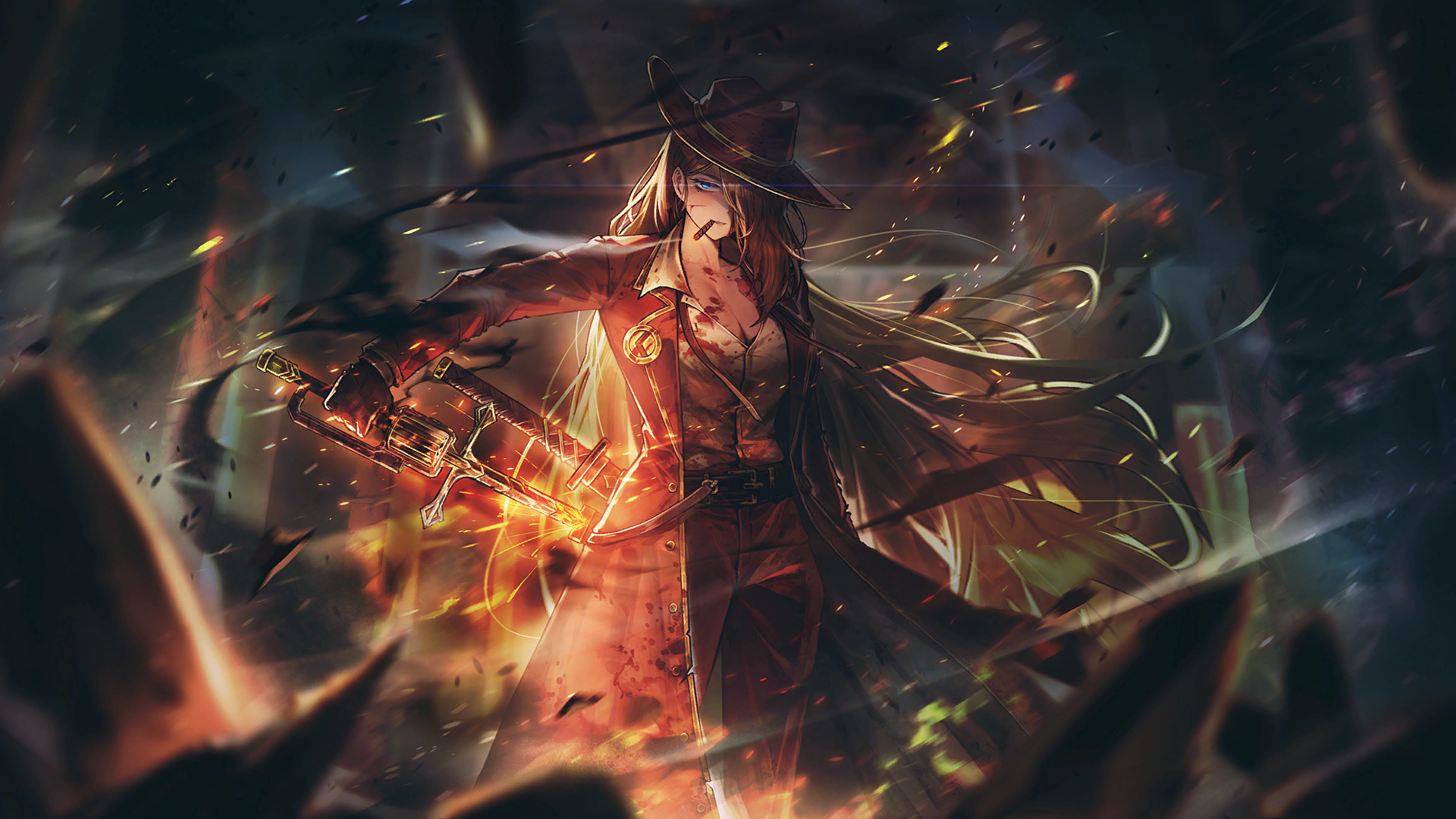
As a gacha game, Limbus Company regularly adds new units to its roster for players to pull for via random draw banners. One such unit was added toward the end of June; a unit anticipated by the playerbase for roughly half a year. I’m going to call this unit “Thumb Rodion.” Her full label is The House of Spiders: The Thumb Nursefather Rodion if you’re curious, but all you need to know is her name is Rodion and as this unit, she is a member of The Thumb, one of the five big-shot criminal syndicates in the game’s setting.
Limbus Company does a lot of unusual things that separate it from other gacha titles, and one of these deviations is in how it conceptualizes its units. Normally, a gacha game will field a roster of various characters, but in Limbus Company, players only have access to the same cast of 12 characters. Instead of gaining new characters outright, players gain alternate versions or “Identities” of those 12 characters, typically from alternate realities where they’ve taken the place of other characters in the story, or became members of the myriad factions in the setting. Imagine a hypothetical Legend of Zelda gacha game where you build a team out of Zelda, Link, and Ganondorf, and instead of getting new characters like Midna or Tingle, you unlock versions of the trio such as Happy Mask Saleswoman Zelda, Zora Link, and Lon Lon Ranch Owner Ganondorf. That’s more or less how Limbus Company works.
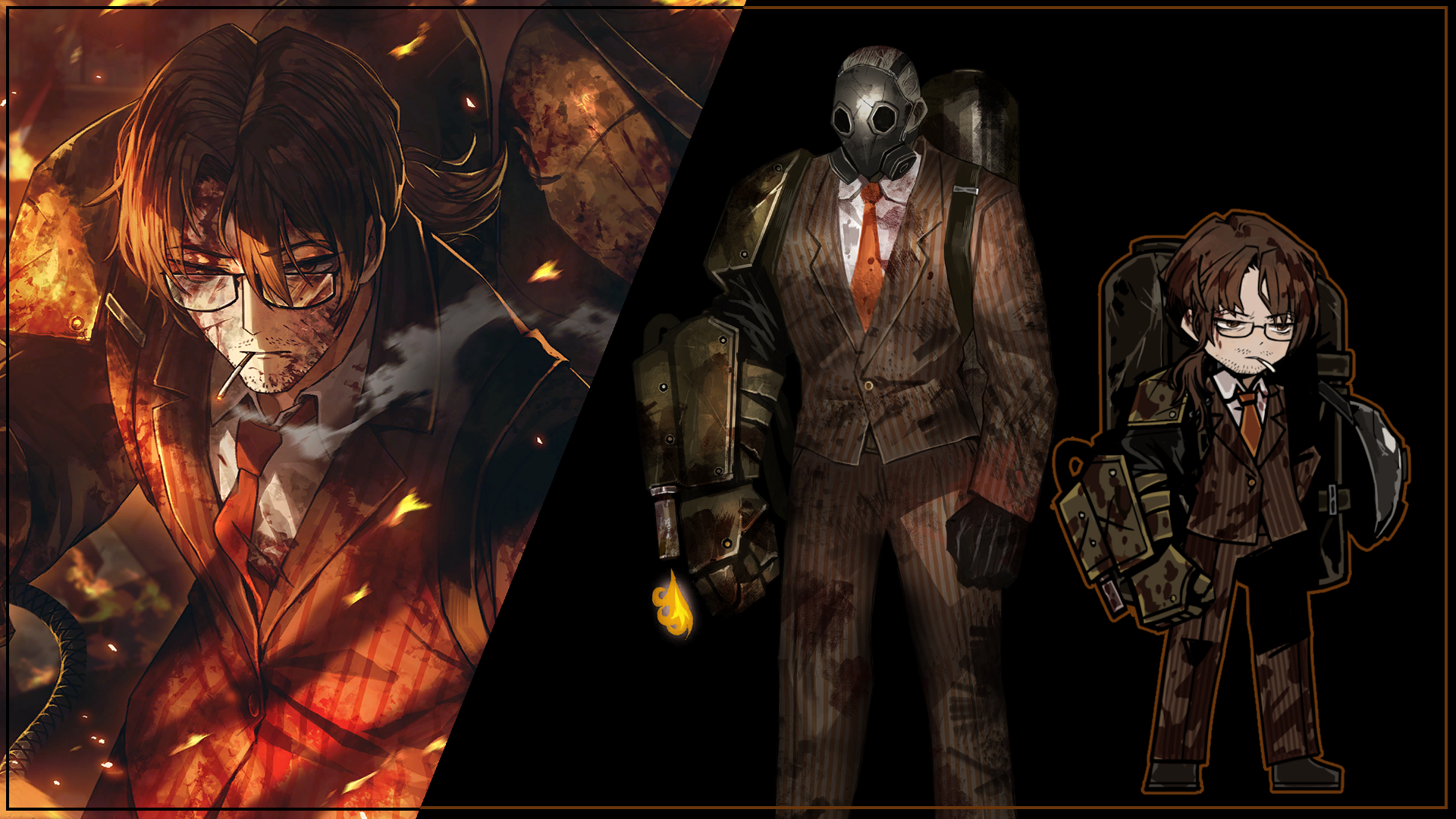
As Thumb Rodion, Rodion takes on the role of Valencina, a major antagonist in the game’s 9th chapter, “Canto IX: The Unsevering.” Valencina is a Nursefather of the House of Spiders. To truncate a lot of details, the House of Spiders is a dead-end facility where the Five Fingers have dumped powerful once-members of their syndicates who have fallen from grace for one reason or another. They’re called Nursefathers as they’re effectively nurturing a special sort of person for a specific goal in order to prove they still have some value to the Fingers.
In Valencina’s case, she was promoted to a high position within The Thumb, a mafia-styled faction with strict rules and decorum, and despite her family name, was demoted and disowned after three days. When a war breaks out, she’s called into service as a formidable combatant, and though Valencina seeks to regain her lost glory and status, successfully fighting tooth and nail as a war hero of sorts, she is denied reinstatement. She’s abrasive, alcoholic, and aggressive. She treats two separate characters as items to be used and discarded, literally calling them “Textbook” and “Ticket” instead of their actual names. She’s the epitome of a prodigy being cast out for a single mistake, spiraling down into the depths of every bottle, and erupting into curse-laden diatribes at anyone who so much as looks at her funny.
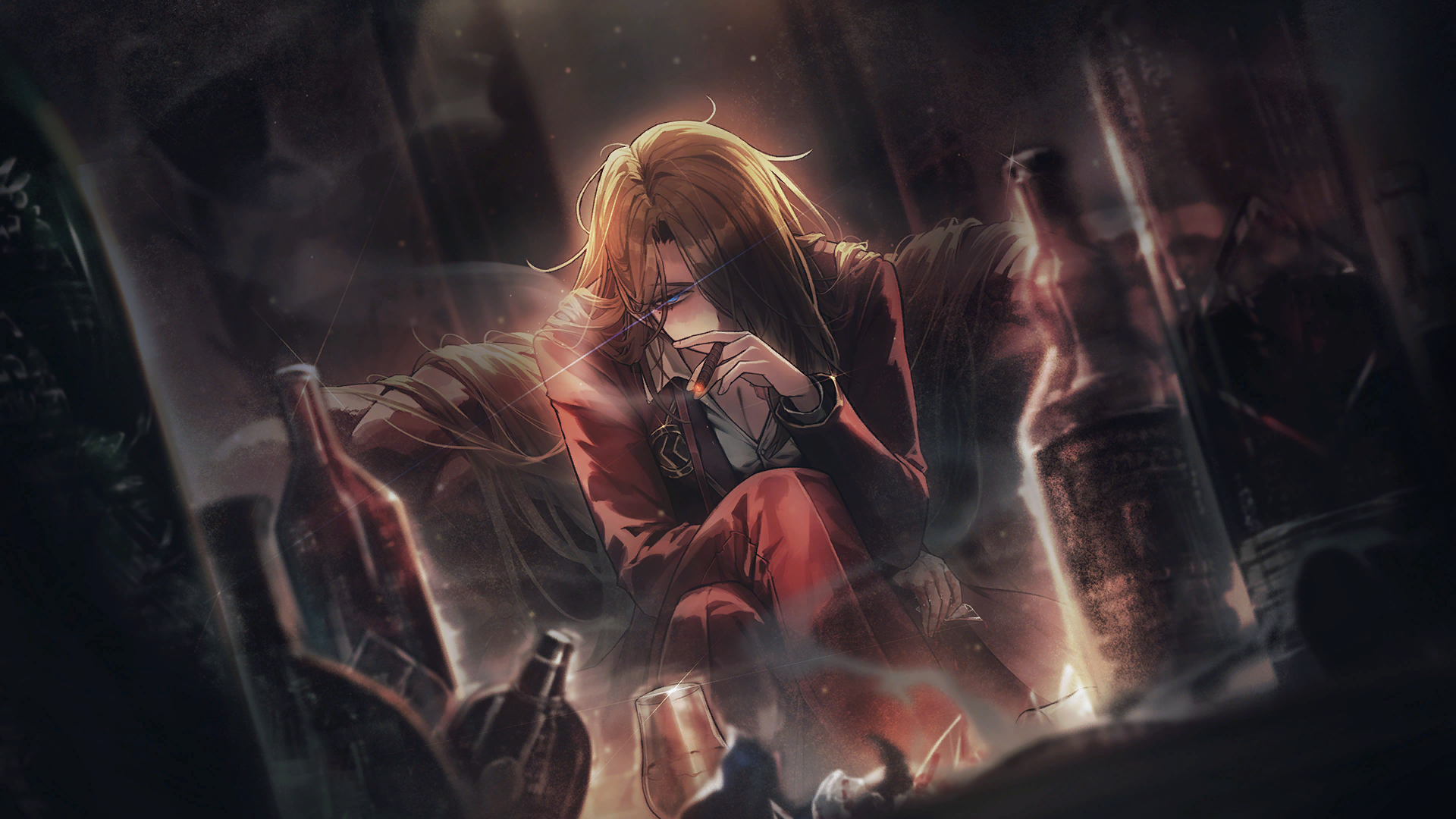
Valencina (or more accurately, Thumb Rodion) had been a long-awaited unit, since Canto IX launched back in December, as she’s one of the first characters introduced in that chapter. This makes it all the more disappointing that in the English translation for Thumb Rodion, one of her dialogue lines features a slur.
When you unlock units in Limbus Company, and upgrade them to a certain point, you unlock a story vignette. These provide some additional background information; glimpses into the life of that character in this new context as they take on the role of another character, or work under another faction. As Limbus Company is a Korean game, its contents must be translated into English, and one line in Thumb Rodion’s Identity Story reads as follows:
“*puff* All right, then. Never thought that stuttering ****** with her E.G.O and the clankin’ tin-girl could stop ya, anyway.”
I’ve censored the slur, as it has no place here. Truthfully, I was hoping this would be a simple error of judgment, where those responsible either weren’t aware of the charged nature of the term or didn’t think it would be as big of a deal as it insidiously is, and the community at large would request its alteration. After all, regardless of what Korean term was used, the translation team would be savvy enough to know not to heedlessly implement a slur in the official translation, right? Surely it would be patched out and remedied within a week or two, right?
That does not seem to be the case, as we’re now weeks from the unit’s launch and there have been no changes to this line. This particular slur has gained more and more usage in online spaces over the last couple of years. I personally have seen it used in social media posts and replies the most, but there has been one instance last year where someone I was in a Discord call with said it out loud as a self-admonishment. One thing that’s clear to me is that this slur has become a lingual crutch for a decent number of English speakers online. I don’t want to simply dismiss this as the “erosion of morals among younger generations” because while I do tend to see its usage more often among younger people, it’s not like people my age and older unilaterally stopped saying the word, and the recent spread of its usage has permeated throughout the age strata. I’m mentioning younger people here because they tie into a hypothesis of mine regarding this slur’s use in Limbus Company.
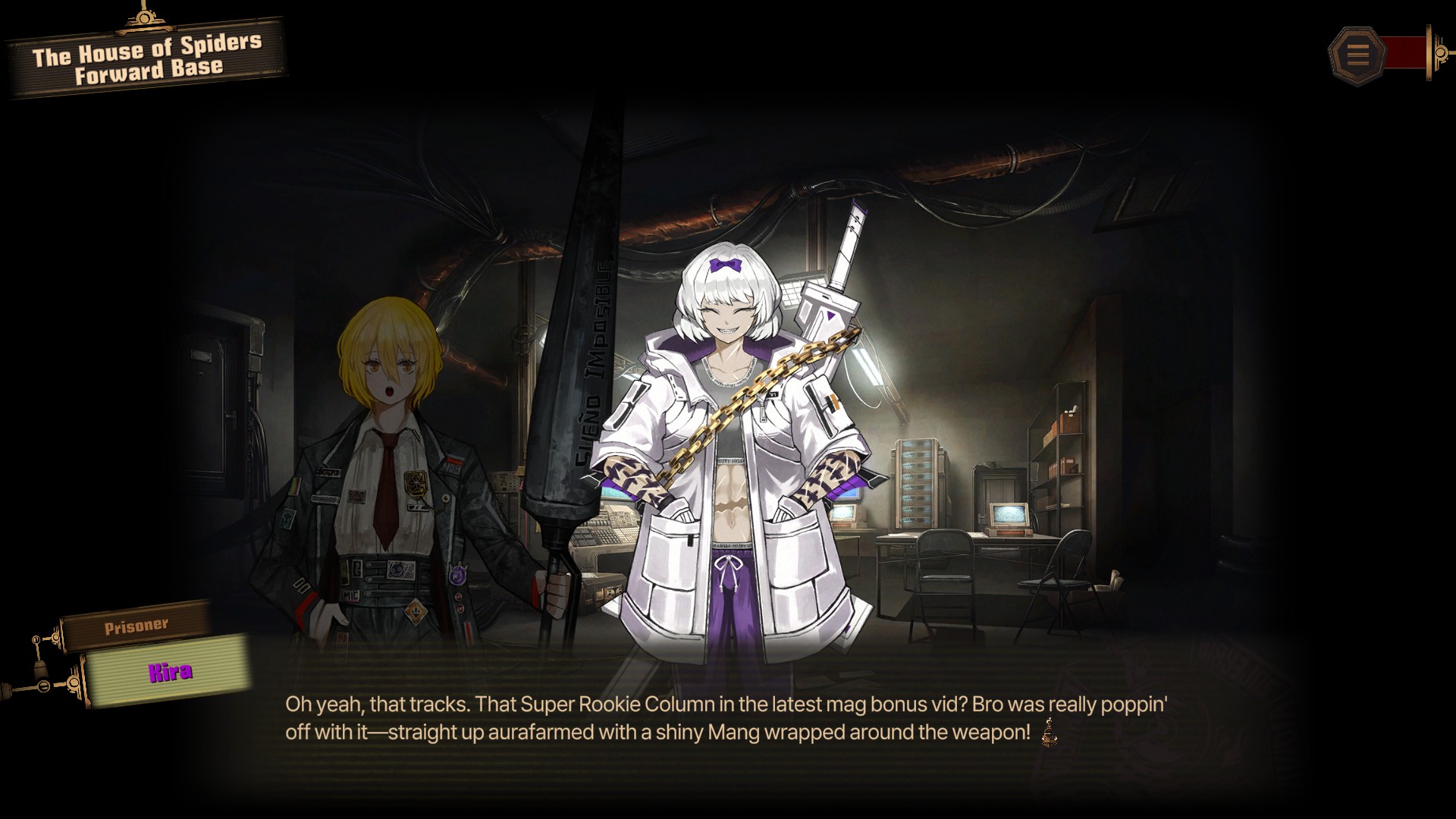
If I had to guess, I’d say the slur’s application in Thumb Rodion’s Identity Story is a thoughtless inclusion banking on the “social credentials” of using current-era slang. Consider a unit released much earlier in the year: The House of Spiders: The Middle Apprentice Ishmael. Much like how Thumb Rodion is based on Valencina, Middle Apprentice Ishmael is based on Kira. I bring this up because Kira is written as the sort of person who says things like “aurafarming” which make her stand out as a more youthful character, and her language reflects that (Middle Apprentice Ishmael also uses this style of language.) Had Limbus Company been released a few years earlier, Kira would be written with different slang terms and phrases, to match the ones in use by youths at the time; she’s exactly the sort of character you’d write to say things like “sus” and “pog” since she’s also a gamer. My reasoning is that since they wrote Kira in that specific way, and Limbus Company‘s translation has a tendency to keep up with modern English language trends, the translation personnel were aware of the rise in usage of this slur and thought it would be okay to insert it into this vignette. That’s the extent of thought that went into using it.
I could make the case that by not saying which slur it is, it makes it more difficult for “proponents” of its usage to vie for it. Because it’s a slur they deem acceptable to use, and it’s one that’s unfortunately in vogue in the cultural zeitgeist of today’s lexicon, they’ll impishly claim that it’s “actually fitting for the character,” or that it “makes sense in context”.
Bullshit.
Would they make these arguments if it were a different slur? I suppose that depends on the individual, and I have no doubt some who bristle at that question would defiantly claim that they’d still make those arguments, when they know full well that using such terms in public and professional contexts would and will have consequences. The fact remains however, that Valencina never says the slur once in all of her dialogue. She was already written with a more fitting form of dehumanizing speech with her calling people objects and denying them their names, so such a vulgar term was unnecessary. Its inclusion here is even worse then, as while Valencina never says the term, Rodion in Valencina’s place does. Rodion is a complex character, but not the sort of person you’d expect to sling any kind of slur given her history and general demeanor. Now, it’s not strange at all for these characters to adopt different personas and attitudes as they use these Identities. Hong Lu often retains his upbeat joviality across his Identities, but this can be extinguished outright or twisted to juxtapose against the violence he commits depending on the context of the Identity. The normally uptight and strict Outis can be seen in more mellow or casual hues in a likewise manner, and this applies to the full main cast of Limbus Company. But never has there been a situation where a slur was involved in the localization, either in the narrative or in these little vignettes, and in such a callous and careless manner at that.

The language we use matters. For five years, I worked with children with learning disabilities, from kindergartners to fifth-graders. I’ve worked with people who have ADHD, ODD, autism, Down Syndrome, etc. You name it, I’ve probably worked with somebody who had it. One afternoon, during the after-school program, outside on the playground, I overheard a student say this exact slur. I called him over, and had him sit on one of the picnic tables for a timeout. I do not remember what I said to him exactly, but I remember being very clear and stern about the fact that such a term is not to be used. It wasn’t a term he specifically was disallowed from saying; none of us should be saying it. It’s not a term one should want to say, and if any other student said it, they’d be in the same situation he was in now. I told him that his mother, a coworker of mine at the school who worked with many of the same students I did, would be very unhappy if she knew he had said such a term. I told him that I wouldn’t mention this to his mother as he was already taking a timeout, and it was a singular mistake, but he needed to make sure he left the word unsaid.
He never said it again, at least in my presence. I would like to hope he left it behind, as I did in middle school. Because that’s what it sounds like to me whenever I hear it. There are two kinds of people who use this slur: middle-schoolers who are wont to make as many mistakes as humanly possible as they grapple with entering the tumultuous period of life where you’re not quite a child and not quite an adult and your pituitary glands are wreaking havoc all over; and people who were eligible to vote in 1980, who have given up growing as people in favor of living within the small confined worlds they’ve built up around themselves. Apart from this resurgence where I cannot go a week without reading that slur in a comments section or thread, that anecdote with that student was the most recent time I can recall hearing it; a snapshot from an afternoon almost ten years ago.
It may sound silly to stipulate on a singular slur in a video game where the setting is such that every horrible cyberpunk dystopian thing you can think of is somehow a million times worse. Where an entire district has legalized cannibalism, public transportation is a certifiably incomprehensible nightmare (and in the game too,) and you can be teleport-murdered for having a clone of yourself be alive for too long. Surely some people in this setting use slurs and pejorative terms for one another. But I’m not arguing about the slur’s suitability for the setting or the plausibility of its usage by this or that character.
I’m arguing that the slur has no value here, and only serves to tarnish the image of Limbus Company and the reputation of Project Moon along with it. This is a term with an extremely compromised and gruesome history; it should not be used without due consideration and an explicit, deliberate purpose. One must ask: “What was the objective in its usage here?” Is it being used in an academic context for a linguistic study or dissection? No. Is it being recorded as a matter of historical authenticity, accurately reflecting decades-old documentation or interview transcripts so that we maintain a complete understanding of a particular time and place, eschewing the desire to paint the past with a rosy tint? No. Is it being leveraged by a person who has been scarred by the slur as a means of connecting their experience to others through writing or song or poetry or some other medium? No.
When you work with people the term has historically been weaponized against, in order to demonize them and divest them of their humanity and rights, you will never want to stop seeing it, hearing it, witnessing it being used so flippantly, not just in creative works like video games, but in everyday life as well. There are other, less intense words that can be used in its place in virtually all contexts. But those who regularly employ it in their casual vocabulary know precisely why it “hits” just a little bit more when they use that word instead. The difference is in the measurable, tangible cruelty that laces the word, the history behind why it’s even considered a slur in the first place, and the knowledge that it is a slur and it is taboo to say it, which makes saying it or using it “exciting.” Just because people are mindlessly parroting it more often these days, feeding into its increased usage as they do, doesn’t change the fact that it’s a harmful, awful thing to say.
The truth is that it has no artistic merit in the context of a game like Limbus Company. It doesn’t do anything with the slur aside from drop it in one line for one backstory that isn’t even critical to the primary narrative, for what I can only surmise is shock value. It is flavor text.
And that flavor is rancid.
