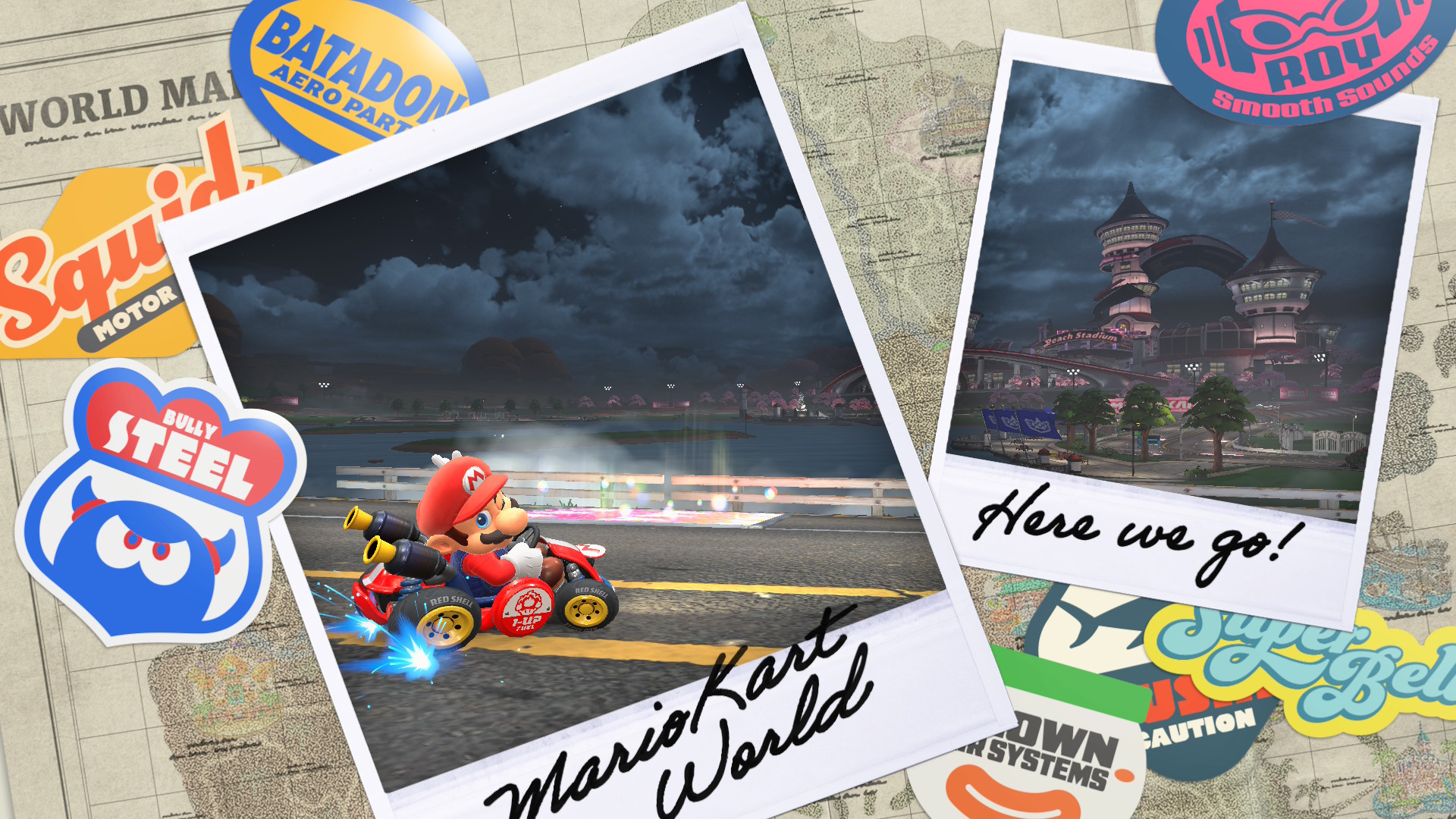
“I felt that in Mario Kart 8 Deluxe, we were able to perfect the formula that we’d been following in the series up to that point, where players race on individual courses. That’s why, this time, we wanted the gameplay to involve players driving around a large world.” — Kosuke Yabuki, Mario Kart World Producer
What else could Mario Kart World do but go open-world, the fate of all long-running franchises? Not only is every track smoothly connected to adjacent tracks, but they’re wider and longer than they were in previous games. To accommodate the new 24-player races—doubled from Mario Kart 8!—they have to be.
Mario Kart races were chaotic even when constrained to an 8 player limit in Mario Kart 7, and that once-charming characteristic has become nearly unbearable with 24 players constantly throwing out items. Many have criticized World’s boring straightaways that connect the “real” tracks, but I found them a welcome opportunity to just breathe a little bit. The artists of Kosuke Yabuki’s team have crafted a beautiful world, but it’s difficult to notice amidst the heat of a race where I can barely hold on to an item long enough to use it.
Thus I found myself enjoying the peaceful atmosphere of free-roam mode more than any races. There’s nothing to do, and it’s better for it. The open-world genre is burdened by association with endlessly repetitive quests, which has only obscured the simple pleasure of noodling around a really big virtual space.
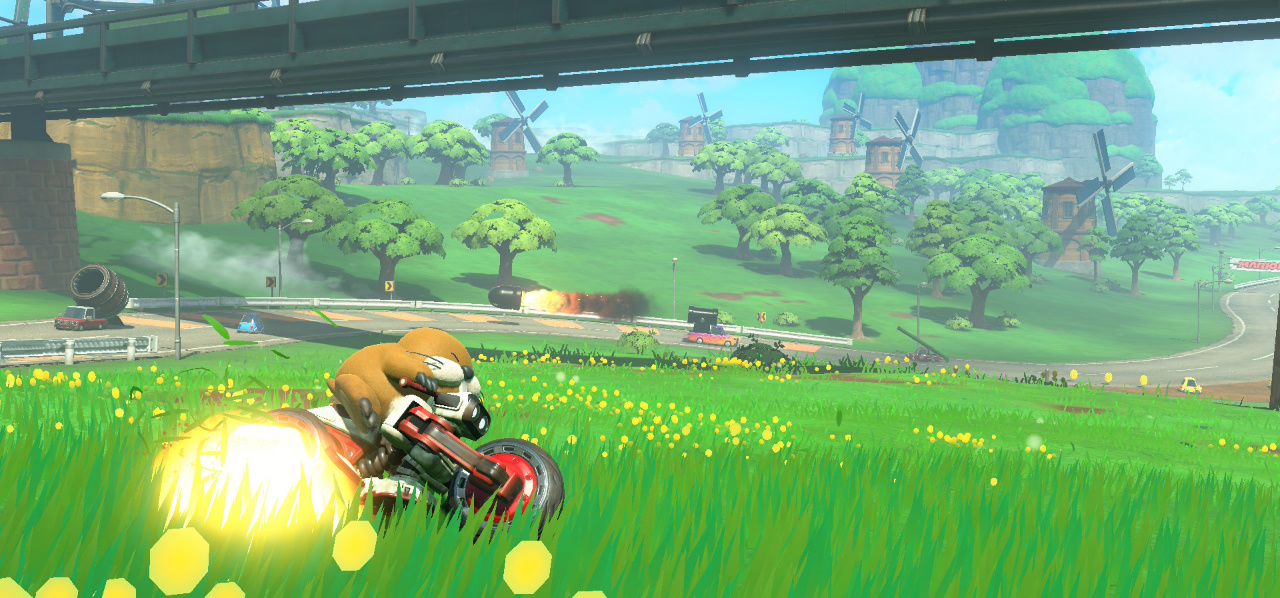
Grand Theft Auto III did not take over the world because of its mission design, but because it offered an atmospheric city to explore and cause chaos in. 16 years later, Breath of the Wild stole everyone’s heart not because of the quality of its questing, but because even a total novice can roll a rock down a hill, set grass on fire, or chop down a tree. Personally, I don’t like Breath of the Wild very much, precisely because its mechanical intricacies are poorly utilized within its quests and dungeons, and because there is little worthwhile treasure to reward exploration. But the best times I had with that game were when I turned off my desire for an objective, walked slowly, and just sunk into its wonderful sound design.
In truth, Mario Kart World isn’t totally free of free-roam missions, but they’re so minor that I can’t resent their presence. There’s some collectibles to collect and some rings to fly through. You might even get something that’s actually fun, like taking over a 16-wheeler to ram through traffic. Mostly, I just like seeing how the courses fit together, and finding the weird little places nestled between them. I use the auto-accelerate option in races, because otherwise there’s very rarely any reason to let off the gas. But I turn on manual acceleration in free-roam, because then I can smoothly coast to a stop to soak in one area. When would you ever have a chance to do such a thing in racing mode?
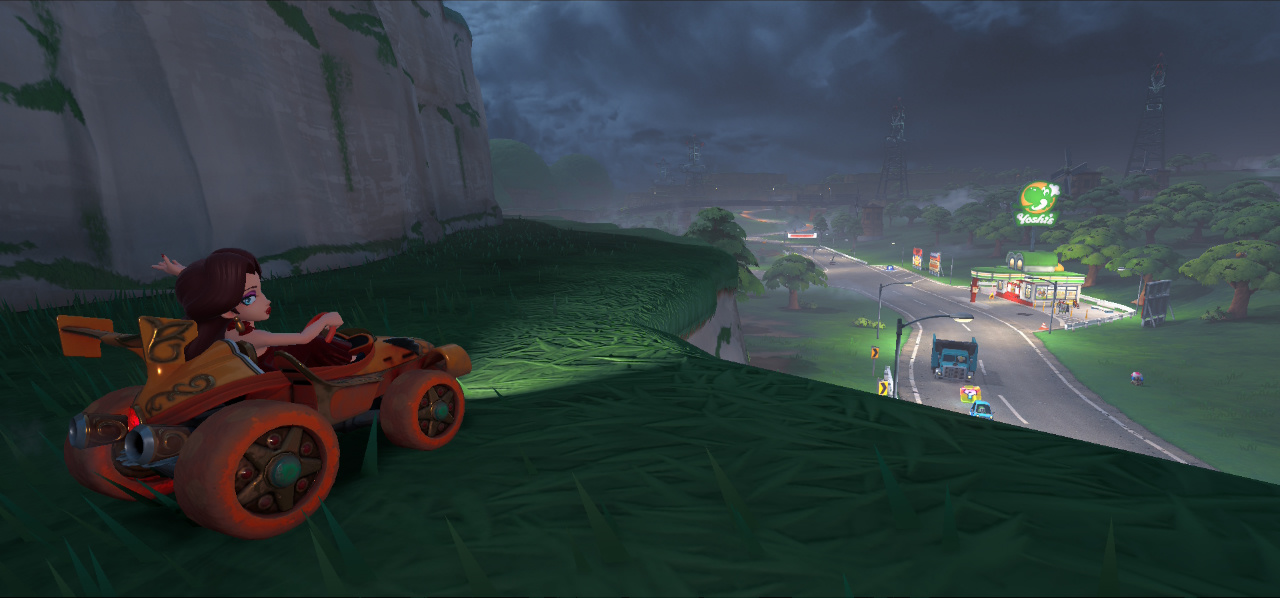
By the way, I also use tilt controls. As a former teenager of the Wii and PS3 era, I feel a certain guileless nostalgia when I use unnecessary motion controls. Perhaps it brings back memories of a time when next-generation hardware could distinguish itself by more than performing the same computational tasks faster, but there is also something to the kinesthetic experience of drifting by tilting a gamepad and holding R. It makes my hands do something that they usually don’t do; a novel exercise of the muscles. And it helps that the stick is still there if I need to emergency-adjust my awful tilt controls turn.
Imprecise tilt control turns do add some needed challenge to the single-player Grand Prix, which is otherwise way too easy to entertain a Crystal of my gaming caliber. I cherish every time the CPU manages to get my heart beating a little bit by dropping me all the way down to 3rd place. However, my gaming skills are not so great that they can reliably get me to even 10th place in online matchmaking. Thus I am without a happy medium of challenge in racing, the so-called main attraction of Mario Kart World.
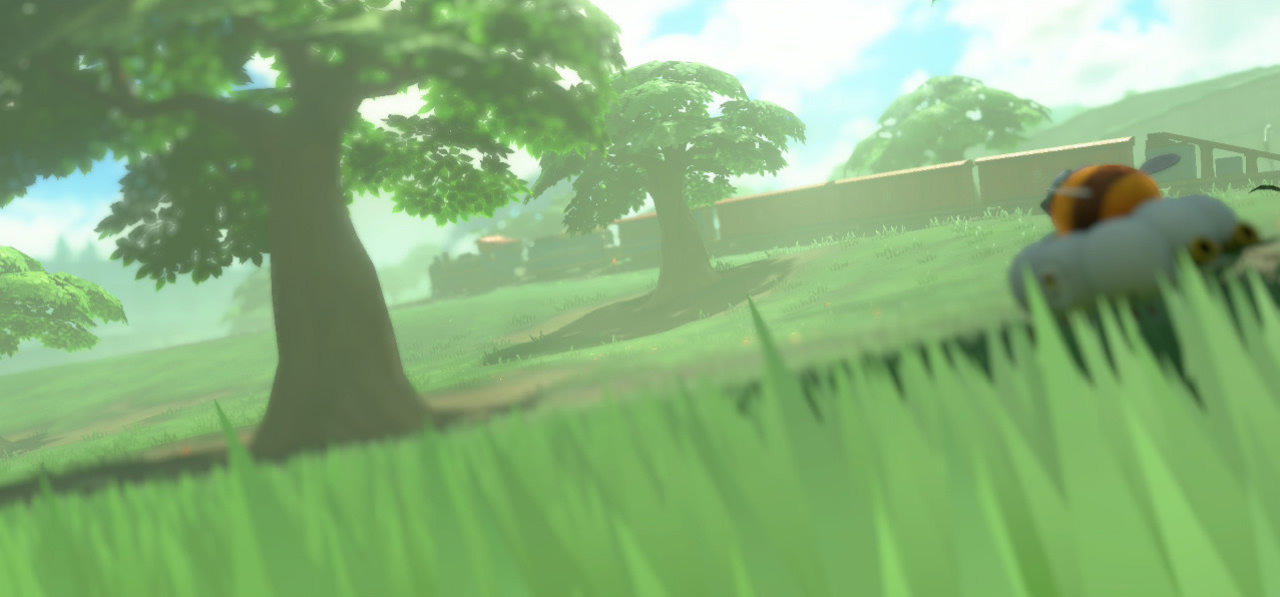
Knockout Tour comes closest to solving that problem by including the threat of elimination in every lap. In normal races, there’s really no difference between Lap 1 and Lap 3; it’s just one long stretch of chaotic moments. That’s why Mount Wario really stood out in Mario Kart 8: each lap was different! Well, actually there is one important difference to Lap 3: it matters who crosses the finish line first. Those final moments are where all your speed boosts and items really count, in a way they don’t at any other point in the race. Why use a Bullet Bill in the middle of Lap 2? Because you’re going to lose it to a Thunderbolt in 5-10 seconds anyway, so you might as well use it now.
The real Mario Kart World pros might cite the above as the reason why I’m mediocre at best in online matchmaking.
Knockout Tour sparks my competitive spirit more effectively than the 24-player races, because it gets less chaotic as it goes on. 4 players are eliminated each round, from 24 down to just 4. That Bullet Bill in Lap 2 feels exciting because it can get you from 18th to 16th just in time to survive, but you still want to keep a big lead, because someone else’s Bullet Bill could knock you down from 12th to 17th just in time to be eliminated. Every lap has tension and excitement; the opportunity for both triumph and tragedy. Each successive lap has less item chaos, and so victory depends more on proficient driving. Even if you only get 10th place, you can still enjoy the small wins of surviving the first three rounds.
I felt all that only in multiplayer of course, the single-player Knockout Tour is still way too easy. For the single-player experience, I can only recommend the humble joys of free-roam mode, perhaps paired with an episode of The Gamesline Podcast.
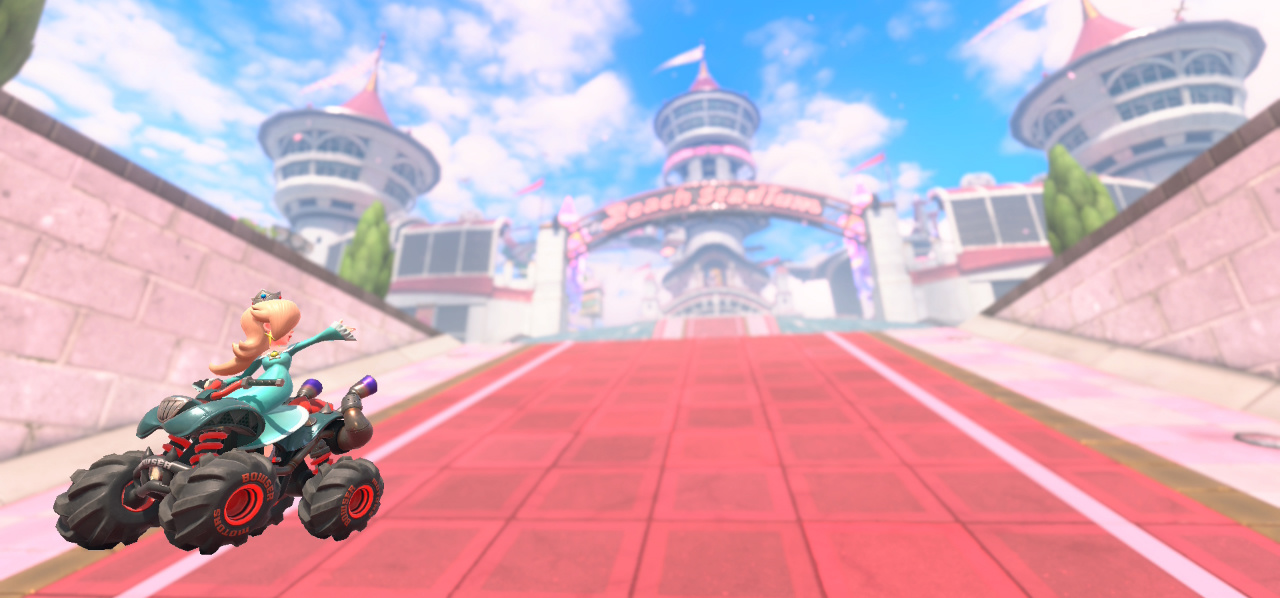
Listen, it’s Mario Kart. You can always rely on it to entertain some party guests. But don’t let yourself pay $50 (God forbid $80!) for it if you’re not hosting a party. A free-roam YouTube video in 4K HDR is free.
Okay
"Drive to Relax"
A mellow open world provides a welcome reprieve from Mario Kart World's overly chaotic races.