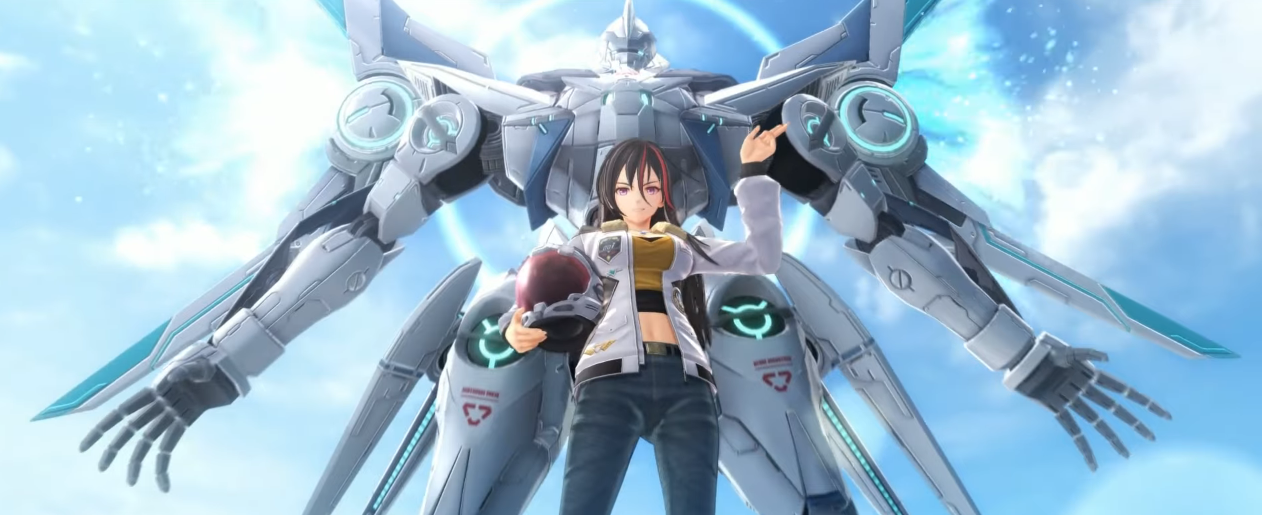
If you haven’t noticed over the last couple years across various features and reviews, we enjoy Nihon Falcom’s Trails series here at Gamesline.
It’s a work that thrives off of its continuous nature; a rarity in an artform filled to the brim with resets, reboots, and retreads. Years pass, technology changes, and every person you’ve met along the way is molded by the events you all experience. It’s among the closest video games have gotten to a grand scale epic like “The Odyssey”, only instead of Odysseus possibly cheating on his wife, you watch a goth girl grow up to invent Linux. There’s nothing like it in games, and oftentimes I feel as if there will never be anything else like it when it inevitably runs its course.
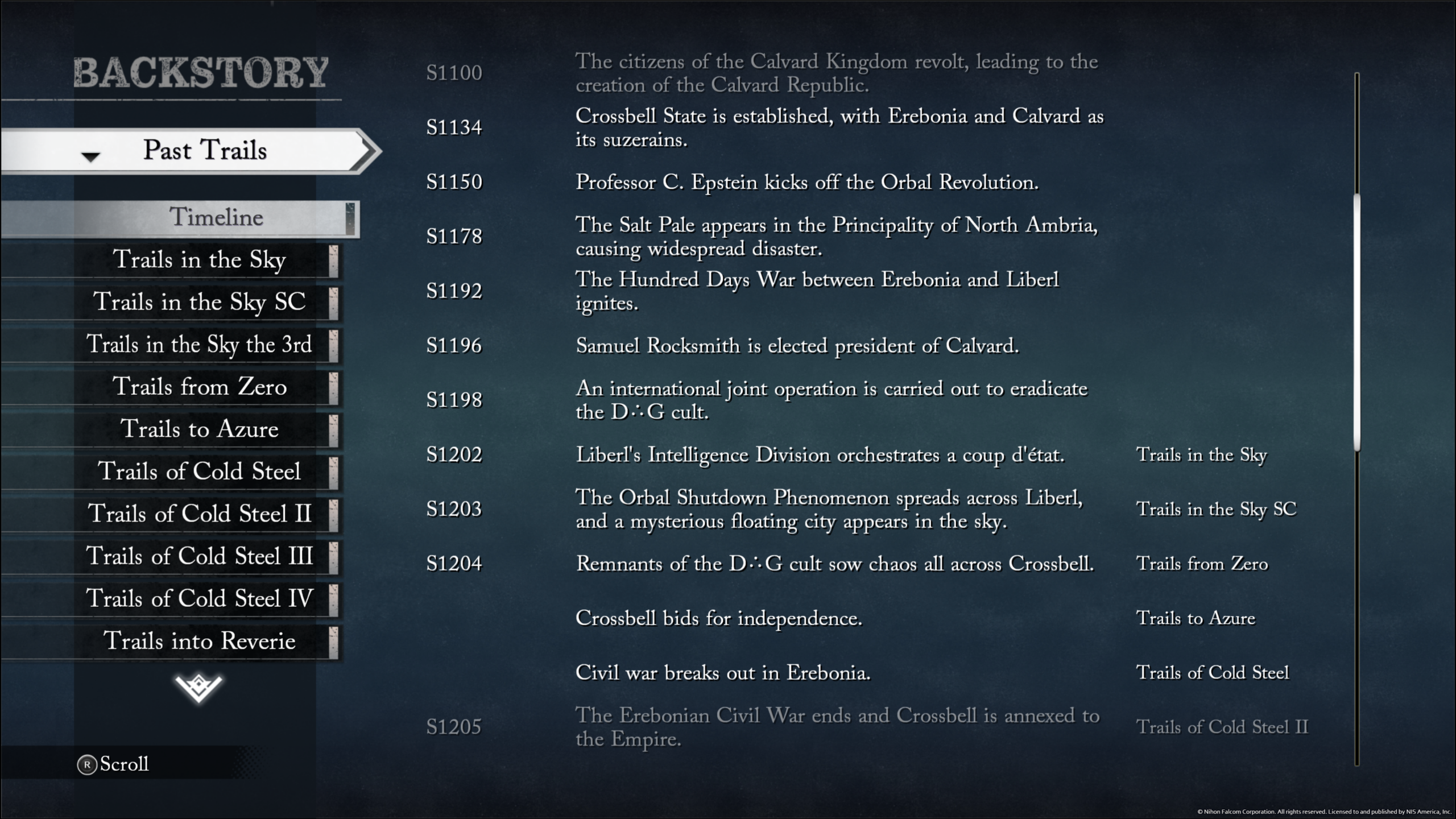
As the thirteenth consecutive entry in the Trails lineage, and the third in its respective arc, Trails Beyond the Horizon is a fascinating step forward for the story; delivering not only the warm community comfort we’ve come to expect, but also a recontextualization of what everything we’ve seen up till now has meant. We’re past the era of NPCs talking around large scale issues, and Not-Organization XIII’s hiding in the shadows whilst opining about the “Truth.” We’ve learned about SiN, we’ve launched a rocket into space, and we’ve gotten payoffs to some of the longest laid bits from nearly 20 years ago.
Trails Beyond the Horizon takes place a few months after Trails Through Daybreak II, with the Calvard Republic’s plans for the first ever manned flight into space quickly underway. As a space boom hits the continent, Van Arkride is doing his best to keep up with the various schemes and circumstances that rise to the surface amidst the turbulent times. There’s cults, political intrigue, and the everpresent meddling of Ouroboros to worry about; but also more mundane situations like stock scams, charity fraud, and all the standard troubles anyone can run into during day to day life.
There’s a balance to Horizon that matches a lot of earlier games in the series, like Trails in the Sky FC or Trails of Cold Steel. Those games spend a lot of time slowly eking out their broader conspiracy with small-scale events that gradually lead to a bombastic finish. This is a hallmark of Trails in general, but it’s a bit odd to see it done in what is ostensibly the Daybreak arc’s third game, which can definitely create an amount of friction or fatigue if you’re the type of player that somehow gets thirteen games into a series without appreciating its core conceit.
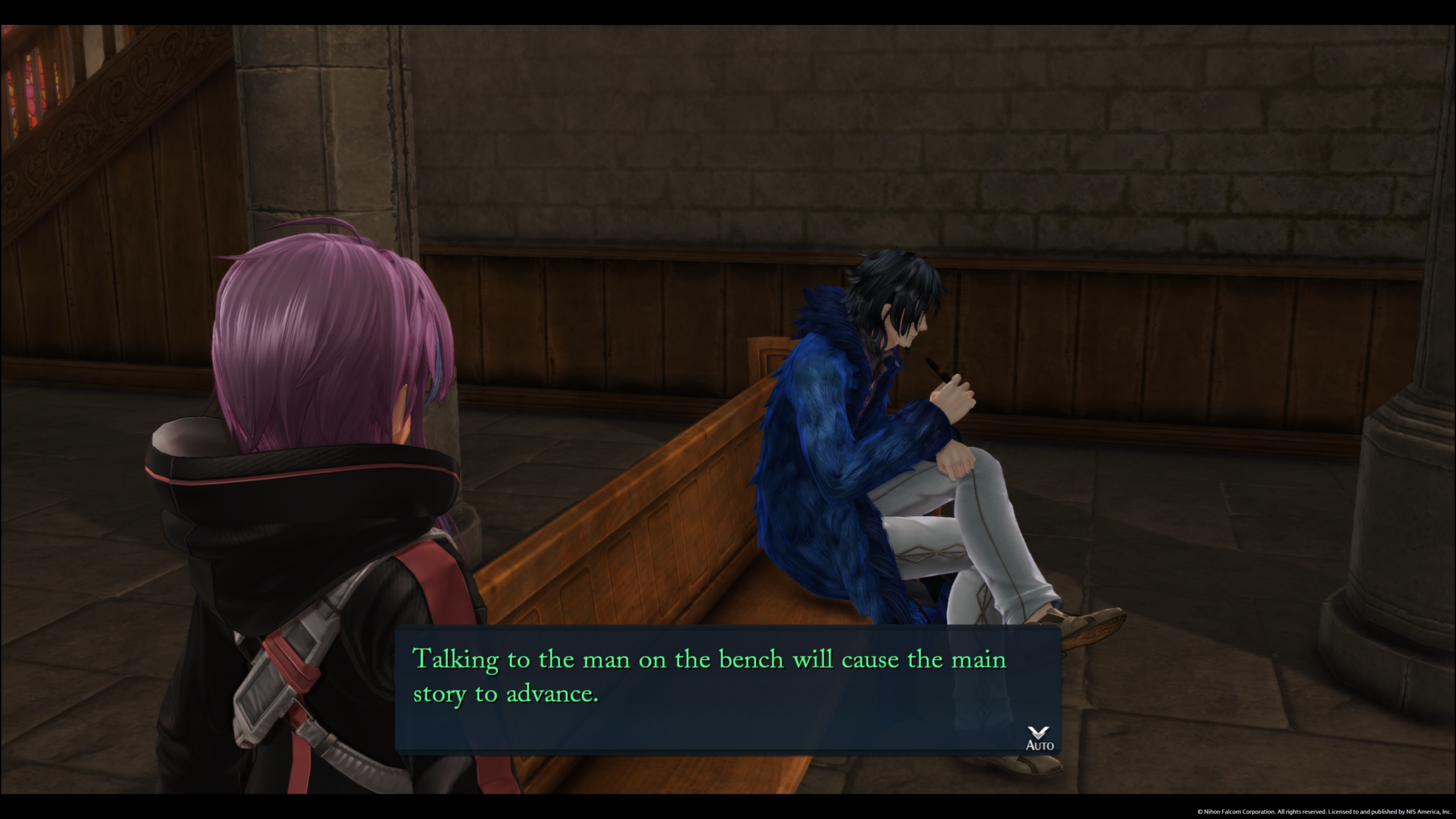
I joke to an extent, but it is odd, especially when paired with the title change and overall belief that this would be one of, if not THE final game in the Calvard Arc; and previous third entries like Cold Steel III were able to marry a large amount of rising action with an explosive climax that sets up its finale. There’s nothing inherently wrong with the “calm before the storm” approach of Horizon, but it does mean you’re left wondering just how everything is going to play out a lot longer than you would in a more thrilling, chapter based entry like Trails from Zero or Sky SC.
A big part of that dissonance is due to the route-based structure Falcom has leaned on since Trails into Reverie once again making a return. Van shares his protagonist spotlight with Cold Steel’s Rean Schwarzer, Sky’s Kevin Graham, and to a lesser extent the ever funny Rufus Albarea who deserves so many games of his own. Each chapter has you ping-ponging between these character’s perspectives, and each has their own party composition, plotline, and resolution largely unrelated to the other. It’s an interesting format, showcasing the strengths of the series for sure, but at times it can exemplify the breaking points of Trails’ many tropes. It’s one thing to be tested by a couple tough guys as Van Arkride and his kids, it’s another to be tested the same exact way by eight other tough guys across the various routes over and over. A route change should feel more meaningfully different, but here it just feels like we’re model swapping who’s dealing with what.
Taking all this into account, we’re also back to encroaching upon the dark times of Reverie where 50 people file into a room to share their thoughts and ideals against a singular antagonist, but mercifully the overall party member count stops at 24. That is, however, still 24 different characters that the game has to balance and attempt to do justice over the course of your adventure, and inevitably this means many characters get sidelined with the assumption you sort of get them already and we can focus on something else. This is a little frustrating with characters like Fie or Crow who have a lot going on but chill in the background; it is even more egregious with characters like Kevin who has been conspicuously absent from the series for over 10 years, and seemingly almost reset to an amalgamation of what you’d expect a pre-Sky 3rd Kevin to be like.
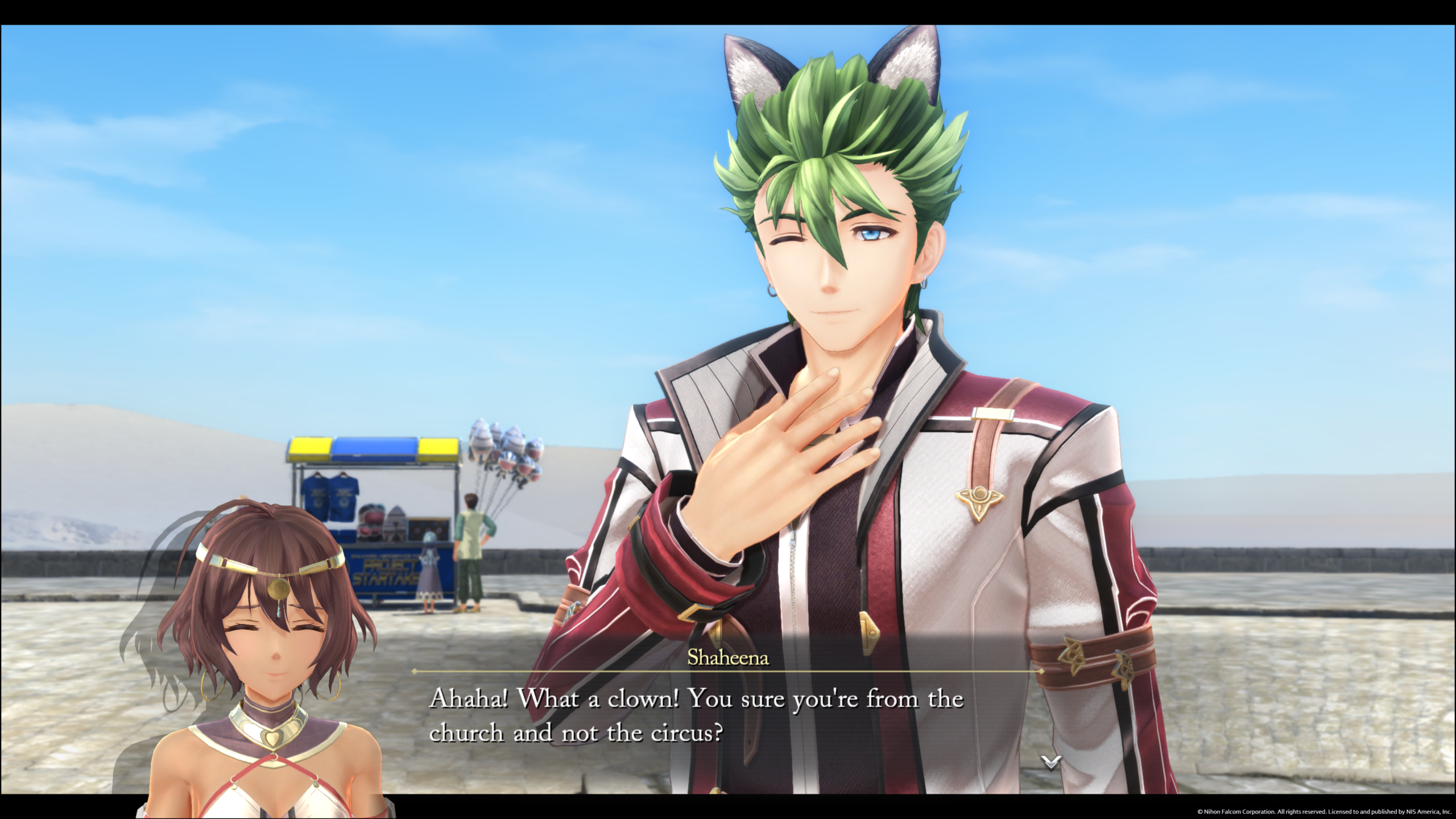
Equipping all these characters can be exhausting too, especially with the sheer amount of quartz, spells, and accessories you have to kit in and think about across every party. Kevin’s party in particular stands out as uniquely frustrating to work with since they lack a core dedicated support unit, relying entirely on the hope and prayer that Nadia’s silly healing teddy bears will be enough (they aren’t).
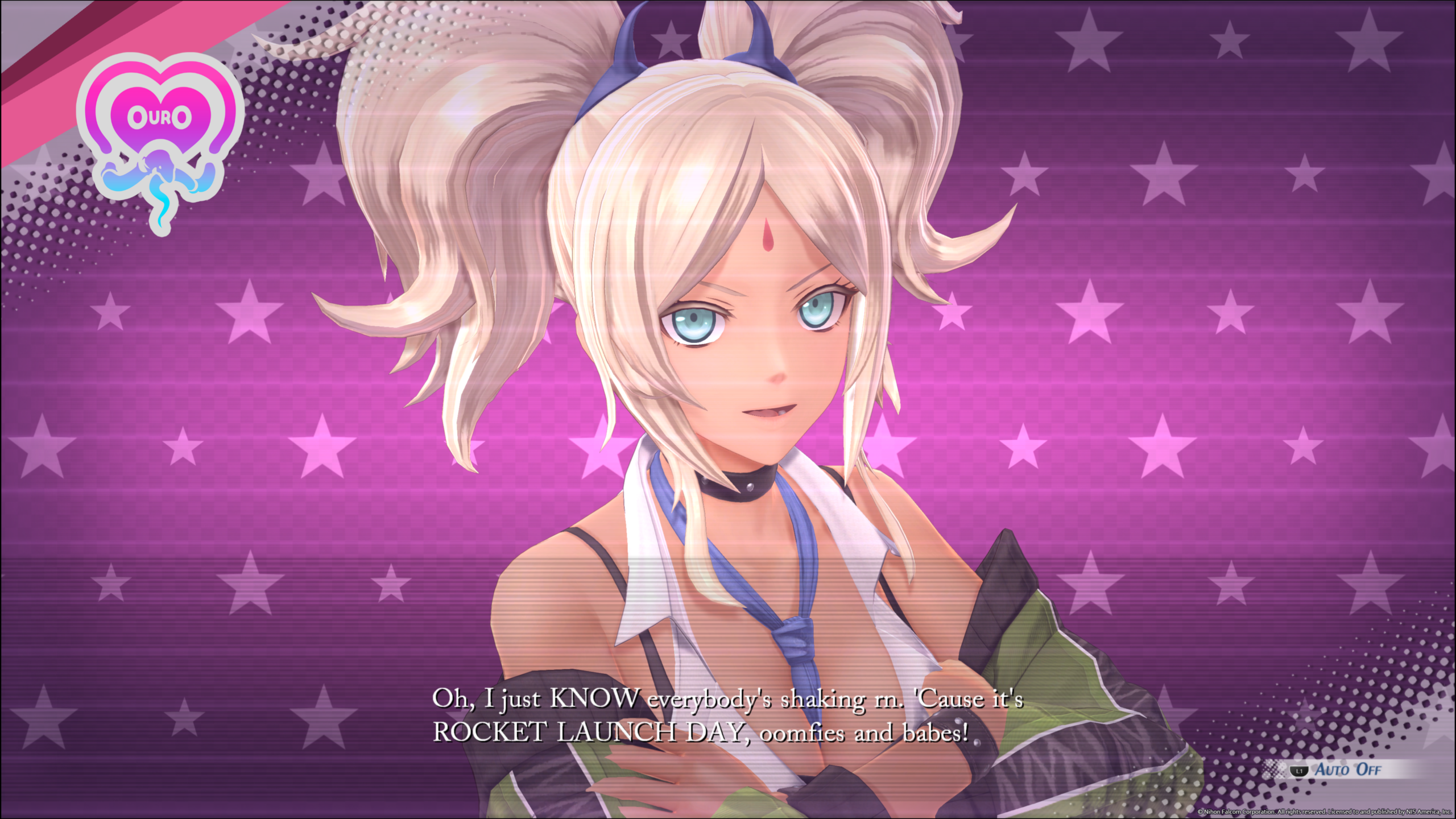
It’s not as bad as it could be, mainly because a large portion of the combat is cordoned off in the “Grim Garten”, a dungeon crawling side mode that lets you use characters from all three routes in your team building. While it’s about as exciting as the Märchen Garten from Daybreak II (read: not at all), it’s aided by at least having an actual story attached to it with really charming Ouroboros characters fooling around, which is always a series highlight. There’s surprising revelations about the mostly forgotten Professor Novartis from Trails to Azure, and new character Ulrika is a standout as a streamer who spits some of the most insane lines in the entire series (done via galmoji in Japanese and modern slang in English).
Ulrika uses “power words” when she speaks that allow her to control and manipulate certain aspects of the people around her (though she insists she never uses them on-stream), which is reflective in-game via the new Shard Command system. These commands are an iteration on the Brave Orders from Cold Steel, and let you activate various passive effects for a certain amount of turns i.e. +60% Physical damage with a small part wide heal. This system is usable by enemies as well, making some boss fights a real nightmare of buffs and debuffs. Just like Brave Orders this almost works, but the inability to use it in the midst of an enemy deluge often makes it feel like it’s just sort of there. If the system worked similarly to the turn order interrupts of the series staple S-Crafts, this would be a great addition! As is, like much of the combat in the Trails series, you can pretty much forget it.
All this whining may seem odd, especially if you slid by those five stars at the top, but here’s the ultimate truth: I had a smile on my face the entire time I was playing Trails Beyond the Horizon, and the theorizing and cliffhangers it’s left open have kept my mind buzzing nonstop as I pore over the older games in the series to go “OHHHH” at. I haven’t felt this burning intrigue in my heart since the secret endings of Kingdom Heart games. At the same time, the quiet slow buildup of the game as I wandered around the now-familiar Calvard checking in with all my favorite NPCs to see what the hell everyone’s doing is like heaven to me. Synthesizing everything I love about Trails into one game, with perhaps the most bespoke localization I’ve seen in games…yeah, you can understand why I might be pretty pleased with Horizon.
Similarly to my Daybreak II review, I wanna run through the appeal of all these characters, because it’s the intersection of world building and character writing that makes Trails Trails.
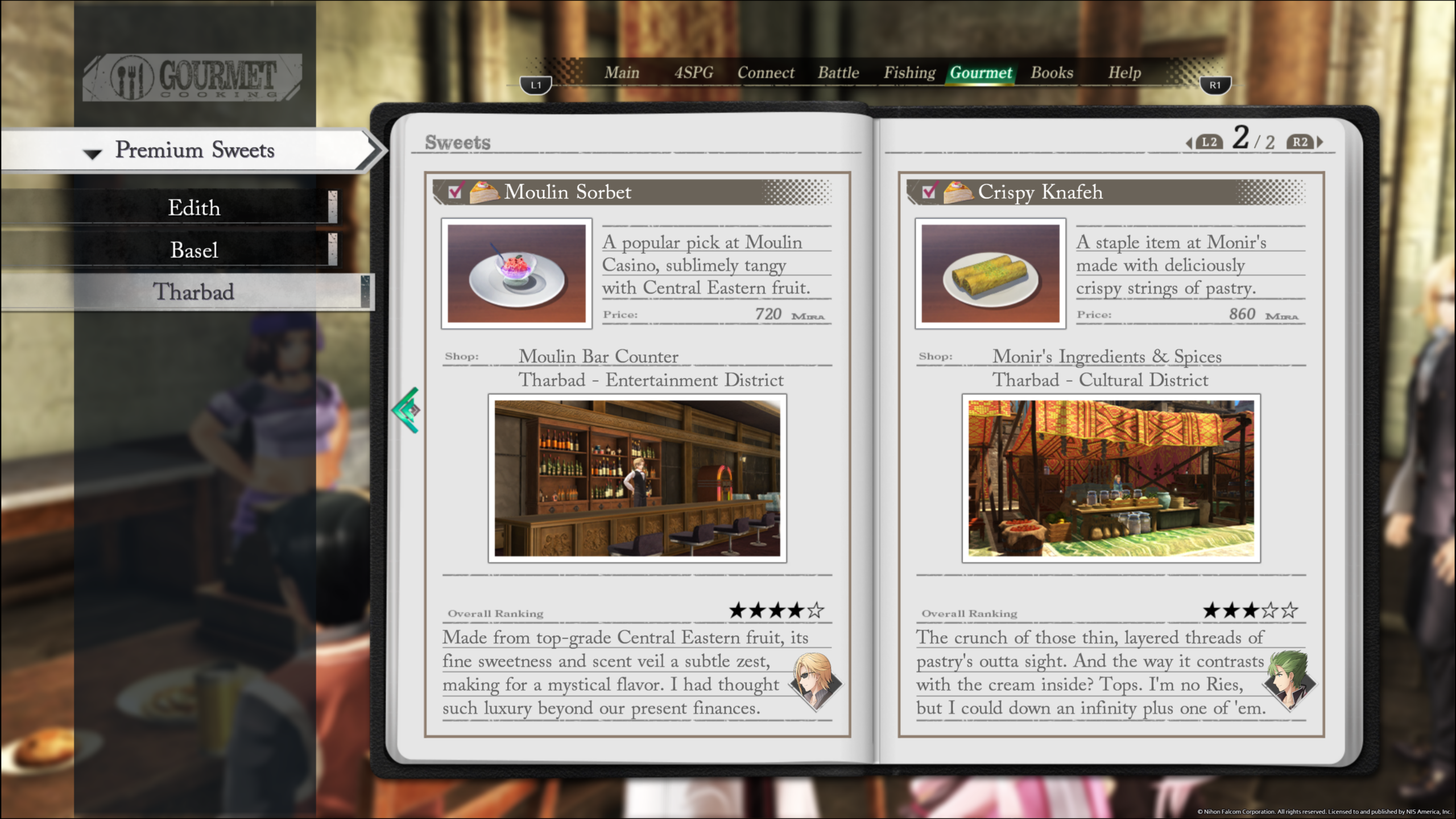
Van Arkride continues to impress as the slowly healing traumatized guy who wants to pretend he’s actually twisted and evil. Watching him continue to make the safe choices and focus on improving his interpersonal relationships with others in a way he never has is heartwarming. There’s a scene with his ex-girlfriend Elaine you can get where he finally explains exactly why he has such a fixation on sweets to begin with (this is what romance is all about). I really like how characters notice that he’s being more normal in this game too, with a lot of the more adversarial allies getting closer and conceding that he’s not the bad boy they made him out to be.
Agnes is in peak loser girl mode in this game. While there’s a lot of layers to what she’s doing and the reason she acts the way she is, I adore seeing her stumble more than anything. She wants that problematic age-gap relationship so bad, and I really can’t blame her, but also it’s so over for her. The next game is probably going to go all-in on an Agnes focus too, so we’ll finally be able to see if Falcom is #Woke or #DarkWoke.
Risette got a big boost in Horizon as the story starts to actually dig into exactly what her insane backstory might be. They do a good job of balancing various possibilities of what may have been before you finally get a clearer picture near the end of the game. A big thing that’s hit Trails as it’s gone on is this idea that you can sort of get what a character’s archetype is going to be within a few minutes of meeting them, and that persona can easily overlap with one who’s come before. There are like 3 girls who act like Tio Plato in the Trails series, and they all work at the same place. Risette could almost fall into the same gang of “disaffected voice tech women”, but her fixation on learning where she came from and how that relates to the world is uniquely cool, and instantly sets her apart.
Judith continues to fail and her mom is really hot.
Aaron has some of the worst lines I’ve ever seen, as he should. There’s a meme going around where people post a picture of a character they hate/love and say “you can tell from their eyes they genuinely think they deserve to live”. That’s Aaron. When he said “I stay in shape by going to pound town every night” I wanted to lock him in a box and throw the box into the ocean. A+ work.
Feri is…a child so she still once again doesn’t have that much going on. At the very least her brother Kasim finally had something approaching a personality in this game, but the Al-Fayed family continues to be the biggest “yeah sure” of the game.
Quatre has another great event related to their gender identity, as well as a separate absolutely insane one. I think it’s really interesting to continue leaning into what it means to be a gender non-conforming person in what has ostensibly been a very conservative world up to this point. Falcom has basically confirmed HRT in Zemuria! Persona could never! There’s this really charming bit where Quatre’s friends show up to hang out with him in the city for a day and talk about loving his anime girl v-tuber streams. You get the real energy that they have no idea what gender he is transitioning to at any point and I eat it up.
Bergard is an old man, so I adore him as always, but he continues to just be there. There’s always been this undercurrent in Trails that the Old exist to guide and light the way for the Young and it feels like it’s really hitting its culmination with what Horizon sets up. It’ll be very interesting to see if there’s anything more to his bizarre circumstances given the ending’s revelations.
As for the other parties, the Cold Steel party is extremely the Cold Steel Party. Crow is putting on the “I’m not gay” show, while gazing longingly into Rean’s eyes and recoiling in fear from women. Towa is continually the perfect woman, and Fie continues to be chilling since she’s found her calling in life. I wish they had a little bit more going on beyond the classic “haha oh Rean you are dating 10 people” joke but at the same time, when they make a joke about how Rean is never going to marry anyone because he’s dating 10 people… I’m just saying some real people might find that a little relatable.
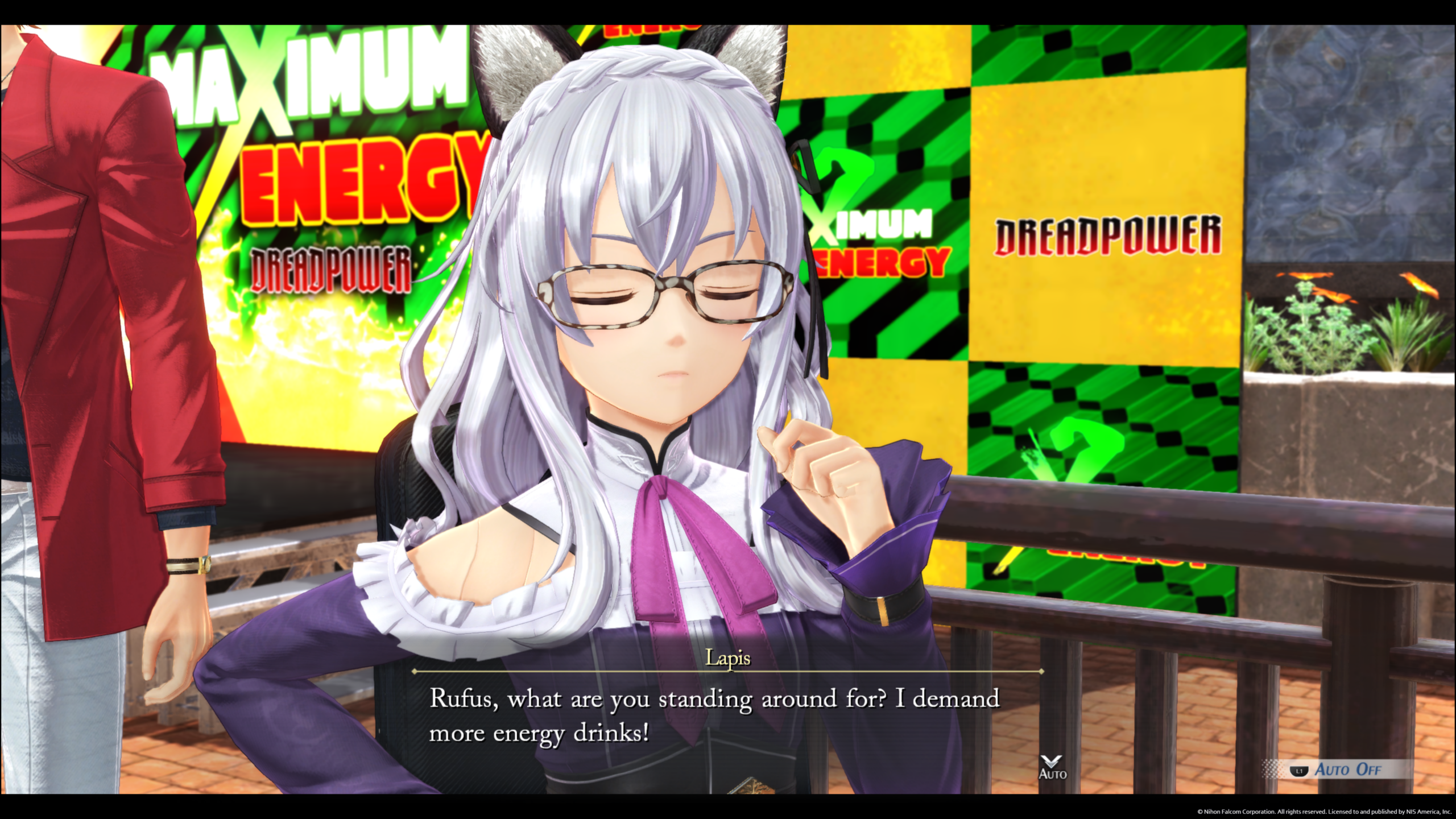
Kevin and Rufus’ group is a little disappointing, but only by virtue of how strong these characters usually are. Kevin is almost a decade out from overcoming his trauma, but at the same time it feels like he isn’t allowed to do that much, especially bereft of his sister Ries. There’s this interesting angle of Kevin trying to sacrifice his ideologies for the sake of the world that could definitely be approached, but as I mentioned earlier, it almost comes across as a retelling for the sake of nostalgic remembrance. Like “Oh you know Kevin! He had a darkness to work through underneath that funny guy bit! He’s back at it again!” which hits a little rough after Sky 3rd dedicates so much time to bringing him out of that darkness.
Which is a similar problem for Rufus and his picnicking front, though it is much less severe given Swin and Nadia’s fleshing out in Daybreak II. They continue to have a great Team Rocketesque vibe going on that stood out to many when they hit the scene in Reverie, but a lot of that is stifled by their representation of a morality that Kevin must adhere to. Rufus can say he’s evil and crooked all he wants, but his actions will never reflect that because the situation will never demand it. Lapis is allowed to suck though; we all love a faildaughter.
Though I mentioned a big part of the issues with this game is the routes not feeling distinct enough, it’s not really because of any specific problem with any given party, but more Horizon’s nature as the third entry in an arc. When Van meets up with that NPC you know from previous games, there’s an immediate rapport and remembrance; we’re continuing something here. When Rean or Kevin run into someone Van’s group knows for one of their quests, they usually bemoan that Van isn’t there for a moment, before jumping right in as if the group had that level of familiarity with them.
From a player perspective this works just fine because of course We know what’s been going on with these storylines, but for the in-game narrative vibes, it sort of throws a weird wrench into things. Trails sidequests can take up most of any given game’s runtime because we’re seeing a community grow and learn interdependence as any relationship does; we’re getting the payoff of watching how all these characters change and address similar issues as they grow and learn. It’s a lot harder to get that full payoff feeling when it’s Rean Schwarzer going “oh hello, child Van helped escape from his abusive father in game #1, I guess I’m going to talk to you like I vaguely know you now.” It’s not the worst ever, but it does create a little narrative dissonance that I hadn’t really run into in past games, especially since Reverie is so uniquely structured, and Daybreak II’s routes always ensured there was a member of Van’s group around to give context. The quests are still good, but they’d hit harder if they were actually tied to the characters experiencing them, which is a problem that’s just… never come up before.
I mentioned that these quests range in severity, but things feel very similar to Trails to Azure in this department. You’re running into a lot of storylines that relate to what’s going on behind the scenes with the bigger picture, and oftentimes acting as a result of that bigger picture. Particular standouts involve dealing with the continued exploitation of migrant workers, and a homeless artist who’s turned her life around struggling with the idea of her art becoming commodified by the wealthy she disdains. These are really great contemporary concepts that wouldn’t be too out of the norm to find in an RPG, but the level to which it’s dissected and examined, as always, sets Trails apart.
Bolstering all this is an absolutely stellar localization that I was continually stunlocked by. Every character has a distinctive voice (aided by a consistently improving English dub that I can easily recommend), helping the prose sing in a way that showcases the quality of the translation. There were over six writers credited under translation, and just as many editors; their hard work and genuine passion shines through in every crass line from Aaron, every detached nicety from Risette, and all the shits and fucks they’ve managed to cram in. An interesting aside about the informing of the original text on localization changes, Mirabel is a character that now speaks with a southern accent since she’s supposed to be from the same area of Zemuria that Kevin does; which is very funny to see from the outside as some sort of Forced Cowgirlification.
As the Daybreak games take place in a much more familiar and modern setting than past titles, they’ve understandably leaned more into the type of slang we see in our real world. In previous games this manifested as the occasional “same” or “rizz” drop, but here we’re firing on all cylinders 24/7. When you see the new Ouroboros enforcer call The Thousand Oathbreaker Unc while they talk about him getting ratio’d online… it’s cinema. It really helps elevate the vibe of this place that’s almost like our real world, but ever so slightly different.
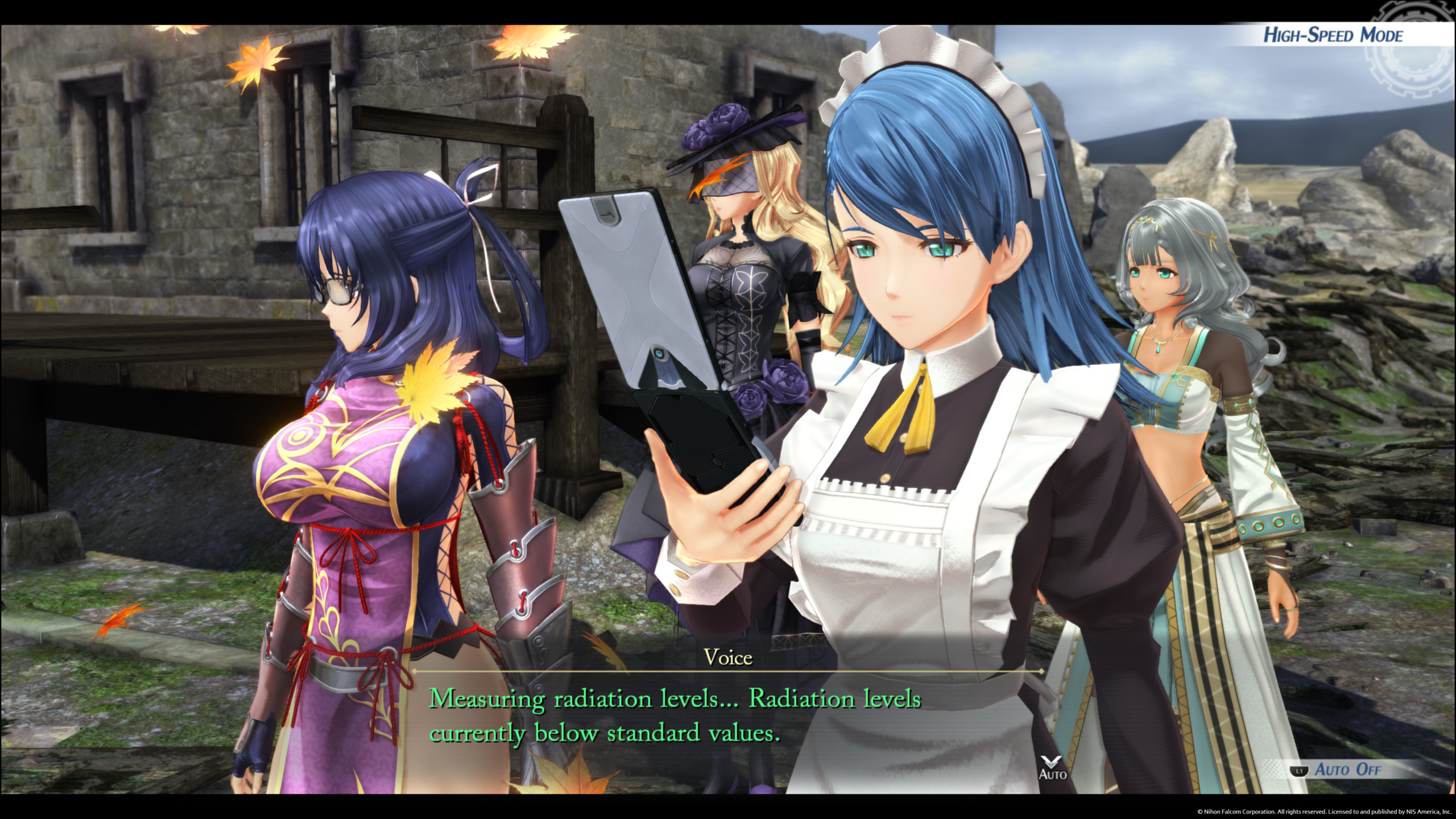
This has actually been a major issue some people have had with the Trails series—technology moving incredibly fast—but Horizon takes great strides in maintaining exactly what makes sense for the setting, and also why these technological advancements might happen to begin with. It’s one thing for Apple to organically create the iPhone over a period of decades, but it’s another for Apple to receive the iPhone in 1980 and then reverse engineer it over the next few years. Human nature is all about learning and mimicking before making something our own, so it’s great for a series to examine just how far you can take that concept when married with fantastical concepts.
It’s soooo cool that as you go around this country stupefied by the Space Launch, you’re seeing younger people watching YouTube on their phones, while news broadcasts are plastered on giant screens in the streets of popular town hubs. This is a world that never had TV! This is a world that jumped from Radios to an iPhone! That’s so cool! They don’t have a stable output of cinema yet because there’s no home market pipeline of VHS to DVD to Digital for anything to be based on! They just re-run that shit every few months like the 1900s! It rocks!!!!
It’s one thing for a world to suddenly pivot to future tech (think Final Fantasy), it’s another to gradually integrate and interrogate how the medieval peasant would be affected by the advent of the Dorito. It reminds me a lot of Ascendance of a Bookworm, one of my favorite light novel series, because Trails genuinely cares about the world its characters live in, and how it informs their world view and vernacular. Bookworm does this with the implications of what providing the working class with literature and information does to change society, and Trails approaches it from every conceivable angle. We watched our own world change dramatically as telecommunications technology developed rapidly over the last 50 years, and it hits even harder in this world where countries once separated by monsters and mountains are able to intermingle and uncover things about themselves and the world.
I don’t want to spend too much time just talking to you directly about what precisely the ending to Trails Beyond the Horizon is—everyone who’s played a Trails game knows that there are endless cliffhangers and absurdist revelations at the climax of most—but I will say the most surprising thing it did for me was improve upon what Trails Through Daybreak II had fumbled with; which is something I’ve rarely seen a game do retroactively and well. By the time you finish Horizon, you have a complete understanding of basically everything going on with the previously uninspired and confusing antagonist of Daybreak II, and not in the sense of “oh they fleshed out his backstory now with a text log” or something, but because it appears your confusion at his diatribes was intentional. It’s such a novel and interesting concept that works perfectly within a series with a defined lineage like Trails, while even series like Kingdom Hearts has stumbled to maintain cohesion.
That’s really my continual message with the Trails series distilled: it’s able to consistently pull off and do things that every game could have the potential for, if the limitations of industry and marketing didn’t get in the way. When I think of my childhood yearning for series like Dragon Age and Mass Effect—these big interconnected epics that spawn multiple entries and remember your every action—I find it meaningfully accomplished here in the budgeted and ambitious world of Zemuria. Sure you might not have the sweeping grand set-piece moments, or sexy AAA fidelity elves crooning into your ear, but the heart is here, limited only by the time they had, rather than what they think it must be, and that makes all the difference.
Those Trails Keep On A'Blazing
"Awesome"
Trails Beyond the Horizon is another stellar (haha!) entry in the long-running series that never stops impressing.
