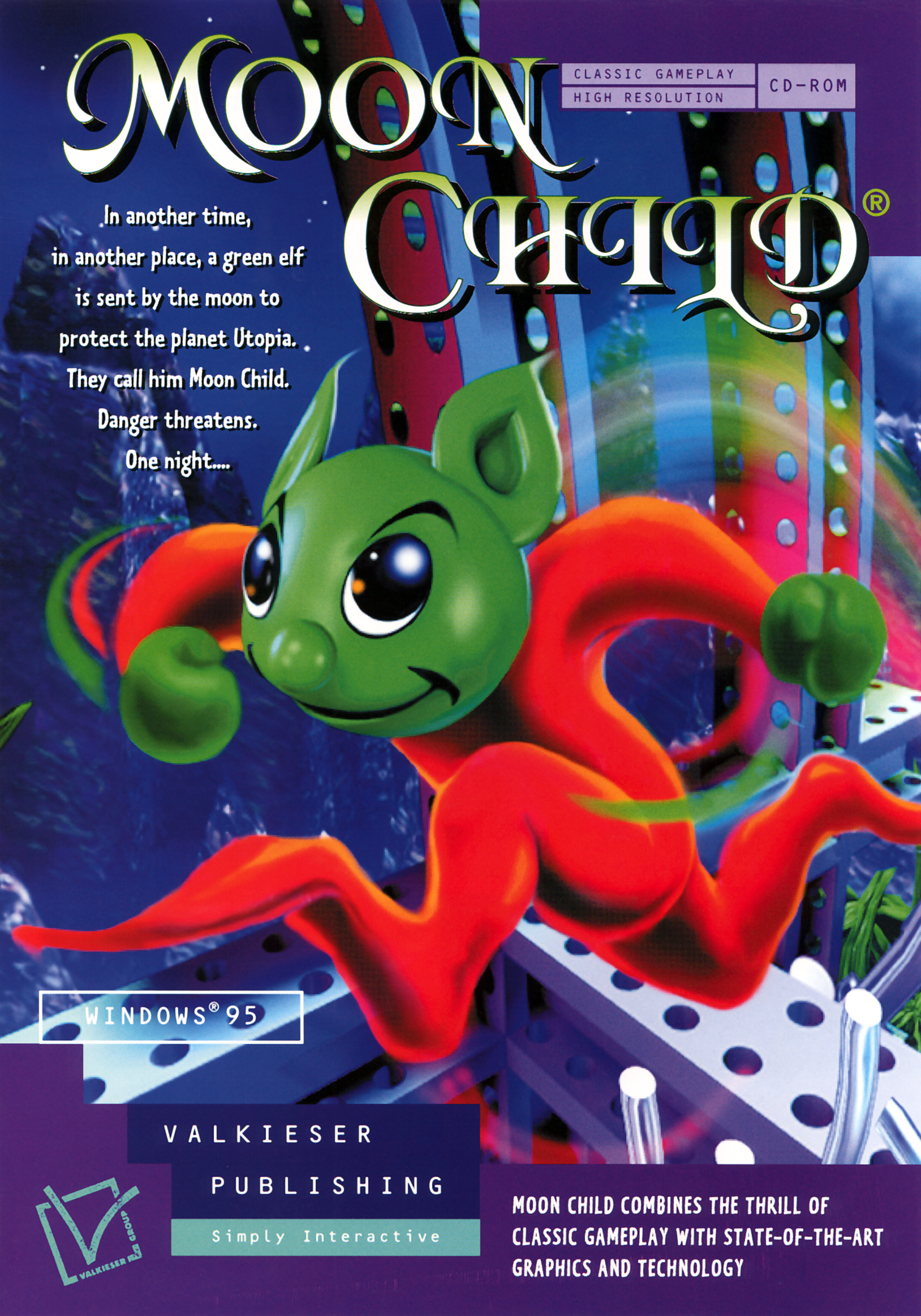
1997 PC platformer Moon Child recently got a bump of attention after Games That Weren’t posted gameplay featuring its ear-worm theme song. The game, only released in the Netherlands for PC via CD-ROM, was originally pitched for Commodore Amiga before a variety of roadblocks led to its limited release. Thanks to a jolt of interest on Bluesky, Moon Child has been embraced as a beloved little guy, easily getting added to people’s Tomodachi Life islands with the promise that their Miis have the power to be his friend. I reached out via email to Metin Seven, former member of Moon Child developer Team Hoi, to ask a few questions about the work behind Moon Child and their other projects, comparing the struggles of developers in the past and today, and recognizing the surprising fandom a thirty year-old nearly-unreleased game has birthed.
John: How does suddenly getting recognition on this project now feel?
Metin: I almost can’t express how joyful it is to witness all the emerging love for Moon Child and our other games. It’s a wonderful, surreal, wild ride, and it pretty much makes up for the repeated bad luck we experienced during our game development years. We’re much enjoying it while it lasts.
John: What previous media inspired the gameplay of Moon Child? Games for the gameplay, of course, but the look as well?
Metin: We all came from a Commodore 64 and 8-bit game console background and played lots of games before starting to develop our own games, but in the case of Moon Child, our goal was improving upon what we did before, when we created our preceding Amiga platform game called Hoi, which was published in 1992 after a delay, and was surrounded by bad luck with publishers.
For Moon Child‘s look I was inspired by the magical nightly atmosphere of a 1991 Capcom arcade game called Midnight Wanderers, which was part of an arcade cabinet featuring three games, collectively called Three Wonders. Next to this, another Capcom game is among my all-time favorites: the Ghosts ‘n’ Goblins and Ghouls ‘n’ Ghosts series, also featuring a nightly, spooky atmosphere in a cartoonish style.
John: How was the development process back then compared to today? Do you think it’s better or worse now?
Metin: Well, we have been ripped off by publishers three times during our game development years. Those early years of the digital revolution were like the Wild West of game development. I guess the most painful experience surrounded the development and release of Moon Child‘s predecessor Hoi…
Hoi would first be published by the US-based publisher Innerprise Software, formerly known as Discovery Software International, famous for the classic Amiga games Hybris, Battle Squadron and Sword of Sodan.
In 1991, when Hoi was about 60 percent finished, Innerprise Software asked us to send them the latest version of the game, for internal evaluation and testing purposes. About three weeks later the Hoi version we sent to Innerprise turned out to have been leaked to the Amiga hacker Fairlight, and was rapidly being copied by Amiga users around the world.
We cancelled our agreement with Innerprise and found a new publisher, also in the US: Hollyware Entertainment, formerly known as MicroIllusions, publisher of The Faery Tale Adventure and Music-X.
But following the release of Hoi, Hollyware never paid us any royalties apart from an initial $200 cheque “for the release celebration party”. As we were three young chaps in a different part of the world, we did not have the resources to legally fight the lack of proceeds from our hard work. It was a deception that would occur again after the release of our puzzle game Clockwiser by the UK publisher Rasputin Software.
Both Hoi and Clockwiser were received warmly by the international game press, which made the events with the publishers even more sour.
Subsequently, we were determined to create a new, better platform game, featuring an elf-like character, and the Hoi character as an automated sidekick. But by the time we had completed the Amiga demo version, Commodore went bankrupt, and the Amiga’s future became uncertain. As we still hadn’t earned money with our games, we got the opportunity to start a semi-independent game development division at a local multimedia company. There, we reinitiated Moon Child for Windows, finally getting paid for our work, and we took advantage of certain PC hardware capacities to double the game’s resolution. We decided to leave away the Hoi character, and focus on Moon Child.
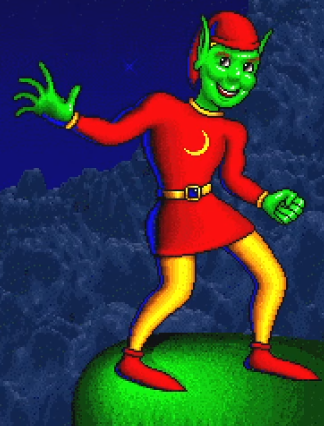
When Moon Child had just been released in the Netherlands, bad luck struck again though, because the company had invested heavily in Philips CD-i authoring hardware and software, which turned out to become a flop. By the time Moon Child would be published internationally, the publishing department was discontinued. So Moon Child remained stuck in a Netherlands-only release.
Later, we found out that the game had been living a life of its own in the worldwide piracy circuit, and through the years I’ve been receiving e-mails every now and then from people expressing the childhood joy Moon Child delivered, which is really heart-warming.
Reading the very sympathetic response of the current game dev community to Moon Child (and Hoi), I sense a connection between what we experienced with game publishers and the current state of the game publishing world, which is increasingly enshittifying, for example with the adoption of generative “AI”.
John: Were there any specific influences for the theme song? Why did the composer take the direction they took with it?
Metin: Ramon Braumuller, our composer, started playing drums at age six and joined bands by the age of twelve. In the early 1990s, he and his brother Ruud produced House music in their small studio. They were named ‘The R.’ Ramon thinks the blend of those House music influences and the Amiga demo-scene tracker music formed the foundation for the Moon Child track. He also sang the vocals in the Moon Child Amiga demo title track, using old school gear to realize the chorus: ADAT multitrack-recording onto VHS tape, then sampled the mix into the Amiga.
John: How’d it feel working on a traditional platformer in the wake of the shift to 3D, whether you knew it was coming?
Metin: I clearly remember that formed a growing dilemma for us back in the 1990s, when Wolfenstein 3D, Doom and Quake were accelerating the attention of gamers to 3D gaming. I started practicing 3D creation in 3D Studio MAX (as 3ds Max was still called in the 1990s), but our coder, Reinier van Vliet, was hesitant to make the switch from 2D to 3D coding, and I don’t blame him. It’s literally an extra dimension you need to handle. Back in the 1990s there were no prefabricated 3D engines you could adopt.
In the course of the 1990s, after the Moon Child release had [been] stranded in the Netherlands, we decided to shift towards multimedia development: CD-ROM games and applications for companies and brands.
John: Which of the memes has been your favorite, and did having something you made find an audience in such a different way 30 years later take you off guard?
Metin: I love just about every piece of Moon Child themed expression I see on Bluesky, but I think I like the whimsical animated parodies made by Bluesky user LVL?KEN / @ricesnot.bsky.social the most.
(Note from John: Ricesnot/Icesnort is a great YTP creator/vidsmith and I’d recommend all of his work. He’s also part of a dev team called Gravy Crew Games that recently released a game called Rules and Rodents.)
Witnessing our games getting so much love and warm responses is a genuine emotional experience after we spent around ten years creating games without a real breakthrough that would have allowed us to keep creating games. After reading the positive reviews of our games in the game magazines of the early 1990s, our frustration grew when we turned out to deal with yet another unreliable publisher.
John: Was Moon Child going to evolve beyond the game if it took off? Do you have ideas for the character, or was it a design first? How has the fan response changed him as a character for you, if at all?
Metin: We always liked to fantasize about people wearing suits of our characters at games conventions, haha. And of course we would have liked to get rich with merchandise and big commercial deals, such as “Moon Child: The Movie” haha. But in the end, the sheer fun we had creating games together, inspiring each other and reading positive reviews in our favorite game magazines at the time was priceless and lasts a lifetime.
And the fan response is just wonderful. Moon Child has suddenly become the iconic character I wished he would become back in the 1990s. I created the first version of Moon Child back in 1991, when we had just experienced the setback from the first publisher, Innerprise. Later I streamlined his appearance to match the speed of Moon Child‘s scrolling. Never would I have thought that he would be elevated to fame more than 30 years later. Life can be full of surprises.
John: If Moon Child was voiced, who would you like to play him?
Metin: Oof, tough question… Sylvester Stallone, haha? Maybe Jim Carrey? In the days we made games, game characters didn’t talk yet, haha.
John: You released the source code and a level editor. Why was that your response to this sudden popularity? What do you want to see done with this now public?
Metin: When the second Hoi game publisher turned out to be unreliable, we decided to release Hoi to the Amiga users for free in 1993, released as a remix version with some minor improvements. It felt good to do that. Money isn’t everything, and we loved the idea that many Amiga users would get to know the game we had been developing for more than a year.
When Moon Child went viral on Bluesky, we wanted to do something similar: to return the appreciation of the gaming community by releasing the source files and assets, so anyone can have fun with the game, make ports, mods, etcetera. We can’t wait to see what people will create with Moon Child.
John: What is Moon Child’s perfect Sunday?
Metin: Chilling in his natural environment, sitting next to his pal Hoi, while chuckling at the funny Moon Child memes on the internet.
John: What is the team doing these days? Anything you want to share?
Metin: Around 2000, I returned to freelancing and became a magazine illustrator, newspaper cartoonist and toy modeler. I’ve also worked as a Technical Artist for the Blender Foundation for a while, which is based in Amsterdam, not very far from my hometown.
Reinier returned to game development for a number of years in the early 2000s, shifting to mobile games. We made one more game together for a company he worked at in the early 2000s, a China-themed game called Yin Hung for the Nokia N-Gage. After that, Reinier moved on to creating apps for banks, and these days he’s guiding other coders in the same field.
Ramon plays the drums in a popular Dutch party band, and creates soundtracks for high-profile Minecraft content creators on YouTube.
The three of us are still friends, frequently messaging each other, and going out for dinner every once in a while.
If you wish to play Moon Child for yourself, the game is available to be played in-browser here, or downloaded from Archive.org.
