
Not to repeat the exact same spiel I gave earlier this year when I reviewed Trails Through Daybreak 2, but I love the Trails series deeply. As a fanatic of deeply considered world building and the slow burn writing style, it’s like being treated to a delicious feast with each new entry, and it has created a bar of quality that its RPG peers struggle to reach in the constant fight for my praise. No matter how far into the series I get, the hits of dopamine from ‘knowing place’ or ‘recognizing name’ just go harder and harder, and watching its story grow across 10+ entries is something that no other game series has had the confidence to match.
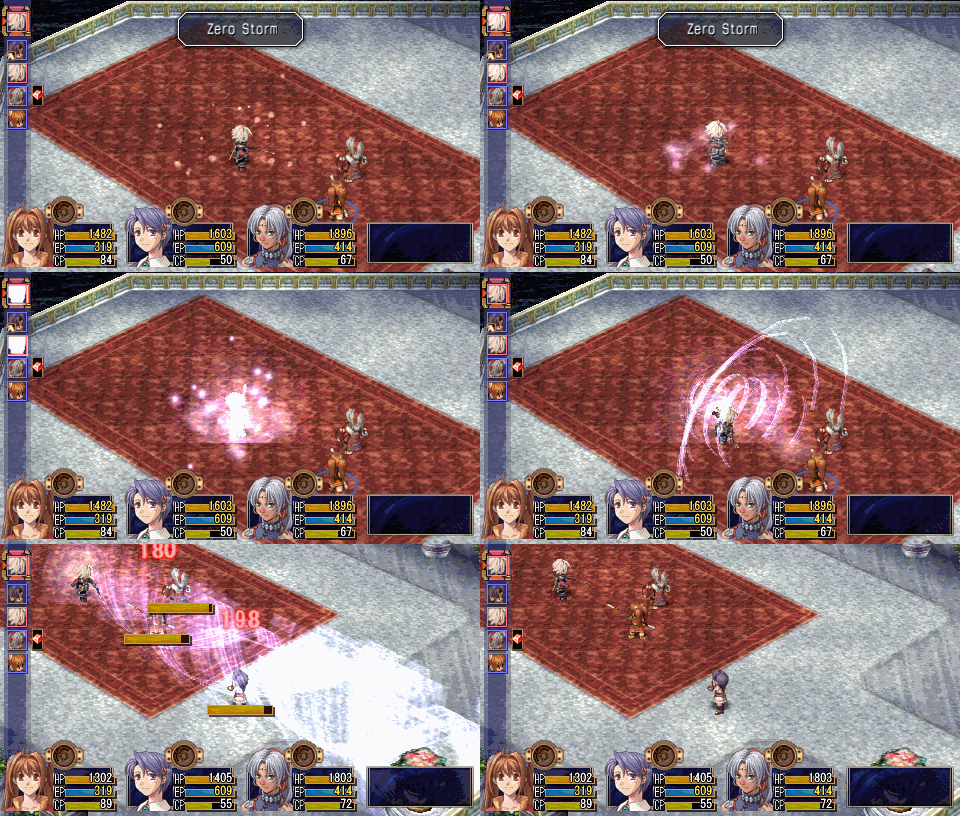
As seems inevitable with such a long running series however, developers Nihon Falcom announced they were working on a remake of the first Trails title, The Legend of Heroes: Trails in the Sky, earlier this year. Although I understood the logic behind attempting to ‘create a more accessible entry point’ for the series, I was filled with trepidation. How could they possibly capture the charm and swag of the original’s picturesque diorama- style world? How could the more modern low-budget 3D the series pivoted to after its Cold Steel arc even dream of matching the feeling that you’re watching a bunch of dolls get mashed against each other while you look at all sorts of beautifully retro expression sheets in dialogue boxes? How could any sort of remixes live up to the raw early 2000s just-evolved-past-MIDIs jams?
While there are a couple snags, I have still found myself reasonably impressed by Trails in the Sky’s “1st” remake, and I think it establishes itself as a fantastic gateway into a series that many have viewed as impenetrable.
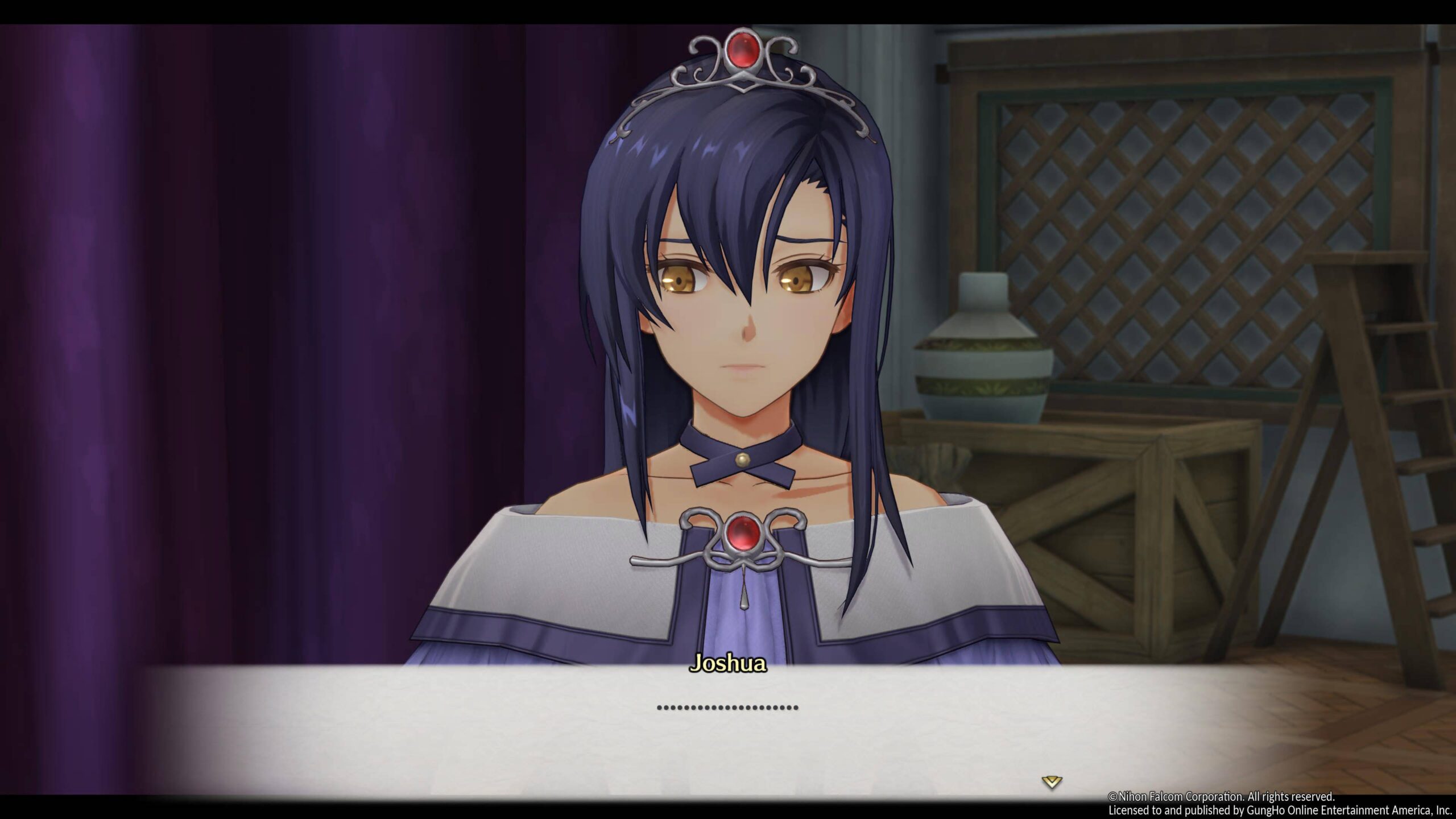
Trails in the Sky takes place in the fantasy nation of Liberl: a small country that’s slowly healing from a brutal war just a decade earlier, and one continually coming to grips with the changes brought on by a technological revolution. Its story follows Estelle and Joshua, two adopted siblings who have trained through their teenage years to become “Bracers”, a community-focused group of everymen who solve all sorts of problems from finding missing family members to eliminating dangerous monsters that roam the countryside. Just as they finally complete their training, they are quickly swept up into a series of seemingly unconnected events that take them all over the country, forcing them to learn about (and help) all sorts of different people.
From that basic description, Trails in the Sky sounds like the most RPG an RPG could be. Plucky young heroes… fighting monsters… going to various towns… it has a vast amount of the staples that make up not just its gaming peers, but the fantasy genre as a whole.
What makes the Trails series distinct is just how in-depth and reactive its world and characters are. Every NPC updates their dialogue after nearly every story beat, creating arcs out of their own mundanity, and adding to the feeling of a dense and alive setting. You’ll learn about random family drama, complaints about supply lines that are gradually dealt with, maybe even witness the seeds of what will become important plot info for future quests. While most RPGs are beloved for their flavor text, Trails takes it to the extreme, and as intimidating as it sounds, it cultivates an extremely cozy and exploratory vibe that you can’t find anywhere else, even in juggernaut RPGs like Baldur’s Gate.
I could keep going on and on with a base level explanation of what Trails in the Sky is, but as I’ve established, I’m a Trails sicko! I played Trails in the Sky years ago now, and I’m all the way into the crazy modern games where you’re finding the super advanced airships from this game in junkyards while the new main character drives his Ford truck past and calls them old! I can’t sit here and pretend to describe this game from the basic level when I basically have a PhD in Trails! Instead, let’s spend some time talking about what has and hasn’t been remade and adjusted in this more modern take on a game that I absolutely adore.
Immediately, the biggest change is with the combat system. No longer bound by the isometric grid based environments of yore, Trails in the Sky 1st adapts the hybrid “real-time into turn-based” style of combat that the recent Trails games have cemented as a new standard. You’ll do some pretty basic hack and slash combat, with the ability to switch to turn-based gameplay in a fixed arena with the press of a button. In-practice, you’ll generally go for stunning an enemy with attacks in the overworld, and then finishing them off with more precise and elaborate moves in a turn-based battle. Just as in Daybreak, the real-time combat isn’t anything to write home about, but it does allow you to deal with repeated random encounters with incredible ease compared to the average turn-based experience of mashing the run button once you’ve had your fill of fights.
Also brought in from future titles are things like support XP and party gauges that can be utilized for strong and flashy follow-up combos, which are incredibly welcome improvements over the clunky chain attacks of the original.
Interesting as well are changes to the timeline buff system that the Trails games have all used. Every character’s turn has a random chance to gain some sort of passive attack – things like a guaranteed critical hit, or mana restoration – and the tactical idea behind the combat was that you would try and use characters’ speed stats, as well as their turn stealing S-Craft moves, to exploit these buffs in your favor. In practice, however, this meant you basically just saved your S-Craft moves for whenever you saw that guaranteed crit coming up, and then just blew all your enemies up in a single turn…over and over again. In 1st, you have to use moves on your assigned turns that have a ‘steal modifier’ instead, forcing you to plan ahead if there’s danger on the horizon. While you’ll quickly find yourself in new routines of combat like the original, I found that this change had me thinking a lot more strategically about the harder fights in the game, especially when playing on the higher difficulties.
Visually, this may be the best looking game to come out of modern Falcom. Earlier I bemoaned the sort of budget 3D the series has become known for, and even with more recent entries like Trails Beyond the Horizon amping up the style and camera direction that’s started to feel stagnant over the years, it’s always been much less compelling to me than anything else they’d put out in the decades before ‘HD’ poisoned the well. Look at Popful Mail! Look at Trails to Azure! These are games working with what they have, rather than what they feel like they have to aspire to, and it’s always felt meaningfully distinctive to me.
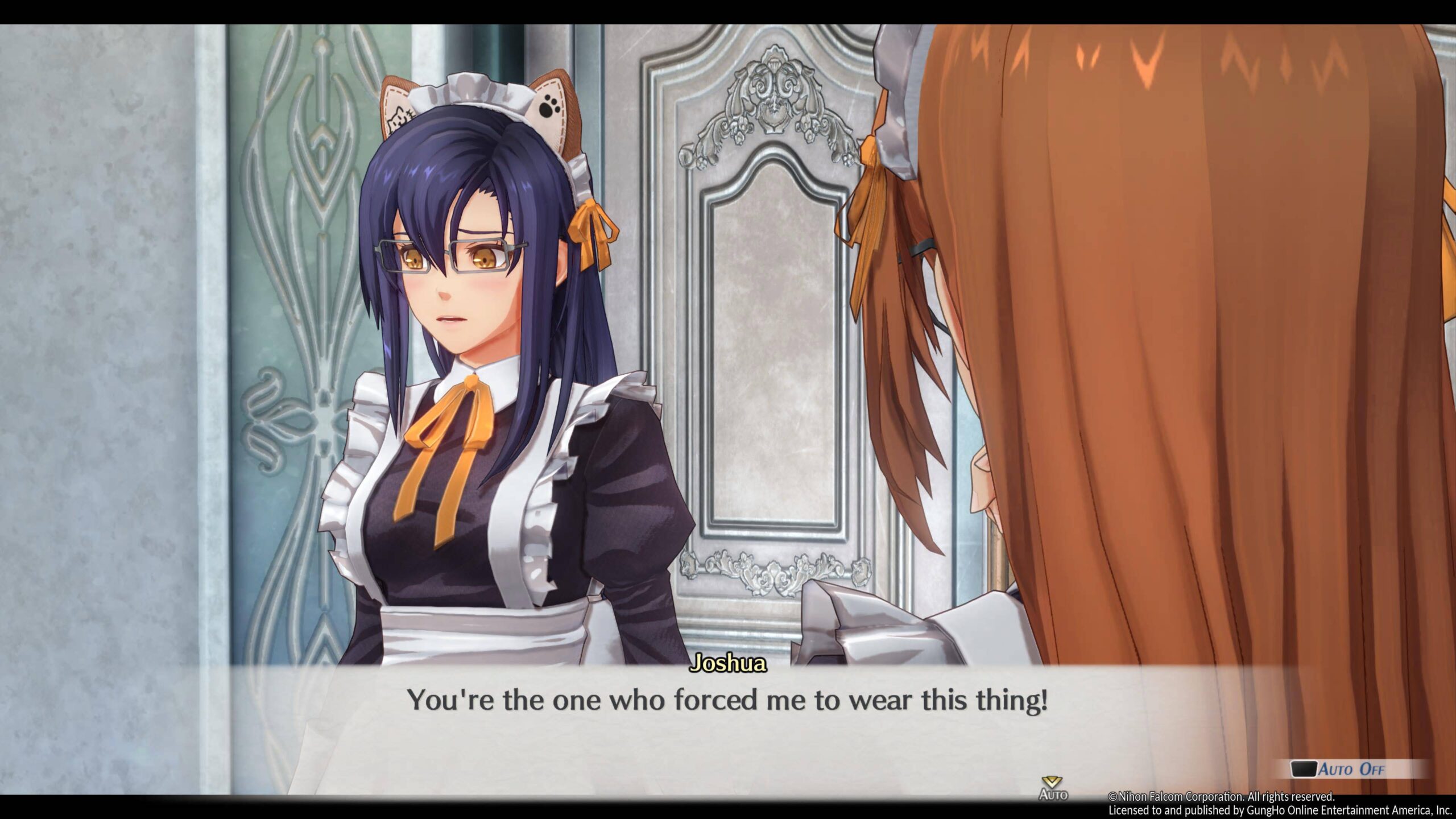
Sky 1st goes for a cel-shaded aesthetic that really helps emphasise the strengths of the original’s early 2000s anime design philosophy. Characters constantly switch between gag manga style expressions with dotted eyes, or foaming mouths when overwhelmed or knocked unconscious, and there are a lot of great comic book style thwack effects accompanying every move that captures the inherent goofy low-fantasy vibes the Sky trilogy relished in. On a more technical level, being able to actually see Joshua’s eyes dull during certain attacks because of the increased fidelity makes certain sequences pop even more than they did in the original.
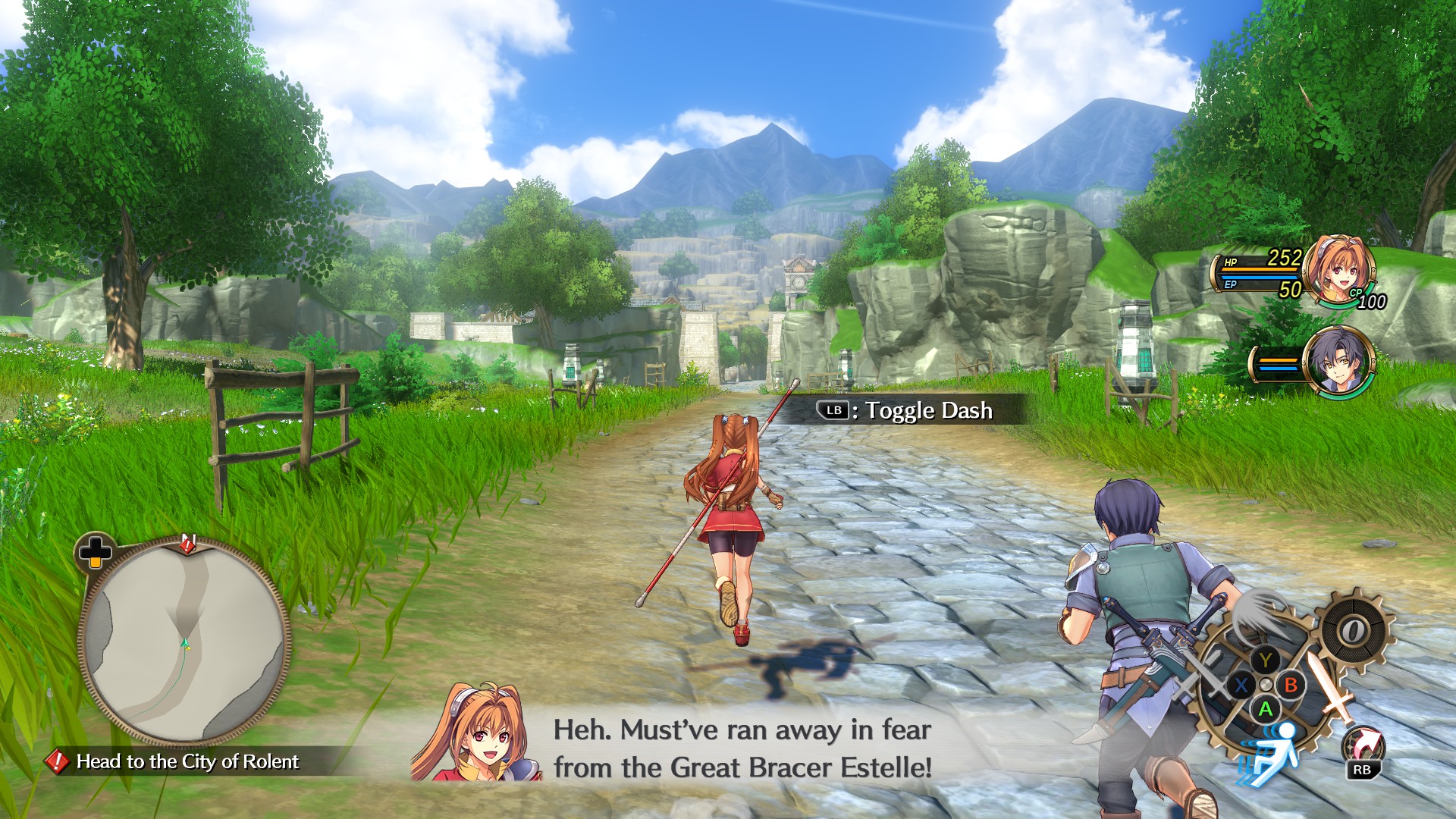
Every map has been faithfully recreated as well, albeit in a more seamless form. The original Trails in the Sky was formatted similarly to a lot of older RPGs with maps occupying certain amounts of “screens” separated by load times, an approach which has its own sense of charms, and in some cases let developers (like the Monster Hunter team) create environments that were both visually and structurally different without having to worry about world consistency. While this mattered more in games like Final Fantasy, where the creatives wanted to cultivate complex and fantastical worlds that felt larger than they actually were, it mattered less in Trails in the Sky where things are a lot more grounded.
With open areas, you get a sense for just how big (and small) Liberl is as a nation, and the way areas lead into each other feels incredibly natural. With the only real loading screens being the interiors of houses and border checkpoints, the vibe of the world ends up being a lot more cohesive. You understand full well why Bracers like Joshua and Estelle are hired to protect people in the unkempt wilderness between settlements (there’s so many freaking monsters around!) and you understand why the rise of the airship and other forms of transit have completely changed the way these people are able to navigate the world around them. At times I did miss the feeling of “hey they used the language of a video game dungeon for the generic outdoors, that’s super cool”, but being able to just seamlessly enter towns and listen to the music change and watch everyone tuck their weapons away feels just as satisfying.
Similarly, the improved camera direction – especially in the more important scenes like character introductions or crucial moments – helps add oomph and impact to a lot of fairly basic sequences. There will always be that appeal to the original’s aforementioned doll mashing, but I would be lying if I told you I wasn’t dying to see all the pop-off moments from Sky Second Chapter done like this whenever they get around to it. The Aura Farming is much more impactful when they can have the wind blowing through their hair, and the camera slowly panning up billowing coats.
Other than that, the meat of Trails in the Sky is pretty much completely intact here. Events unfold exactly as they did before, even in spite of comments made in pre-release interviews suggesting that there was going to be “new content linked to future games”, with the exception of a few side quests added to flesh out characters that are further expanded upon in Second Chapter. Unfortunately, there was no hidden child Rean Schwarzer cameo for all the power scalers out there, and honestly I think that’s for the best since it helps keep the quaint and low-stakes setup that Sky establishes for itself.
A huge benefit to replaying Sky all these years later is realizing just how much Falcom had seeded and remembered throughout each consecutive title. Every time I ran into a reference to something I knew mattered more in a later arc, I had to double check the original every time to make sure it hadn’t been added in, and almost every single time it was just already there. All of the setup for Second Chapter, and characters like Loewe especially, had me blown away by how much they had actually told you over the course of that original game, mostly through subtext and one off lines. Trails is a series that rewards you for caring about its world and characters, and seeing how it was already like that right from the get-go felt like renewing vows with my beloved video game wife.
The only thing that really hurts this remake in the end – and unfortunately, a pretty severe thing – is its localization.
If you know anything about Trails in the Sky from the outside, chances are it’s about the infamous task of localizing the original Trails in the Sky trilogy into English. Long story short: it was a huge pain! There’s a lot of dialogue in a game with constantly updating NPCs, and with terms and items that are maintained across several games, it was an ordeal that required tons of patching, editing, double checking, and reworking over five or so years. Some complain that its end-state can be a bit heavy-handed when it comes to characterization, but to me it’s a shining example of exactly what a localization should do: accentuate character voices and rework prose into a state where it feels more natural to read in its new language. When I think of Trails in the Sky I think of the specific way party member Olivier talks when he cracks his stupid smile, I think of the tenderness in Kloe’s mannerisms, and I think of Estelle and how often she threatens people with her giant Staff.
All of those character traits remain to some degree in publisher Gung-Ho’s new localization, but they are continually subdued and marred by a baffling decision to focus on a direct translation to “Honor the original Japanese text”. Gone are most of Estelle’s lightly reactive quips in favor of dozens upon dozens of “what was that?”s and “huh?”s. There are countless line changes that come across as amateurish in the remake, even if the original could be considered over the top. One that stood out to me specifically was during a tournament late in the game, where two divisions of the military are fighting each other. The original localization had the line “We’ll show em twelve kinds of hell, army style!”, while the remake instead offers “Special Ops…We will show them the power of the regular army!”. Even if the first line is a bit excessive, it fits into the cartoony presentation of the army that has been seen across western media for years upon years, while the new line comes across as clinical and divorced from any individual voice; a functional line, which is a concept that runs completely antithetical to what the series has been about to-date!
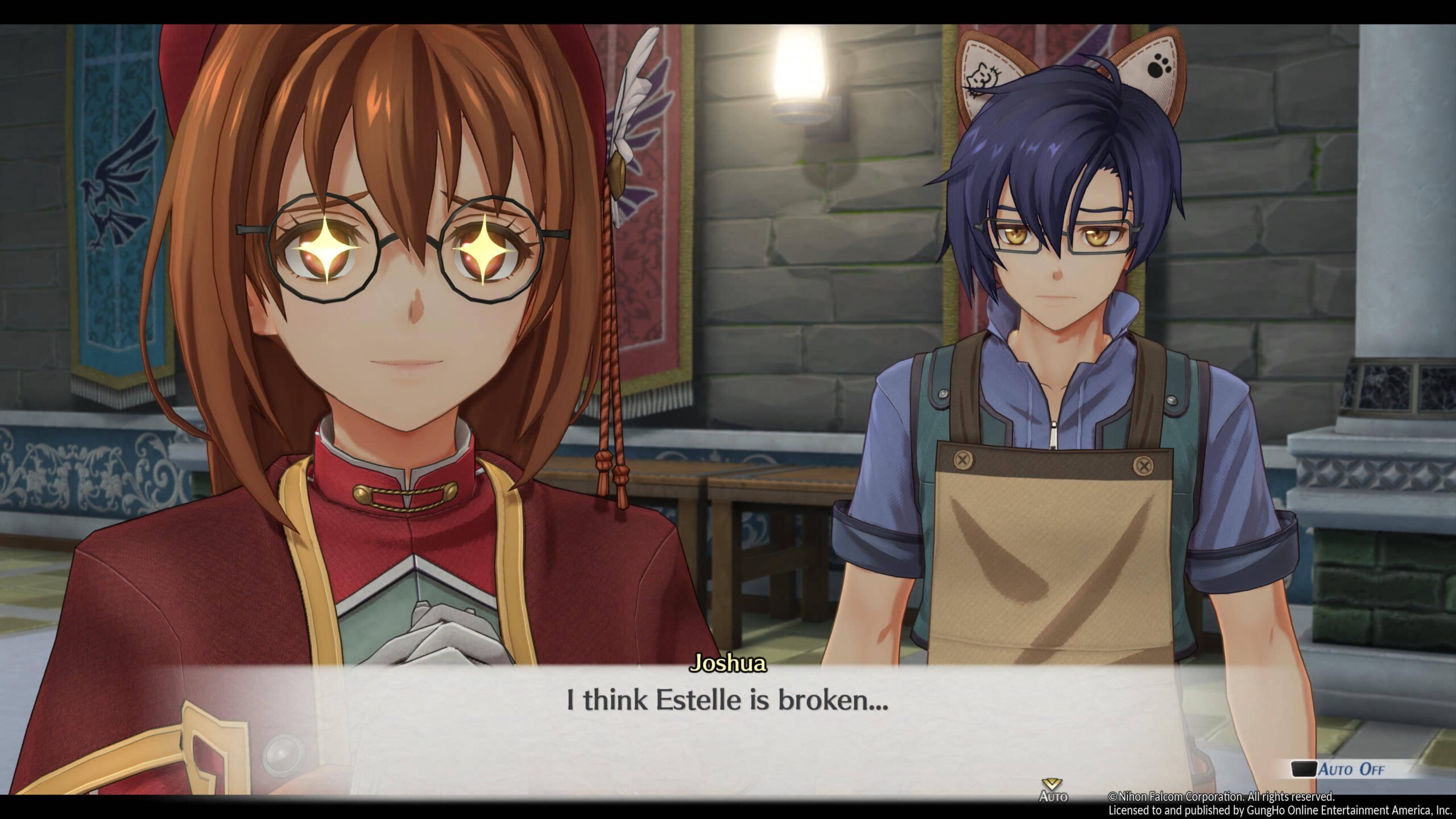
Similarly, several series staples and titles have been renamed inexplicably, with some being fixed over the course of patches for series consistency, and I just…don’t understand why? Why after so many years would you decide to change “Divine Blade”, a title critical to so many characters in so many games, to the incredibly basic “Sword Saint?” Why would you change the genetically engineered Acerbic Tomatoes, named as such because they were cultivated by a scientist who would use that sort of elaborate naming convention and which are consistently called as such in all subsequent games, into the incredibly childish “Bitter Tomato”? Did they really read the line now present in Sky 1st of “Bitter Tomatoes…wow this is bitter!” and think they nailed it? Am I supposed to be impressed by flavor being taken away?
By changing so many of these names with little thought directed towards the established series vernacular, it actively gets in the way of those big ‘recognition’ moments that makes the Trails series what it is. How will a new player who decides to go more in-depth into the series feel when every other game has entirely different names for things? Sure, they’ll eventually figure it out once they get past this one game, but shouldn’t this be THE new entry point that makes the rest easier to stomach?
There are other miscellaneous NPC name mix-ups that have gradually been fixed over time, and I’m sure other things will get ironed out as people point them out, but I just don’t understand how or why this would ever happen, and it really bums me out that for a remake that otherwise does basically everything you would want a fancy remake of an old game to do, Sky 1st stumbles in what should be its strongest aspect. The game is still fundamentally based on that original script done by XSeed, but sucking out so much of its soul hurts as someone who loves the game because of how I got to experience it originally. The defining point of the Trails series is its characters and watching them grow and change over time, and seeing that disrespected in favour of either acquiescence to the worst Internet posters you’ve ever seen, or obsession with some platonic objective ideal of translation is incredibly saddening and worrying to me with a Second Chapter remake on the horizon.
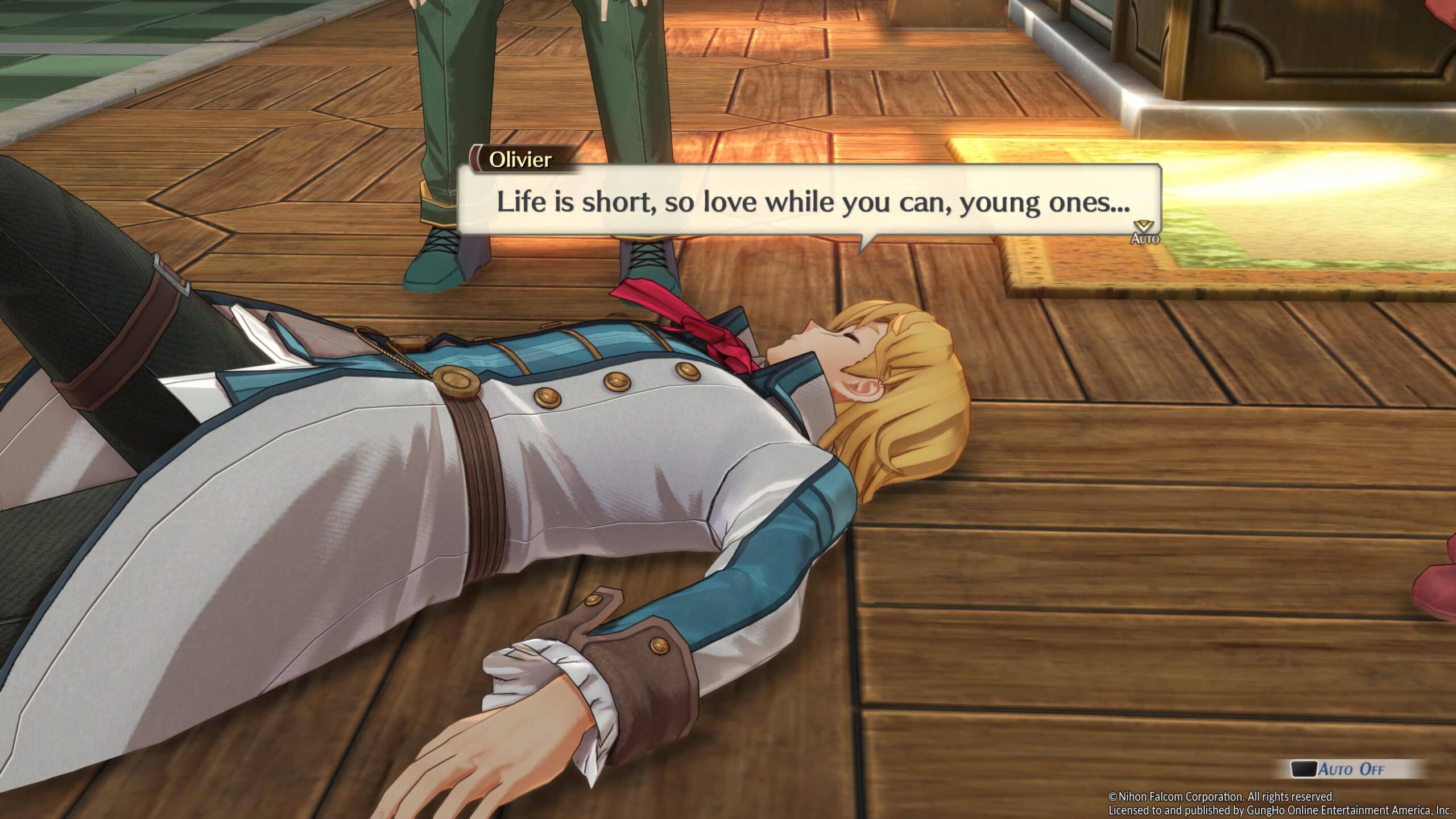
I worry that my complaints here seem too severe, especially since most new players probably won’t notice what’s missing or what’s been done (especially with how historically bad most localizations can be in terms of stiffness and clinicality) but I have to be true to my beliefs…my beliefs that Estelle should be asking Olivier if he’s “one of those boys who likes boys”, instead of the incredibly dull “wait you have that kind of preference?”
There are plenty of things this remake does well enough though for me to easily recommend it as an entry point for anyone who’s been scared of trying Trails before. Quality of life changes extend beyond just the battle improvements and world traversal, bringing more modern conveniences like no longer hiding side quests, and marking important objectives on the map. It’s no exaggeration to say that once Trails Through Daybreak added the ability to see what NPCs you’ve already talked to with different icons, and letting you know when shops had added new items, it changed everything for the better, and it’s wonderful to see these features ported backwards.
At the end of the day, though, I struggle to validate a remake in a culture full of remakes. It is at least nice to see one that has mostly tried to just redo their freshman foray into something that feels tighter; hopefully issues with the localization will in fact be cleaned up with more patches, and this remake can be a shot in the arm into finally tricking all of those people who whine about there being no turn based games or RPGs that aren’t Persona into expanding their worldview and experiencing joy for a change.
Good
"Back Down the Trail"
Despite some localization downgrades, Trails in the Sky 1st is an engaging and thoughtful recreation of an RPG great.
