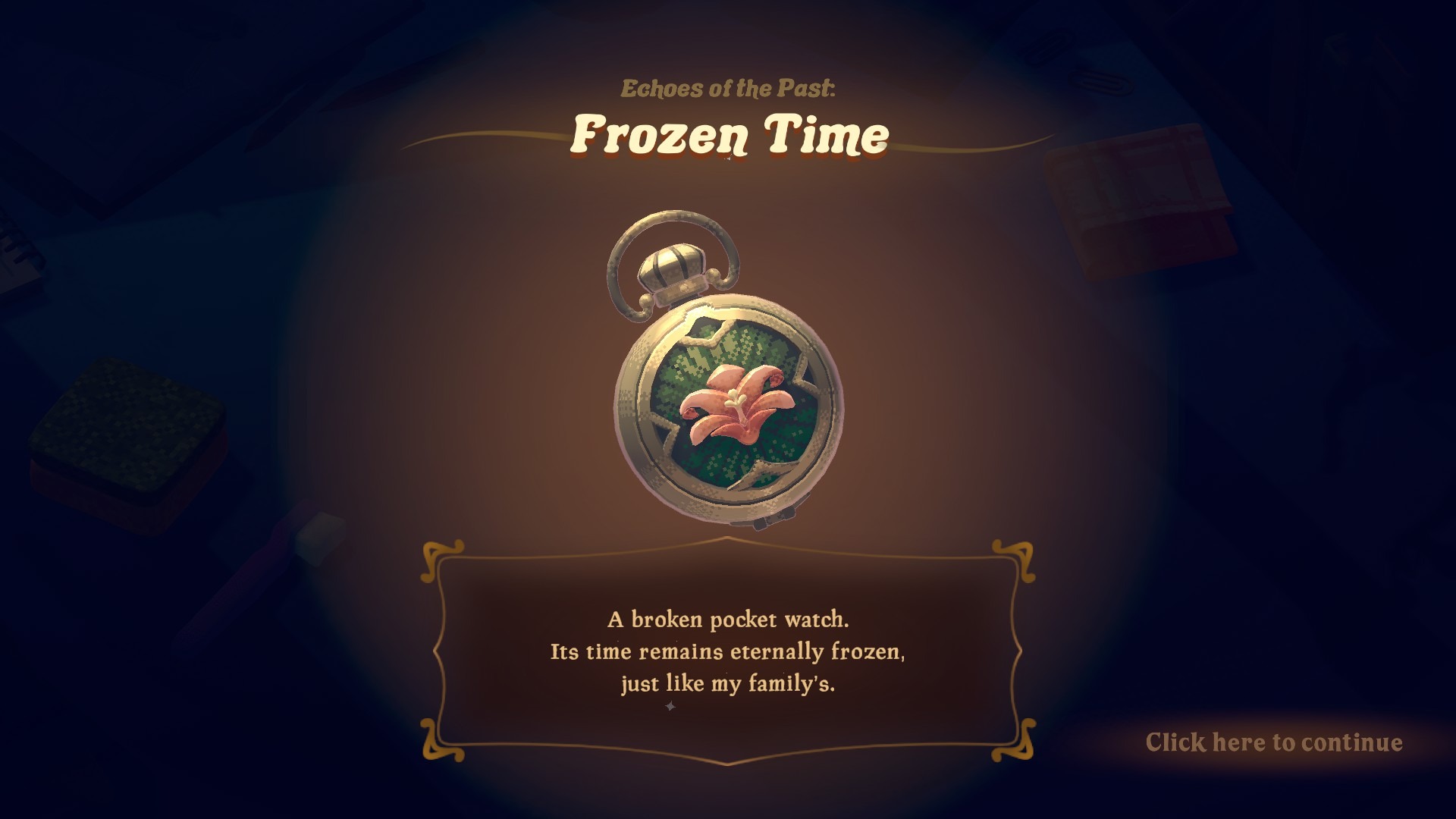
It’s not often that I’m faced with a reflection of my feelings so poignantly to a point of some kind of ashamed annoyance. I played Undusted: Letters from the Past with a begrudging satisfaction – it’s succinct and sweet, a one-or-so-hour exercise in unraveling a family’s sad history with no particularly happy, fuzzy ending, and it’s meditative in the singular mechanic of cleaning small objects.
It goes by quick: the story of an imperfect yet happy family turned into a placid examination of an estranged and resentful relationship that forms between mother and daughter after the passing of their husband and father. The daughter – Adora – is tasked by her aunt to find an old key in her childhood home. During her search, she uncovers old memories by cleaning and restoring certain small objects in the house – like a record player and a typewriter – that each house their own unique anecdote.
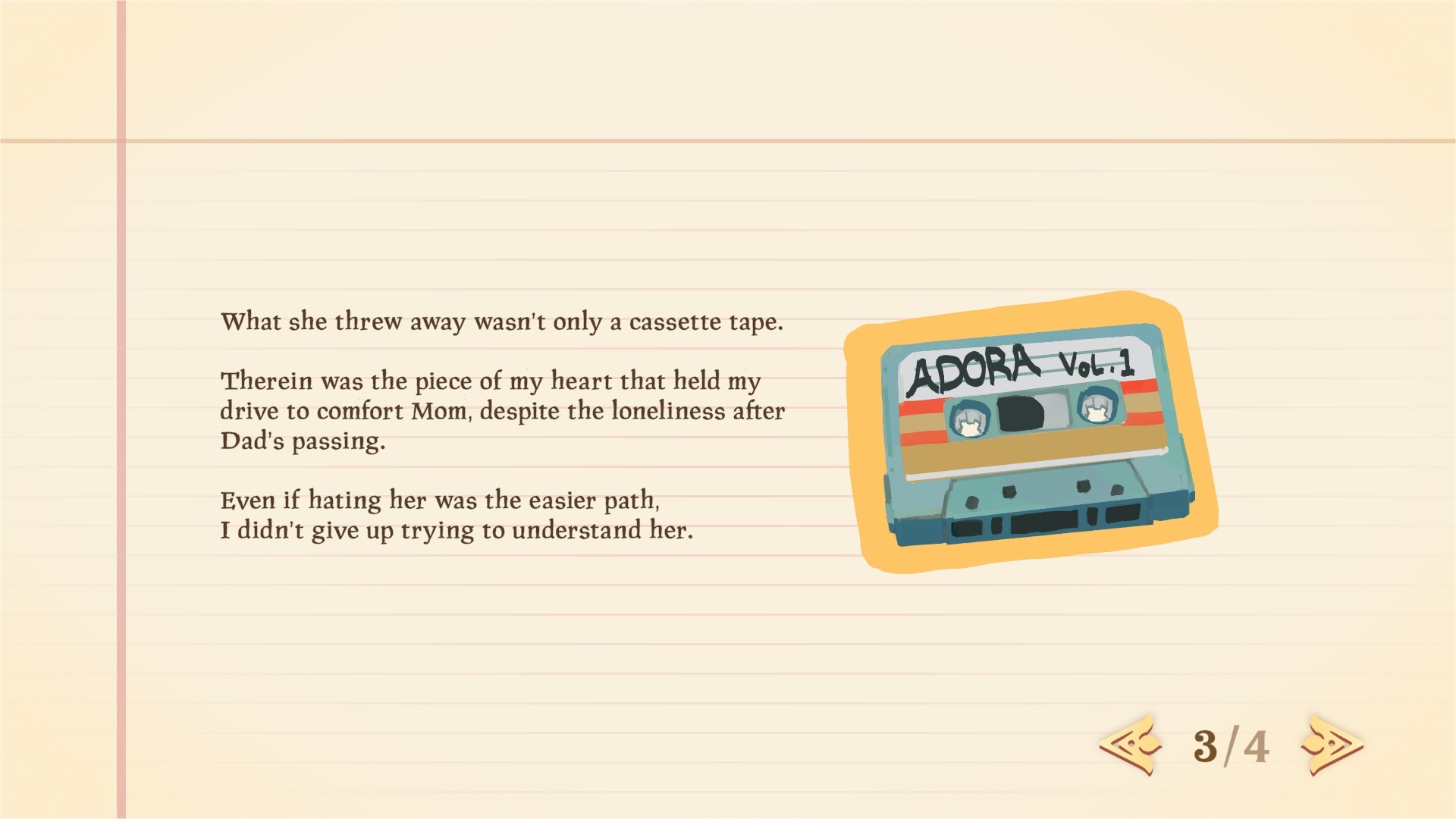
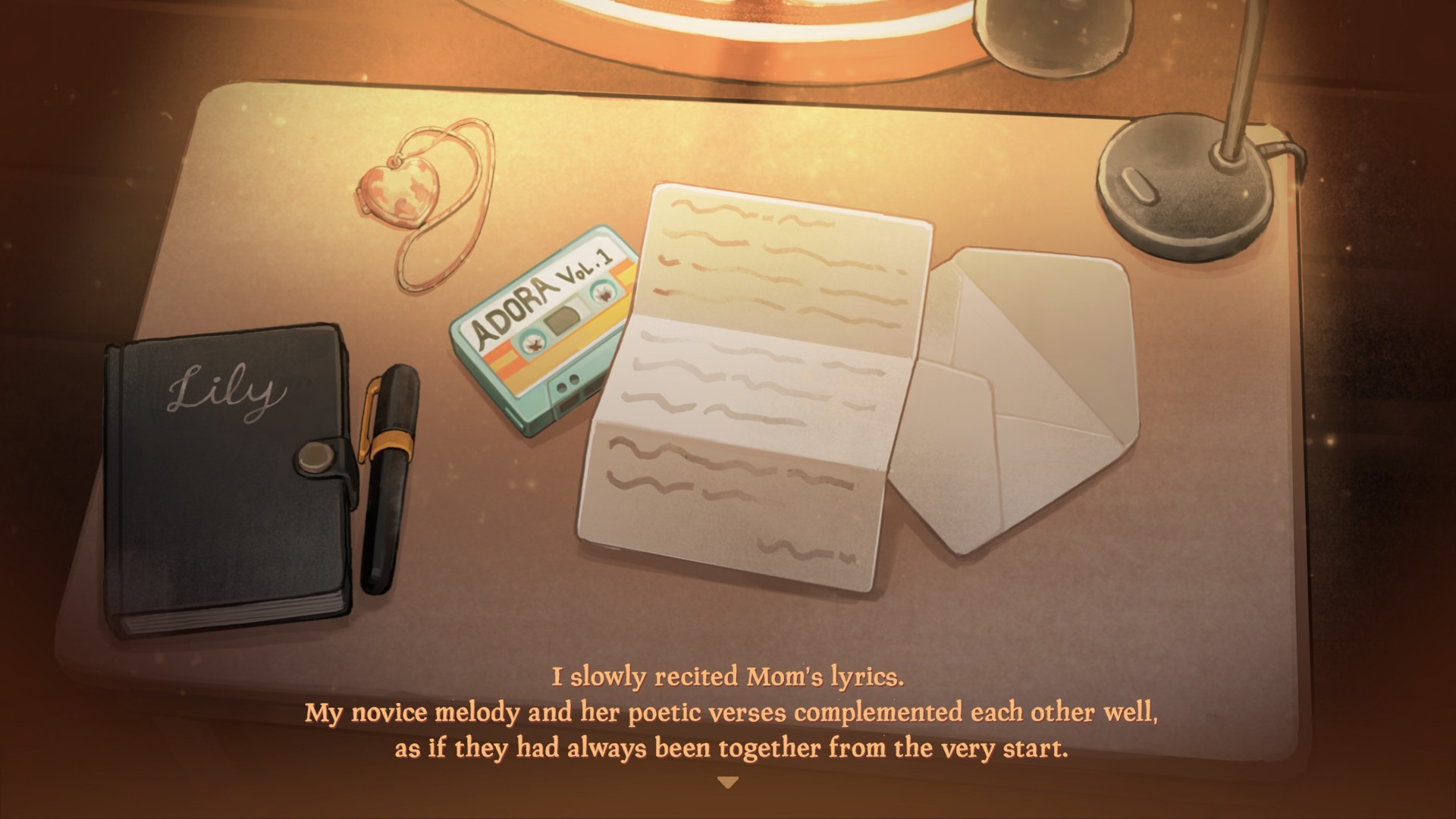
She catches glimpses of her mother’s old accolades as a writer, a pursuit she seemingly dropped out of nowhere despite some modest success. After her father’s death, Adora takes up making music, a hobby that reminds her of her father, and makes for her mother a cassette tape with music that reflects her desire to connect and comfort her. But her mother, predictably overworked in her drive to repress her own feelings of grief, throws it in the trash and admonishes Adora for being so reckless with her future, in wasting her time with a pointless hobby. Understandably, their relationship worsens, and when Adora goes off to her adult life, she refuses to call her until she’s proven her wrong. Her mother dies before they ever reconcile with each other, and her regret is obviously sour.
I love to engage in anticipatory regret. One of my more pressing regrets is that when my parents eventually pass on, it’ll be a righteously unsatisfactory ending to a deeply dysfunctional familial situation. There’s no reconciling, because the situation only persists thanks to my casual lifelong performance as anyone except the kinds of people they deeply fear (gay, leftist, etc) and they allow themselves the peace of sweet ignorance. It’s alienating and weird. I think of it as a thin veil – we are opposed in virtually every way that matters, but they are all I have, so I know at some point I’m going to be like Adora, wishing for different circumstances, a better end to a path that only goes in one direction.
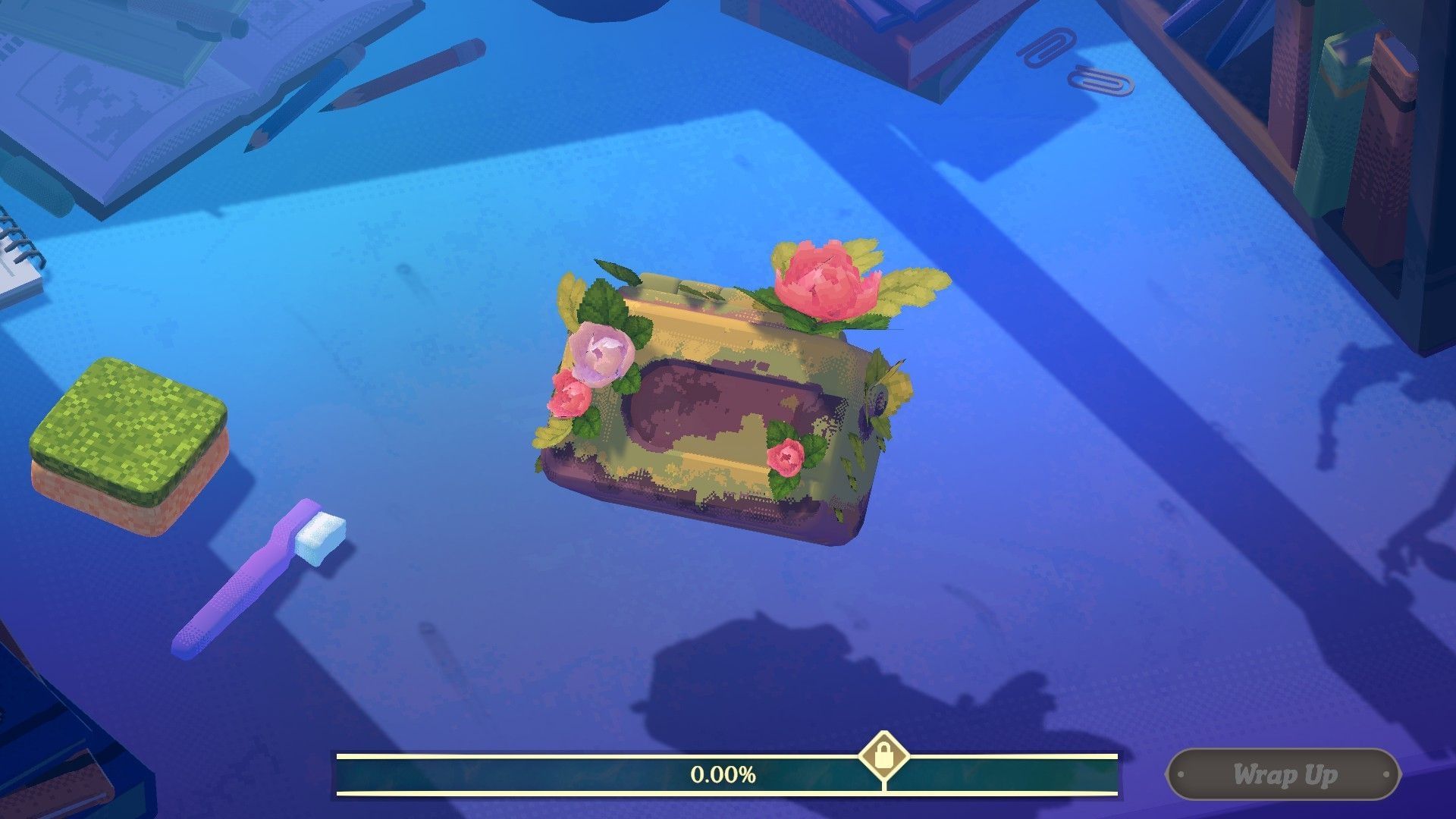
My own memory is pretty spotty, specifically in terms of my own childhood and periods of my life that occurred farther than ten years in the past. Letting a memory attach to something physical is a pretty powerful tool to keep an internal narrative going, especially as a person who never took up writing in a diary. I’ve been dragging around things for over a decade now, from apartment to apartment, simply because it holds the potential to help me remember something I at some point wanted to remember. Occasionally, during the few times per year I wander around the house I grew up in, I’ll pick up some old toy or stuffed animal given to me in a brief moment of harmony in an otherwise turbulent childhood and feel the fog of war lift from some part of my mind. Cleaning off the objects in Undusted feels similarly peaceful, brushing out the crud in the corners and wiping off grime; and finding little pockets of dirt in old gadgets opens the moment of reminiscence to breathe and reach its natural conclusion.
The end of Adora’s story is the realization that she and her mother were suffering similarly but separately, needlessly for the fact that they could have met each other on equal grounds if they took the time and space to acknowledge their grief. Both had unspoken needs and tragedies through which they filtered their interactions with each other, which led to redundant animosity and miscommunication. Every time they had a moment to reconcile, they stalled.
It’s a very personal story, and the depth and detail remind me yet again how a certain experience can be elevated by the player rather than the reader or watcher. Cleaning, thinking, coming to terms with each step of the story. Taking the time in its fullness, along for the ride with the author. Part of my bitterness is seeing a familial relationship that could be mended so easily in comparison to my own, but Adora’s story is familiar in its inevitability – there is no ending reflective of an entire life, all the rights and wrongs, things said and unsaid, perfectly preserved in a final moment of satisfaction. Mend what you can, brace for what you can’t.
I won’t sit here and insist that every relationship is able to be mended—some are destined to be weird and fraught until the very end— but that regret may still remain. Someday I’ll be in a similar position to Adora: sifting through stuff in the garage, boxes of unorganized ephemera (and probably like a hundred bibles), cleaning off the dust and picking apart both the good and the bad memories, waffling between contrition and acceptance.
