
We tend to play through most games together—if not in co-op, then one watching the other play, or playing the same game in sequence or parallel. We also tend to play games that require very large time commitments, so the breadth of our play can be fairly limited compared to other people. These factors tend to mean that our list of games in a given year will have a lot of overlap, and 2025 was no different.
An audio discussion of the games we played in 2025 will be uploaded on an upcoming bonus episode of The Book of Mudora.
Blue Prince
There’s a wonderful synergy in the gameplay and the story of Blue Prince. As you dive deeper and deeper into the secrets of Mt. Holly, you gradually piece together its mechanics as much as its history. Both are wonderfully interesting and layered, compelling you to dive deeper and deeper–and for those puzzle obsessed amongst us, deeper again. Though RNG is always a factor in the floorplans you are presented with or the items you receive on any given day, over time you can bend it in your favour like some sort of subtle luck wizard. In striving to meet your great uncle’s demands to inherit the mansion, you genuinely become a master of the estate.
There have been very many lovely thinkpieces about Blue Prince, and I encourage you to read them after trying the game out for yourself. It is a love letter to and rumination about puzzle games and their players, about obsessively hunting down every last mystery, and finally, when, how, and if we can ever feel satisfied in walking away. —Monica
Donkey Kong (‘94 / Bananza)
I have a special affection for video games built around theses of play as an exploration of mechanics and how they change the feel of interaction; video games as toys. Video games are abstractive in a way that physical toys sometimes aren’t, but the experience of a good platformer isn’t that different from that of playing with toy cars, or sending dolls on adventures climbing cliffs, or what have you. Through the abstraction of movement on screen, linked to physical experience by the act of player control, platformers embody a joy of movement that is hard to replicate in any other genre.
1994’s Donkey Kong on the Game Boy is a platformer and a puzzler; Mario, with by some metrics the most varied moveset the character has ever possessed, is both player avatar and a potential victim of misplay. Jump off a ledge that is too high, and he will express his discomfort in all the fidelity the Game Boy can render. Fall from much higher, and he will die, a halo of light floating over his head. The same if he is struck by an enemy, touches open flame, or has a rolling barrel land on his head—though he can prevent this last by doing a hand-stand and catching the barrel with his feet, which are much better suited to impact than his head.
Every level in Donkey Kong either introduces or iterates on a new platforming concept that must be strung together in increasingly complex and demanding ways. Shimmy across a wire to cross a long gap. Swing on the wire to fling Mario upward and reach otherwise-impossible heights. Swing on a diagonally hung wire in a specific position at a specific speed to launch Mario past obstacles and into safety, all in pursuit of the titular ape. The game is so much game, a full one hundred stages blossoming out from the arcade original’s four, and each is simultaneously long enough to be satisfying and short enough to be appropriate for handheld play. The credits boast seven course designers, and it is a wonder that all of the stages fit so neatly into the game’s mosaic effect. I don’t think there was a single level in this game I didn’t like, out of all one hundred of them, and its adherence to the feel of its arcade progenitor while applying over a decade of iteration and refinement renders this one of the most remarkable platforming games or puzzle games you can play, thirty years later. Truly an excellent toy.
Donkey Kong Bananza is different.
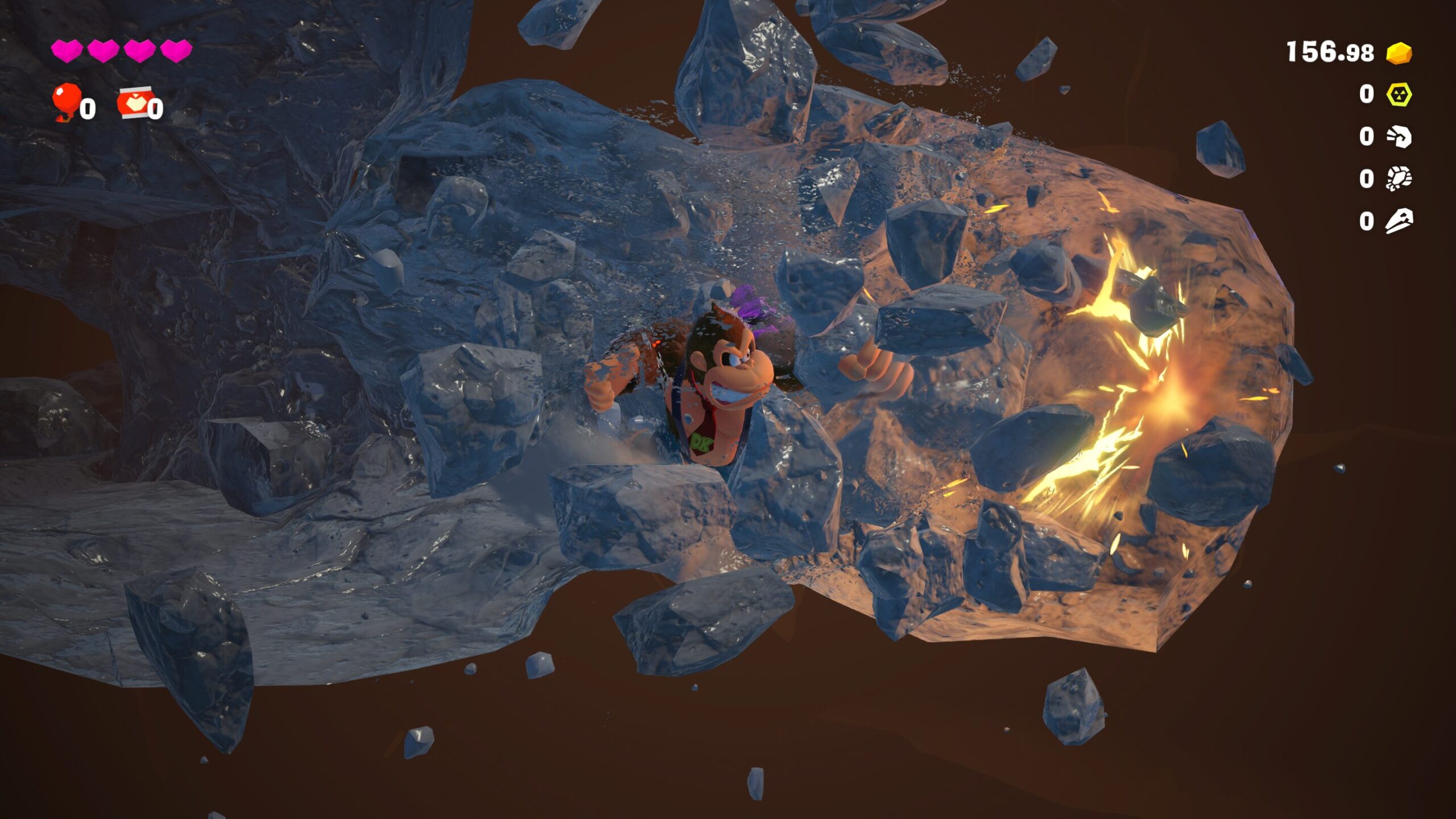
It’s still a toy, but it’s more like a sandbox toy, building off of the expectations of limitations established in other similarly scaled and styled Nintendo games from the past ten years. Donkey Kong feels unstoppable. Jump off a ledge a kilometer up? You’re going to hurt the ground, but DK and Pauline will be fine. Want to scale a wall but you’re holding five tons of explosive gold? That’s fine, DK can climb a wall with just his feet. There are limitations—metal is an unbreakable material, DK can’t climb oiled surfaces, and some platforms can’t support his weight—but every action you take further builds on the sense that you can affect the world in pretty much any way you please. You feel agile despite weighing five hundred kilos, you can smash through bedrock, pull chunks off of stone enemies, surf down mountainsides or over water, there’s an interlocking series of platforming actions you can take to extend height or distance in a style reminiscent of Cappy-based jump extensions in Super Mario Odyssey; the game feels different from its forebears but it embodies the same kind of joyful movement and easy humour.
Bananza is also an interesting sequel to ‘94’s Donkey Kong, in a narrative sense, and I’m glad I played them in sequence. The Game Boy title is a continuation of the arcade original: you play Mario, and you seek to save the girl from the marauding ape. Bananza, though. You know this is a portal fantasy? You play the magical animal companion to the young girl whose real-life problems are interrupted when she’s whisked away to a parallel world where she is hounded because of the talents that are both obstacle and solution in her normal life. You provide her bodily protection while she grows into her powers, and in the end it is her own strengths that allow the adventure to reach its conclusion, and she carries the lessons of her adventure back into her normal life, having grown beyond her need for you even if she will always treasure the time you spent together. That’s neat! I like that.
It was a good year to play Donkey Kong. —Cameron
Final Fantasy VIII

One the joys of recording the Book of Mudora–and its spinoff Book of Matoya–podcast with Cameron and Crystal was getting to replay FFVIII after a full 25 years away from it. I’ve long been a FFVIII apologist, arguing for the game in spite of its ‘rough spots’. Replaying the game in 2025 and getting to see the reactions to it from new and less familiar players, I realized the truth:
Love is real, and FF8 is awesome.
A story about how we are all connected and how we are stronger and more realized when we lean on each other. An emphasis on feelings, (mis)communications, unsaid implications, and the feminine. Small wonder it was mocked in the early aughts, and I’m thankful that recent years and the hard work of ardent advocates have started to give the game some much-deserved appreciation.
Go into the game with an open mind. Think back to your years as an awkward teenager and come at this lonely, awkward protagonist with how you might have felt getting dragged into friendships and relationships and adulthood. Ponder on the mysteries of a complex world setting which have never been further elaborated or expanded on in additional media, leaving so much rich ground for fan theories to sprout.
It’s a beautiful game in more ways than one, and you should play it. —Monica
BS The Legend of Zelda: Ancient Stone Tablets
Back in 1997, Nintendo put out a Zelda game, based on A Link to the Past, on their Broadcast Satellaview add-on for the Super Famicom. BS The Legend of Zelda: Ancient Stone Tablets was an episodic, score-based game that used a combination of locally stored, satellite-transmitted game data and unstored, live sound data. The effect of this setup was that you had to play the game in hour-long chunks, broken up into four episodes, and by the end of your run you would either have everything you needed to defeat Ganon and see the ending, or not. A really interesting structural experiment!
The game was only officially broadcast for three runs. If you owned a Satellaview and lived in Japan at the time, you could have played it, at maximum, for a collective 84 hours.
The story of the game’s preservation, decades after it had been relegated to the ether, is a fascinating one. Even if you have no interest in playing it, I suggest reading up on it to familiarize yourself with a storied piece of Super Famicom esoterica.
The structure of the game lends itself to quick and measured play: in the ROM, as in the original game, you can play one day for a total of just under an hour, and in that time you need to find an average of two dungeons, complete them, scour the overworld for upgrades, and respond to characters alerting you to sidequests that you can address for bonuses or for extra bits of characterization. You’re deep in your second dungeon and hear that an old man has fallen into Lake Hylia; will you make the time to go save him? Can you afford to? What will you miss if you don’t?
The running commentary, originally voice-acted in the live broadcast, has in the fan recreation become a steady stream of text that you must keep in your peripheral vision at all times, because it is the source of the story, hints for where you need to go next, and an indicator of when certain events are beginning. The dungeons use the tileset, enemies, and bosses from A Link to the Past, but Ancient Stone Tablets throws the player into labyrinths that are simplified in their structure but sometimes diabolical in their puzzle solving; more than once I had to use the Pegasus Boots to ram into a wall overlooking a gap, flinging myself backward a far greater distance than Link could jump facing forward. The novel puzzle solving, modified mechanics, and limited play time coalesce into an arcade-style Zelda experience that is wholly unique in the series as I’ve experienced it.
Crystal, Monica, and I played this game together, one episode a week, comparing notes and progress as we went along. The social element can’t really be separated from my experience, and it’s not intrinsic to the game itself, but the game’s formal elements incentivize comparisons and sharing of tips so that if you fall behind on one day you might be able to make up the difference on the next one. The game is a scramble, an inventive building on and subversion of the source material, the first time you could play a Zelda game all the way through as a textually female character, and a Hell of a way to spend four hours with like-minded friends. —Cameron
PEAK
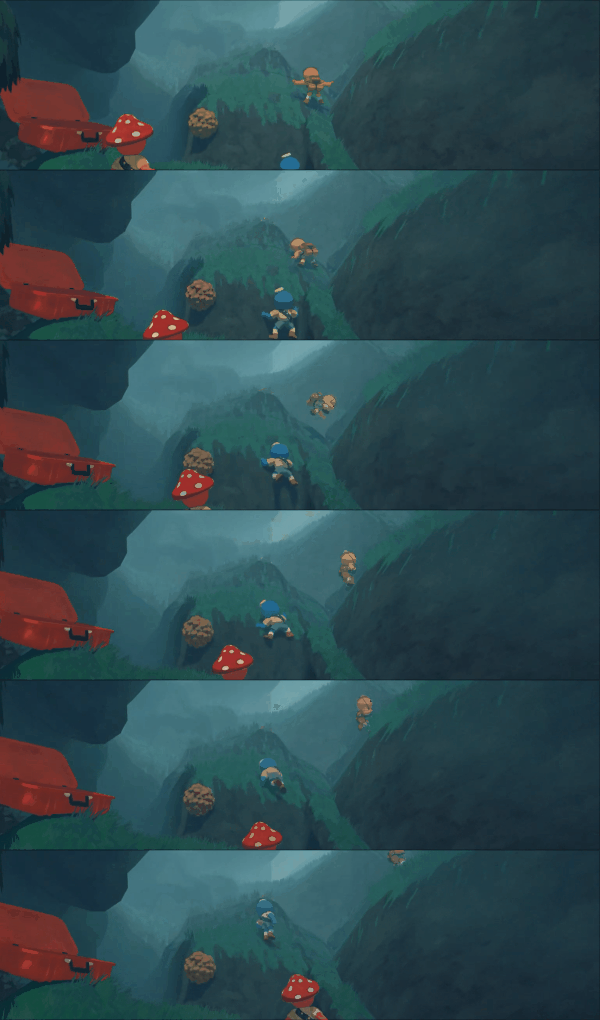
Every friend and family group needs a good cooperative multiplayer game. PEAK’s strengths are in how easy it is to pick up, how the climb is procedurally generated and therefore novel every day, how the items and plants have esoteric and often hilarious effects, and most importantly, how loosely collaborative it can be. You can be the person helping everyone up or carrying a heavy backpack of supplies; you can be the go-getter surveying potential pathways before anyone else; you can be that person that is mostly just trying to stay alive. Weaker players–or those who died to a miscalculation or twist of fate–can still stick around as ghosts and provide help to the group by spotting harmful threats or helpful areas of interest. More than once, our party’s survival hinged on a weaker player being able to complete a section on their own and respawning the rest of the group at a waypoint.
One time, a giant tornado beelined towards Cameron and I and we were hurled in opposite directions. I was safely deposited on a high mesa, where I promptly lit a portable stove to cook some food and set up a signal fire for everyone else. Cameron was impaled on a hundred-meter-tall cactus and died. Another time, near starvation, I found a giant egg but was frustrated at the inability to immediately consume it. I yelled at it, cooked it, cooked it again, then screamed in triumph when I finally threw it away and its eggy contents flopped onto the ground.
Hearing your friends fade into the distance yelling and cursing never gets old, which is great both for those who survive and those who plummet to their doom. Of all the games on this list, PEAK elicited the most laughs from me this year, and it’s worth a climb or five with your friends. —Monica
Day of the Tentacle
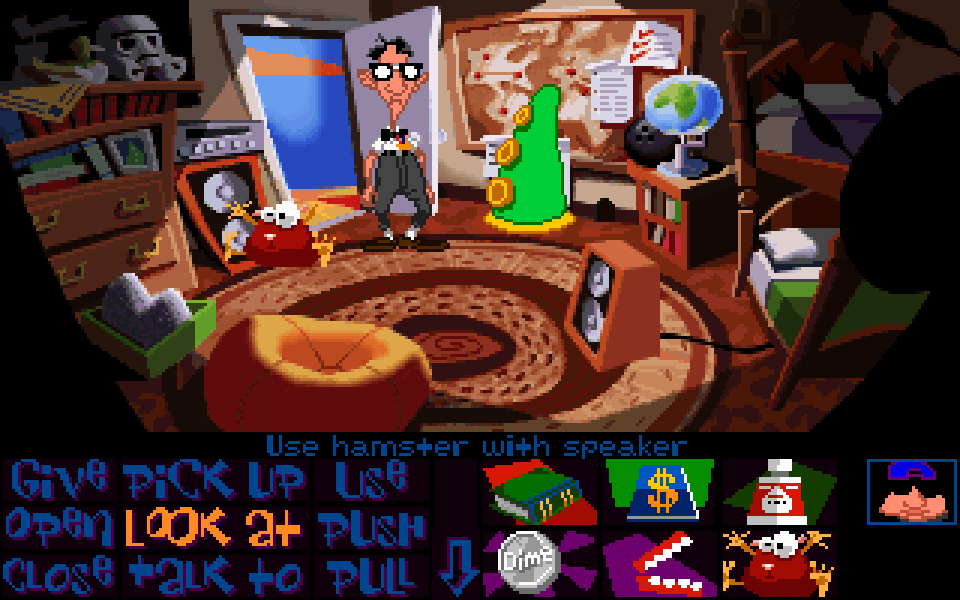
Day of the Tentacle is one of Monica’s childhood games, that rare collection of titles that shaped her understanding of what video games were and could be like, and it’s taken me too long to get around to sharing this experience with her. Now that I’ve had it, I gotta tell ya: it’s terrific.
Games from this era have a reputation for occasional (or even constant) inscrutability, but I never got that playing this game. The puzzle pieces always fit together in a more-or-less reasonable way, though I’ll admit that Monica was watching me play and would offer pointers if I ever got stuck for too long—though, I need to point out, she hadn’t played the game since the turn of the century, so the solutions sticking in her head speaks to a certain intuitive element, if only in being so easy to remember.
It’s a remarkable game to play together, too, and a perfect time capsule of the era. The way the game looks and sounds is a great deal like a computerized cartoon, recalling the days when looking and sounding like a cartoon was treated as one of the highest technical aspirations a game could have. It’s a funny game! Genuinely witty with a higher percentage of quality jokes than I would have anticipated. The game’s time travel conceit allows different locations to affect each other in a natural way, and also broadens the potential subject matter of the game’s humour, which is to its benefit: Thomas Jefferson huffing his own farts, an evil mad scientist who must be managed rather than directly confronted, a human dog show where you sabotage your other competitors, the list of vintage irreverences is as long as my arm and, where not explicitly funny, is at the very least interesting as a product of its time and environment.
Really I’m just struck by the quality of it, I think? “Games never needed to be higher fidelity than this,” is so rote that it is the most hollowed-out sort of cliché, but I’m so enamoured with the game’s cartoon cutscenes, violent slapstick, and excellent voice acting that I lament that the era of prominence for this sort of game was so relatively short. I guess it means I have a whole new genre to catch up with. Maybe Monica and I can spend some time playing new ones together. —Cameron
Pokémon Legends: Z-A
As a Pokemon-liker, Legends Z-A was a very exciting addition to the series. It brought many of the novel components of Legends Arceus more in line with the rest of the franchise, a sign that it’s a format that’s here to stay. The upgrades to the battle system make it punchy, quick paced, and genuinely fun to play, as do the quick load times and longer draw distance.
In terms of story, Legends Z-A is a game that doesn’t take itself too seriously, but instead really leans in to being funny–often ridiculously funny–and that works in its favour. Characters are memorable and slowly have more sophisticated teams that pose somewhat more of a challenge than usual.
For Pokemon people, it’s also never been a better time to do shiny hunting. They better incorporate the shiny sound effect, twinkle, and marker into the mainline series. —Monica
Monster Hunter (Wilds / Generations Ultimate)
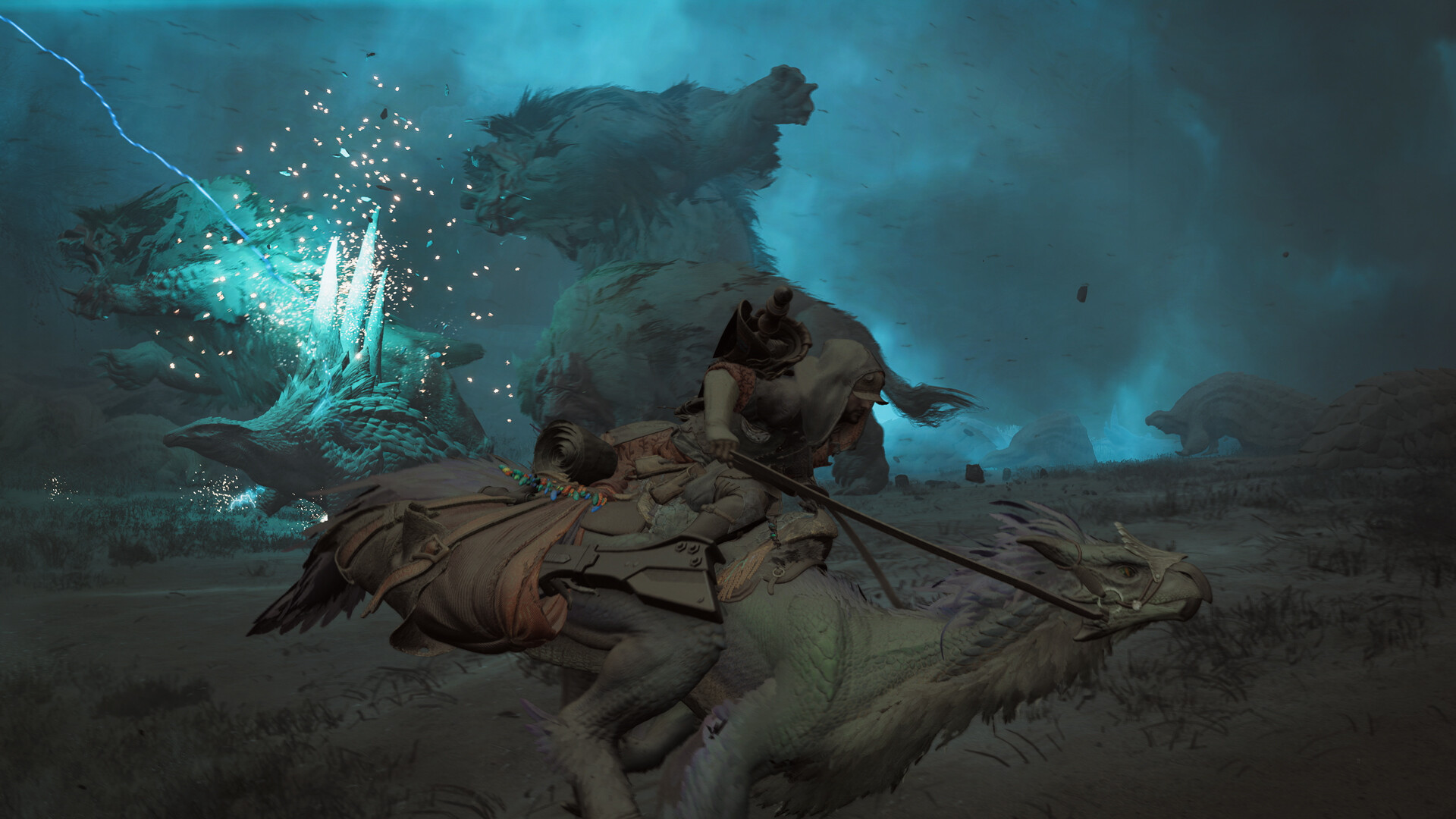
In 2025 I played two games in the Monster Hunter series: Monster Hunter Wilds and Monster Hunter Generations Ultimate. The former I picked up at launch because I really enjoyed the previous two games, World and Rise, while I picked up the latter during a holiday sale on deep discount, so I have spent much more time with Wilds than with Generations Ultimate.
Monster Hunter, the series, appeals to the part of me that cut his 3D gaming eye teeth on the dungeon bosses in Ocarina of Time. Variously towering beasties who present an overwhelming presence when compared to the humans who are tasked with driving them off, capturing them, or slaying them? And they’re all essentially self-contained boss fights that can slug it out with you anywhere from five to thirty minutes? And the fights and mechanics are all really, really fun once you learn the ins and outs of the system? And I can hit them in the head with a big hammer and make them fall down with cartoon stars floating around their heads? It’s the kind of game that would have made my head explode when I was eight.
Wilds is a progression of the encounter design from both of its predecessors where the player character is made more powerful so that the prospect of fighting these monsters might be less intimidating to the uninitiated. It’s treated this way in the story, of course—your character is a veteran hunter with a mysterious past that is not elucidated on in the text, but it is understood by everyone around you that you are the best person for the job and that if a monster needs huntin’, you are the hunter to call—but more importantly it is treated this way in the way the game plays. The biggest mechanical innovations of Wilds compared to previous titles in the series are a small selection of mechanics which allows one to overpower the monster one is fighting: through the Offset attack, one might land an upward strike against a charging 40-ton reptile that sends it flipping backward, stunned, while the hunter charges in for a follow-up, while the aptly named Power Clash has a hunter wielding a block-capable weapon to, against certain monsters, engage in a kind of reverse tug-of-war where hunter and monster simply try to out-shove each other. If you succeed, your friendly cat companion might tell you that you have done a great job out-muscling the monster. There are other system changes that allow one to more easily avoid a monster’s attacks or better aim one’s own, but the underlying thesis of the game’s mechanics is in making the hunter, as player avatar, feel more powerful than the monster you are up against. That is a quality that, in a vacuum, is neither good nor bad, but it is very different from the other games in the series that I’ve played. The result is some of the best and most frenetic combat action in any game I’ve come across, in which you are absolutely dismantling entities that feel like embodiments of nature itself.
The biggest objection people had to this game is with its performance, but I am playing it on the Playstation 5 as I played its forebears on the Playstation 4 and the Nintendo Switch, respectively, so I am less bothered by what has proven a critical issue for many players. Instead I’ve been enjoying the power fantasy, while also growing more consistently aware of it as I play: this same fantasy-through-mechanics will likely carry through the expansion, but if the game following this one were to set that aside just as the ability to ride monsters in combat was discarded after Rise, I wouldn’t mind too much. It is a fun game, and the power fantasy aspect isn’t what made me set it down—that would be the mono-monster endgame grind, much like in base World—but I’ll be glad when it’s done with. If it’s done with.
Generations Ultimate is very different. It’s my first “old” Monster Hunter, that is pre-World, and while it barely qualifies as such you can feel the differences in its framing and its tone, even with the little time I’ve put into it. Respect toward the player’s avatar is both inconsistent and conditional: characters look down on you, try to manipulate you for their own ends, and some may be trying to get you killed in a comedic way. One of your room attendants informs you that her plans for the day involve waiting for you to leave, getting all her friends together, and then rifling through your stuff so they can gossip about you. A monster setting its eyes on you is announced with a frightening chord as the music ominously transitions into pre-combat, and despite all the fanciful maneuvers you can do you never get the impression that you are stronger than the monsters; you are still a person going up against something bigger than yourself, which is communicated in everything from your character flinching at a monster’s attention to the way your running animation changes to a more frantic gait as you run pell-mell away from a five-meter-long marauding rabbit bear. I’m not far enough into Generations Ultimate to make any kind of direct comparison, but the different mien of its power fantasy—that of a person fighting against impossible odds and winning not through power but through skill, care, and knowledge—resonates with me. —Cameron
Ninja Gaiden: Ragebound
Look, I’m not made of stone. I love a good action platformer, and I especially like one that is so carefully crafted around your character’s abilities. Normal enemies that take one or two slashes to defeat while feeling very dangerous, so that you deal a lot of damage and take a lot in turn? Man. That’s the stuff.
Ragebound is well-crafted in every way I can think of applying that term. When you know how your moveset works you can fly across a stage, fragile but untouched, and the game’s structure encourages practice until you can do so: the game has a simplified score system where various metrics of performance come together to form a letter grade, the highest only being achievable when you perform near-perfectly while having multiple limitations placed on how you can play, such as a total removal of healing items or having no checkpoints throughout the stage. Those checkpoints are generous and necessary during a first casual playthrough, recalling 2021’s Cyber Shadow in their frequency and the speed at which one can respawn, but as one becomes familiar with a level, that safety net is the first one might consider disposing of. The game’s Hard difficulty is only unlockable after one’s first playthrough, but it is a choice well-justified by a total level redesign in every stage that requires skillful usage of one’s complete toolkit.
The game’s relative brevity is to its strength, both in terms of its overall package and in each of its individual stages. The average first playthrough might take six hours of sweat and effort, but one might spend longer than that in pursuit of the higher ranks and the cosmetics that are unlocked by them. Those stages, when mastered, require almost perfect play—but that play only needs to be maintained for perhaps three or five minutes at a time, broken up into discrete chunks that feel reasonable to memorize for veterans of the genre.
And it’s just cool. You know? The pixel art is maybe the coolest the ninja platformer subgenre has ever seen, the music is rockin’, and the characters are cool almost to a fault. It’s cool and it’s fun to play and when I play like it wants me to, it gives me a little cookie and tells me I did a good job. I can’t ask a lot more than that from an action game. —Cameron
Game of the Year: Silent Hill f
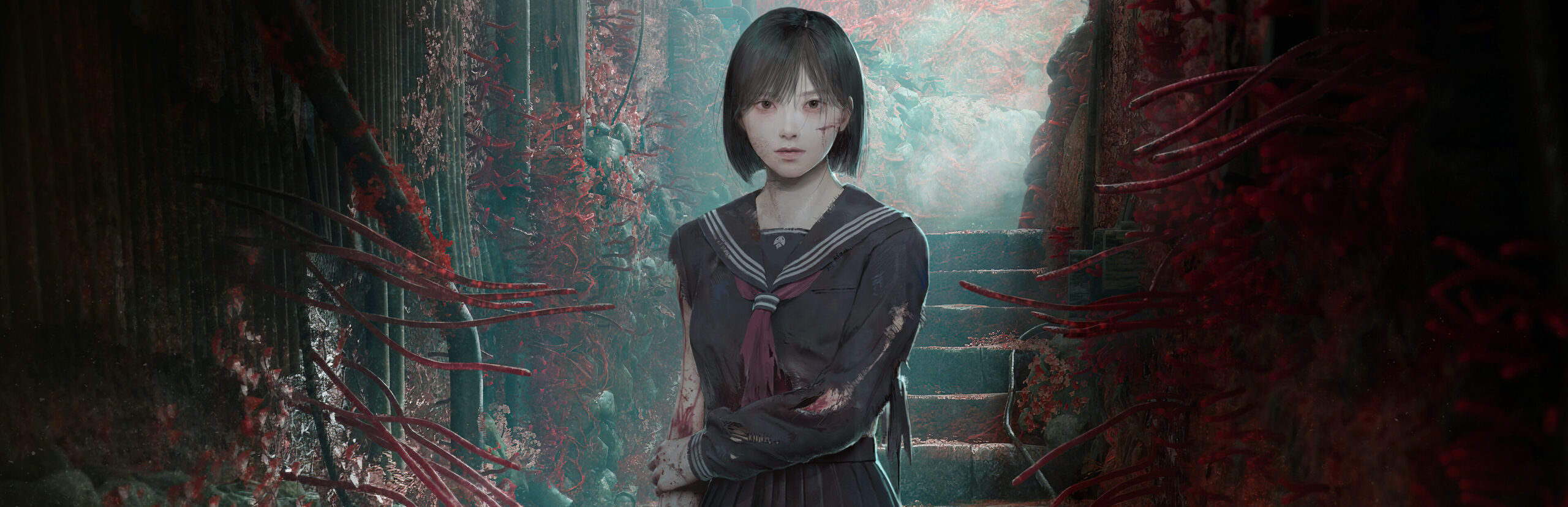
There’s a lot to say about Silent Hill f, our favourite game of the year.
The game is set in 1960s Japan. You are Hinako, a young woman who wants so desperately to break free of the confining expectations that people place upon her. Her parents are emotionally and physically abusive; her friends view her with venomous looks in their eyes. But worst of all she is unsure on what to do, how to be, save that she wants to be the person to decide it.
The quiet dread as you progress in the story is perfectly embodied in the fog that envelops the quiet mountain town Ebisugaoka, and in the drone of the shō both in moments of quiet beauty and in moments of horror.
What is real? The story is told across many dreamlike settings, and the mystical and the fantastical are just as true as the ‘actual’. Perhaps moreso, in how they capture the psychological truths that reality can’t show. The game encourages you to consider not just what it is like to be subjected to prejudice, abuse, and trauma, but how to continue on despite them. Its message of empathy and self-actualization is refreshingbecause it is well written, well thought out. Silent Hill f shies away from easy answers, and you should absolutely play through each of the game’s endings to learn how it does so. —Monica
Honourable Mention: Metroid Prime 4
Metroid Prime 4 is not a stellar or groundbreaking game. It has its rough bits–and no, I don’t mean the NPCs, who are well acted and voiced and have a good amount of backstory and personalities fleshed out, including in content that was cut from the final release. The guidance/hint system can’t be turned off. The areas are all disconnected from each other. The primary antagonist and the titular metroids only have the briefest presence in the plot.
However, for every rough spot there are so many more beautiful, fun, or comfortably Metroid Prime-y moments that you can bask in. Flora and fauna are lavishly described in the logbook; the architecture and layouts of each of the areas is thoughtfully and interestingly designed; the snappy Joy-Con motion controls make me a much better player than I usually tend to be in shooty games.
Given how troubled a development it had, that they could release it and it was this polished on release is an achievement in itself. I’m very much interested in seeing what Retro Studios can bring to Metroid Prime 5. —Monica
Cameron Morris (He/Him) is a cohost on The Book of Mudora podcast, as well as a rabbit caretaker who lives in the big city. He can be found on Bluesky and nowhere else.
Monica (She/They) is a cohost on The Book of Mudora podcast. She can be found on Bluesky.

i like your toyetic description of donkey kong. it’s something i really feel replaying tearaway