If there’s one thing I like in terms of community, it’s an indie scene. So many ideas running wild, the highs and lows of self-determination, the oscillating anxiety and confidence of earnest creation, the specter of technocapitalism floating forever above our heads in the form of questions like “how do I make myself more marketable” or “how can my art reach more people” or “how do I realize my dream without getting into a bunch of debt?”
I wanted to be many things in my 20s and dabbled in many indie scenes, especially in Seattle where I was born and raised. I even wanted to seriously pursue being a writer for a video game at one point, finding local jam groups that never quite got off the ground and indiscriminately thrown-together forum game dev cooperatives that got incredibly toxic within a few days. So, when I was invited to check out the inaugural Seattle Loves Indie Creators Expo, otherwise known as SLICE, you bet I wanted to be a fly on that wall.
SLICE was brought to life by Seattle Indies, a nonprofit organization that brings together the independent game developers of the Greater Seattle Area, both new and experienced, professional and hobbyist, and cultivates a scene for networking, collaboration, resources, critiques, all sorts. They also host SIX (Seattle Indies Expo) at a nearby hotel during PAX West every year, which is a one-day showcase of a bunch of different (mostly) local indie games. I’ve been to a couple of these in past years, and the thing that struck me the most was how the open layout encouraged a lot of natural conversation and overflow, something that many independent creators of all kinds might not get a lot of, especially in the more isolated working environments you can find yourself in with game dev, art, or writing, in my case.
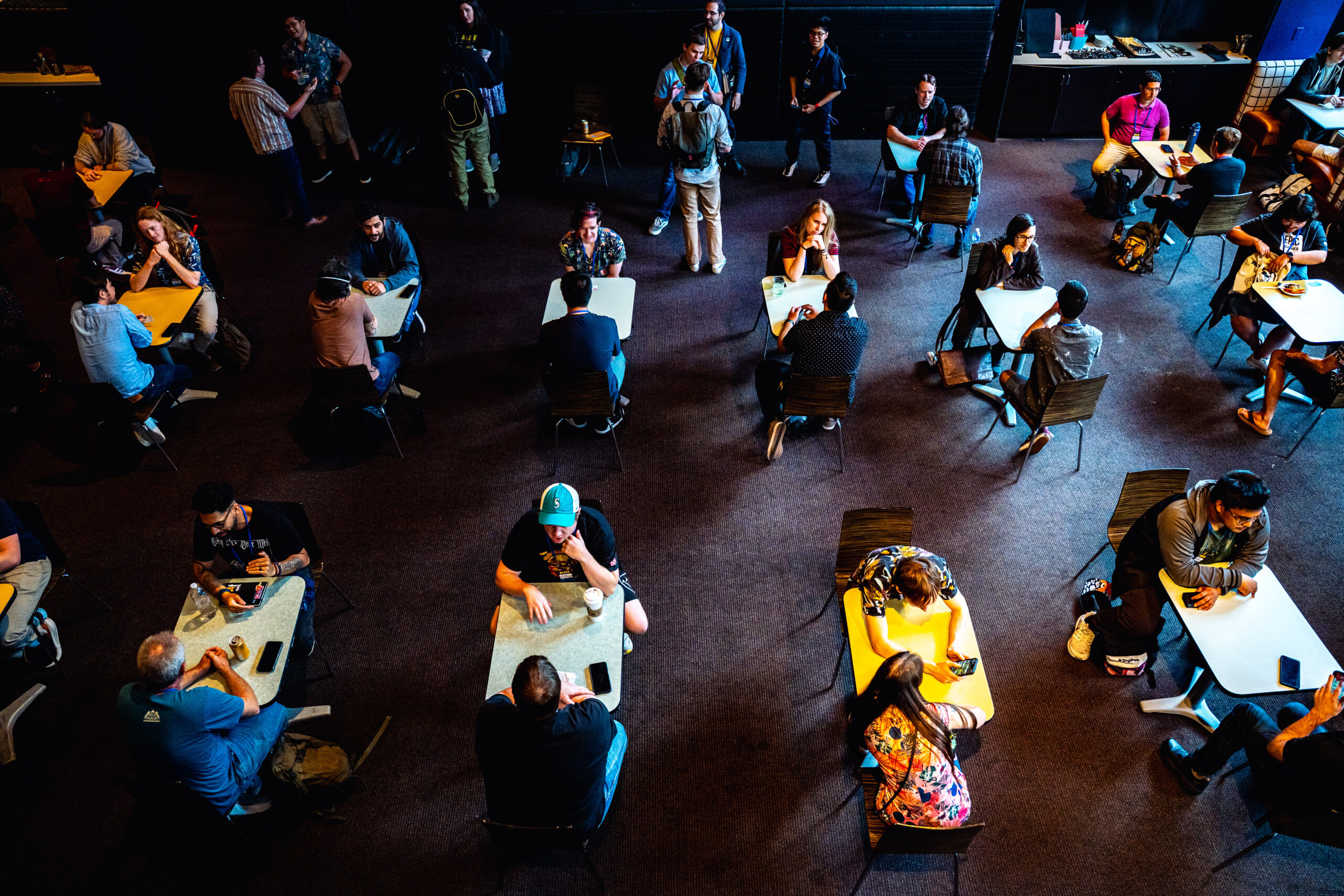
That same concept carried over to SLICE really well. Being located in Seattle’s McCaw Hall, a performing arts venue by design, meant that there were theaters and conference rooms of varying sizes, all located near one another for easy access between the panels. The rest of the space was open with a lot of room for people to chat in groups, and quiet corners to work in peace. This event was tightly focused on connecting professionals and experts with a wide net of game devs, whether aspiring or published, so the space held everyone in a way that facilitated that kind of networking.
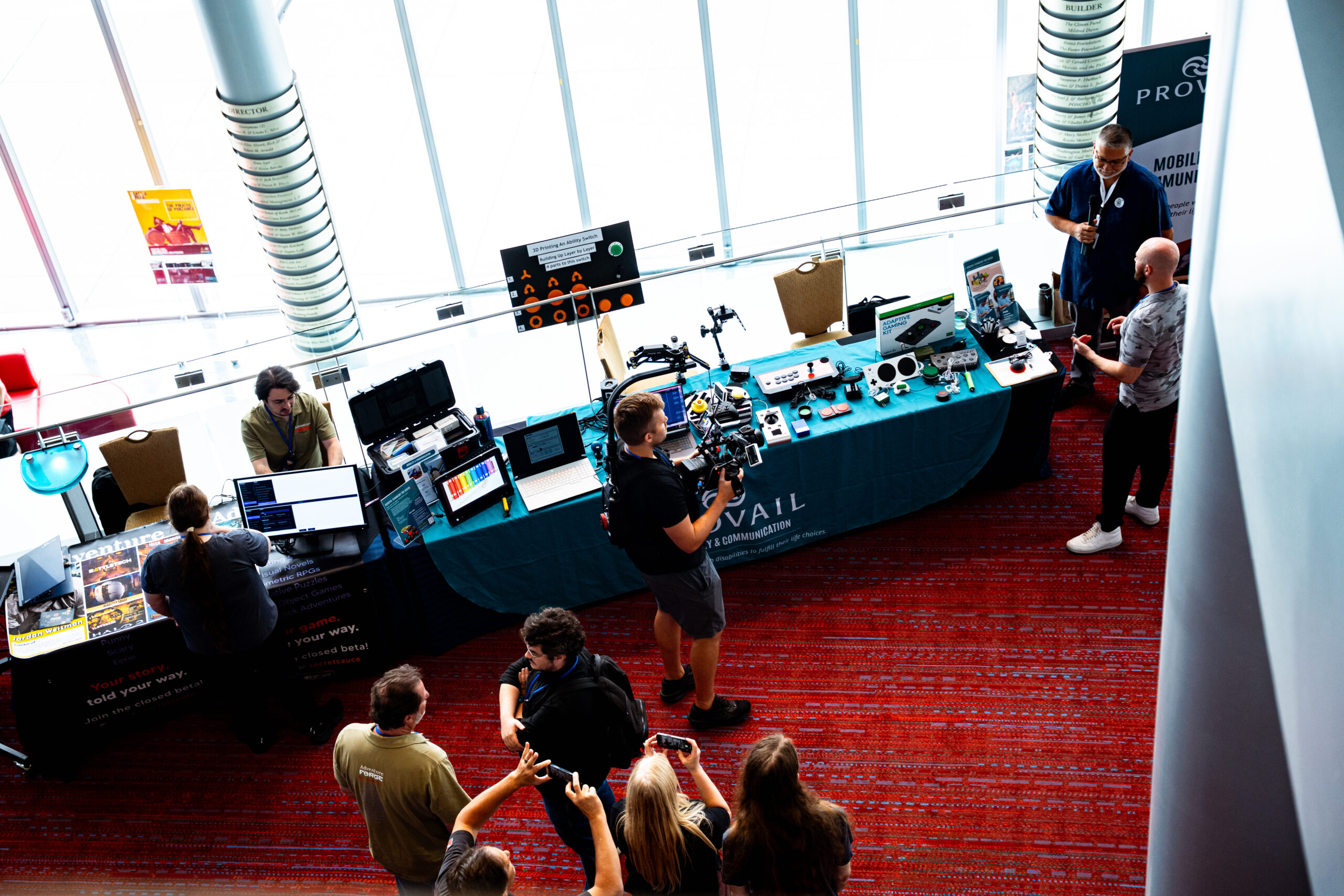
Among the space there were a few stations: a Pitch Clinic, where people could go have their pitches heard and improved upon by experts of that sort of thing; a corner where a small group of local indie games were hosting demos; a bunch of vendors for things like freelance support, indie tools, and accessibility. There was a cafe, a media room, and plenty of space to spread out. There was also the biggest, emptiest women’s restroom where I chatted with one of the staff about how easy this group of people were to work with, how clean and respectful, and how she gets paid well to be there. Years ago I briefly spent some time earning $15/hr cleaning up after people who own yachts and work at Amazon, so it’s always nice to see that conditions have improved even a little bit.
SLICE hosted a lot of panels and “microtalks” with speakers of various backgrounds, and I tried to cast a wide net and attend as many as I could while covering a spread of different topics. The first block was three smaller panels mostly about storytelling and player motivation.
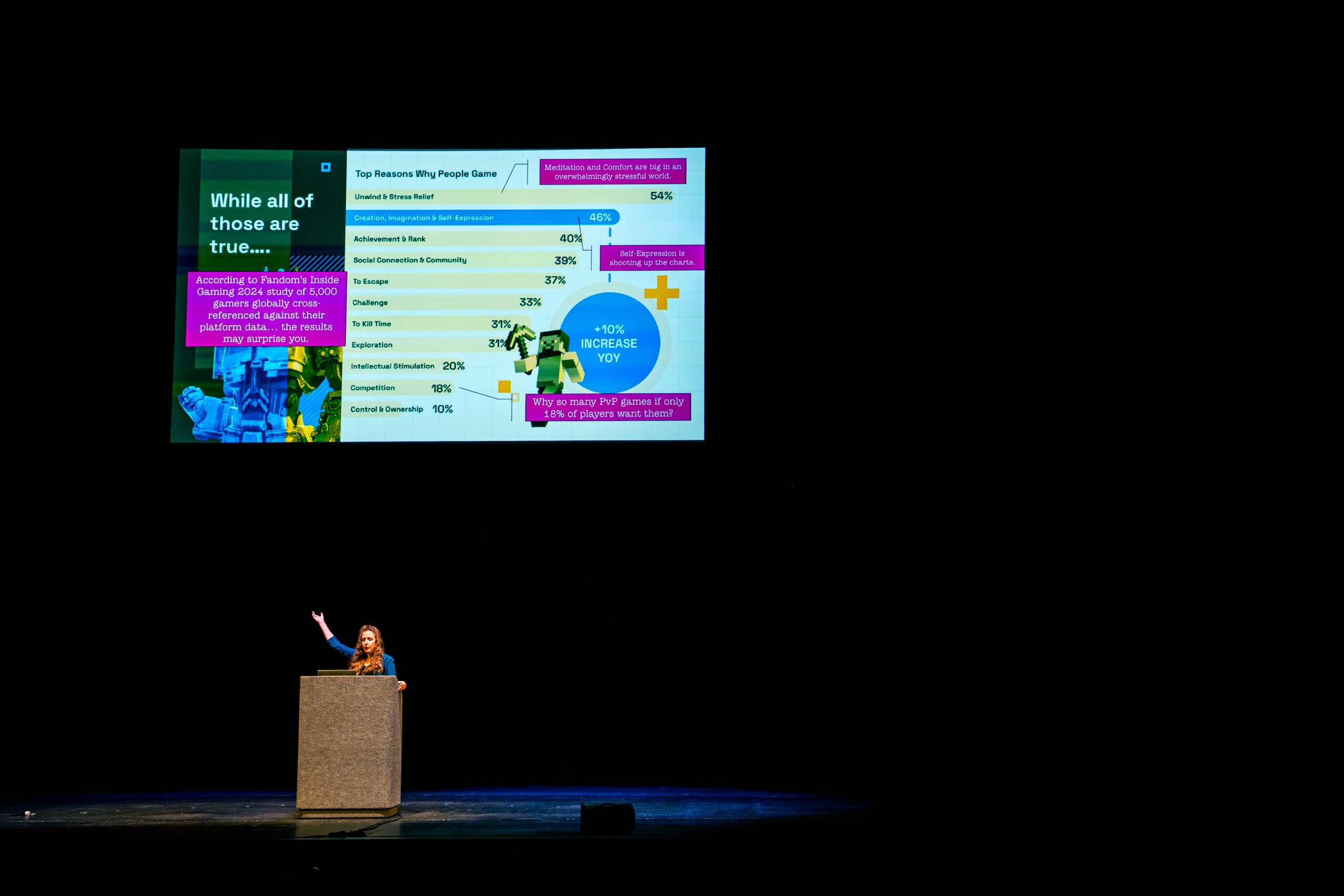
Cheryl Platz hosted the talk “Modern Motivators of Play,” and discussed why people play games, and the psychological needs that players are seeking to fill. There was a focus here on contrasts, especially between extrinsic versus intrinsic values that players gain from play, and the practical concepts of fun versus mastery or competition, and the intersection of those values. Overall, she introduced the many frameworks that developers can use to examine their relationship to their players and their motivations in a way that was grounded and realistic.
Sean Vesce hosted the talk “Listening as a Design Superpower,” about the vulnerability of making and sharing art, especially in early stages, which is a common occurrence in game development, especially in terms of getting player feedback. A few specific notes I got from this talk: thinking of receiving feedback as building a muscle, building a community outside your own development team, and listening without the reflex that you’re losing creative control. Much of this talk involved ameliorating the common reactionary feelings that taking criticism often invoke – again a useful tool for any artist really, but especially those who rely on feedback to build a project. He also referenced Never Alone, a game made in collaboration with the Iñupiat people of Alaska, and how that process required listening and sharing, and honoring the world around them.
Leah Hoyer hosted the talk “Importance of Story to Your Founder’s Journey,” which was about the story not only within a game, but around it. She starts with a question that comes up in articles sometimes: why do games still have narrative? A question with a flawed premise and an obvious answer from my perspective, but not so obvious if it keeps coming up in think pieces. She throws out the fundamental answers: it’s ownable, it differentiates one game from another, it creates conversation, it’s inexpensive, it keeps people coming back, and it provides the why. A story isn’t just in the game, it’s about the game, it’s a story about the studio or developer, the development, and the game itself – why should players or publishers buy it?
Especially in a volatile market and an industry that’s already hard on developers and studios who have to do their own marketing, accounting, etc., there’s a need to understand what players and investors care about, and how a game lines up with it. I’ve seen the rise in players and fans taking more of an interest in the process and behind the scenes of games and studios, voice actors and artists, so it probably wouldn’t hurt to consider the story around the game as part of a core strategy. She ends on a foretelling note about understanding one’s own motivation: are you starting a studio to make games or are you starting a studio to start a business?
Here’s where it starts to get interesting: the next panel I chose to attend was about AI. Specifically, it was titled “AI in Game Development: How Are You Using It?” I know, I know. I thought, would I not be doing my due diligence if I heard them out? Let me give the AI guys here a chance to defend themselves. What unfortunately followed would become the throughline of my impression of the day, if not the gaming industry as a whole, at least here in 2025.
This talk was hosted by Chris Nemcosky, Justin Bailey, Jesse Helton, and moderated by Ric Neil. They represented different companies using AI in different capacities for game development both generative and analytical. I actually won’t go too much into the details of the talk itself – also I left 15 minutes in – but I will tell you much of this defense of AI in game development was introduced as “how to make a AAA game with a team of less than 12 people” and “how to make a character for less than $10k.” Considering those previous panels I attended had, at multiple points, spoken both about the scarcity of the market and the necessity for creative originality and collaboration, this panel felt like it snuck its way into this expo. Again I am reminded: are you starting a game studio to make games, or are you starting a game studio to start a business?
For each company, there was a function they introduced. One was using original art to generate geometry and other assets with AI. The next was just text generation, for things like manuals and other tasks that would typically fall into the lap of a copywriter. In response to both of these, I would say this does not quite reach the lowest circle of hell, but I still don’t think game development is the place to take artistic AI shortcuts.
The final example was forecast generation. From what I could gather, this program uses AI to predict how well a game would sell based on similar games. They used PEAK as an example, which didn’t clearly take into account basically everything else about it, what kind of game it is, the marketing behind it, the mechanics within and how that appeals to people, streamers, and other factors that I don’t confidently believe can be regurgitated into tangible results for what is simply Another Game Like It.
The thought I keep coming back to is the fact that in Seattle alone, we’ve seen massive layoffs at some of our biggest and most profitable tech and gaming companies, game studios closed unceremoniously, upcoming titles cancelled despite the work already put into them, and some of the reasoning behind all this is cost-cutting, restructuring, and the growing budgets for AI. And that’s just in 2025. I can empathize with the desire to be able to make games even if you don’t have a lot of money to invest in it or a lot of people on a team, but finding new and creative ways to deny your work of human touch and a skilled person out of a paycheck isn’t the way to a bright future for the industry, for any industry.
One of the speakers mentioned in their company’s own independent study of the market, they found that it was best to take a “conservative approach to AI integration” because “Gen Z and Alpha value authenticity” but that only manufactures permission to find the shortest route to the smallest amount of authenticity before AI is permissible to the projected audience. It feels paradoxical to frame that approach to game development in such a way – just enough authenticity to satisfy – and certainly more work than just approaching it fully invested with human labor and legitimacy. Why is the question “are the assets going to be made by humans” still up for debate?
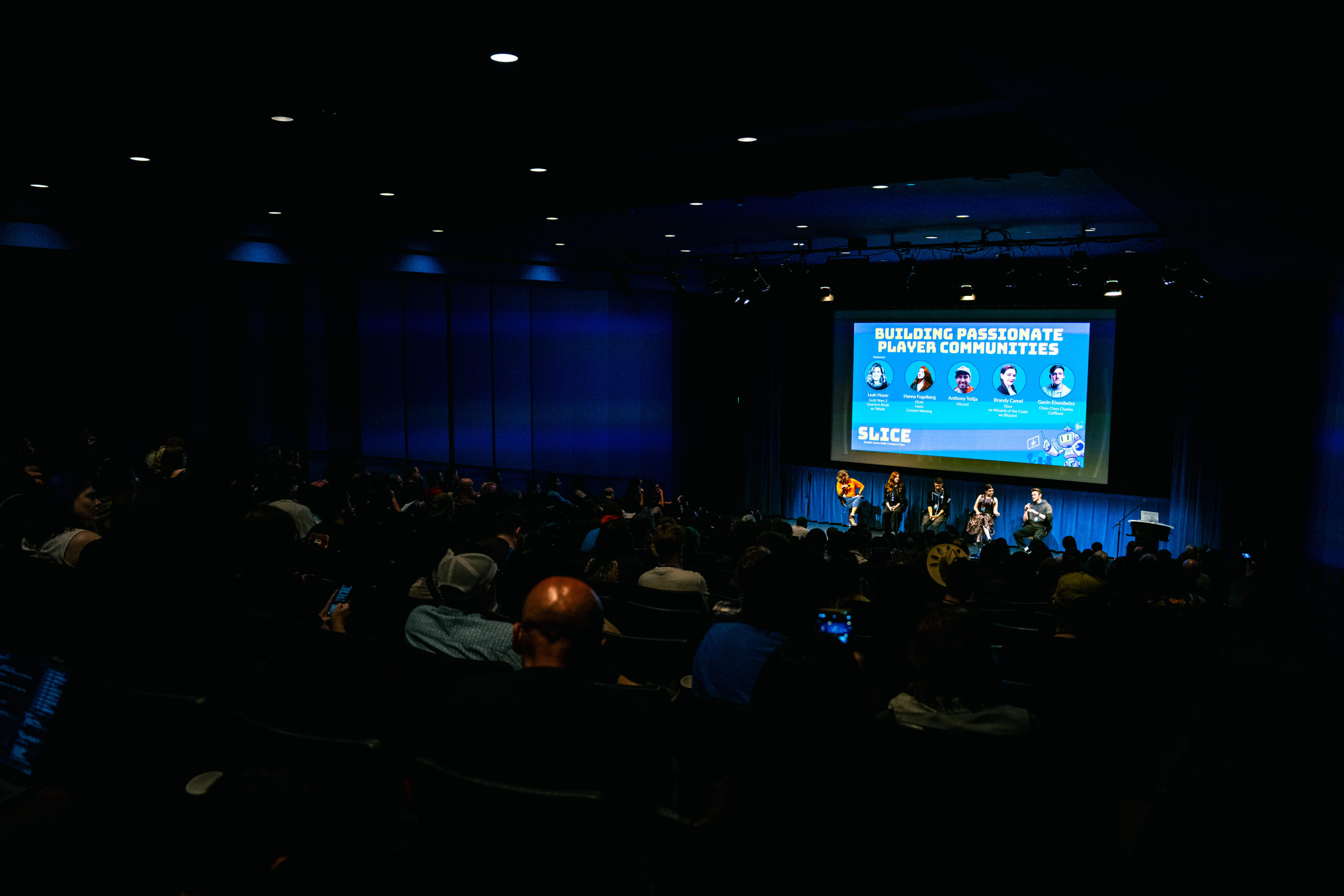
After looking around and wondering how many of the many, many people in the room were there for the same reason I was, I left to go catch the back half of the other main panel for that block: “Building Passionate Player Communities” – thank goodness.
Hanna Fogelberg, Anthony Tešija, Gavin Eisenbeisz, and Brandy Camel were speaking, with Leah Hoyer from one of the earlier panels moderating. This talk brought everything back down to Earth, with how to connect with a present and potential audience, different modes of marketing, and what kinds of approaches to take. There was a focus on authenticity, not thinking of marketing a game as some kind of strategy, but rather being comfortable in the tone with which you address your audience naturally. In terms of promotional material, Hanna said “fuck AI slop.”
This talk was more candid than I expected, but better for it. In particular, when discussing how to recognize one’s audience, they didn’t hold back on the reality of toxic communities. Brandy spoke up on this specifically, having been the person who announced Diablo Immortal at BlizzCon back in 2018, and said that building up rapport with the community helps to mitigate negative backlash and “if there’s anything you can own up to, own up to it.” One of them put it rather succinctly (paraphrased): ‘Shitcans aren’t your audience, so you don’t have to care about them, but dedicated players, modders, etc. are the people who you want to keep.’
In this new rise of certain demographics of gamers having rather unhinged reactions to video games with female protagonists, among other non-issues of diversity, there should be a push to deny them the satisfaction of getting their way. I’m sure it’s daunting to new and/or independent developers, but with the support of seasoned game industry people saying hey, don’t even worry about those people, we might just get through this era with our darlings intact.
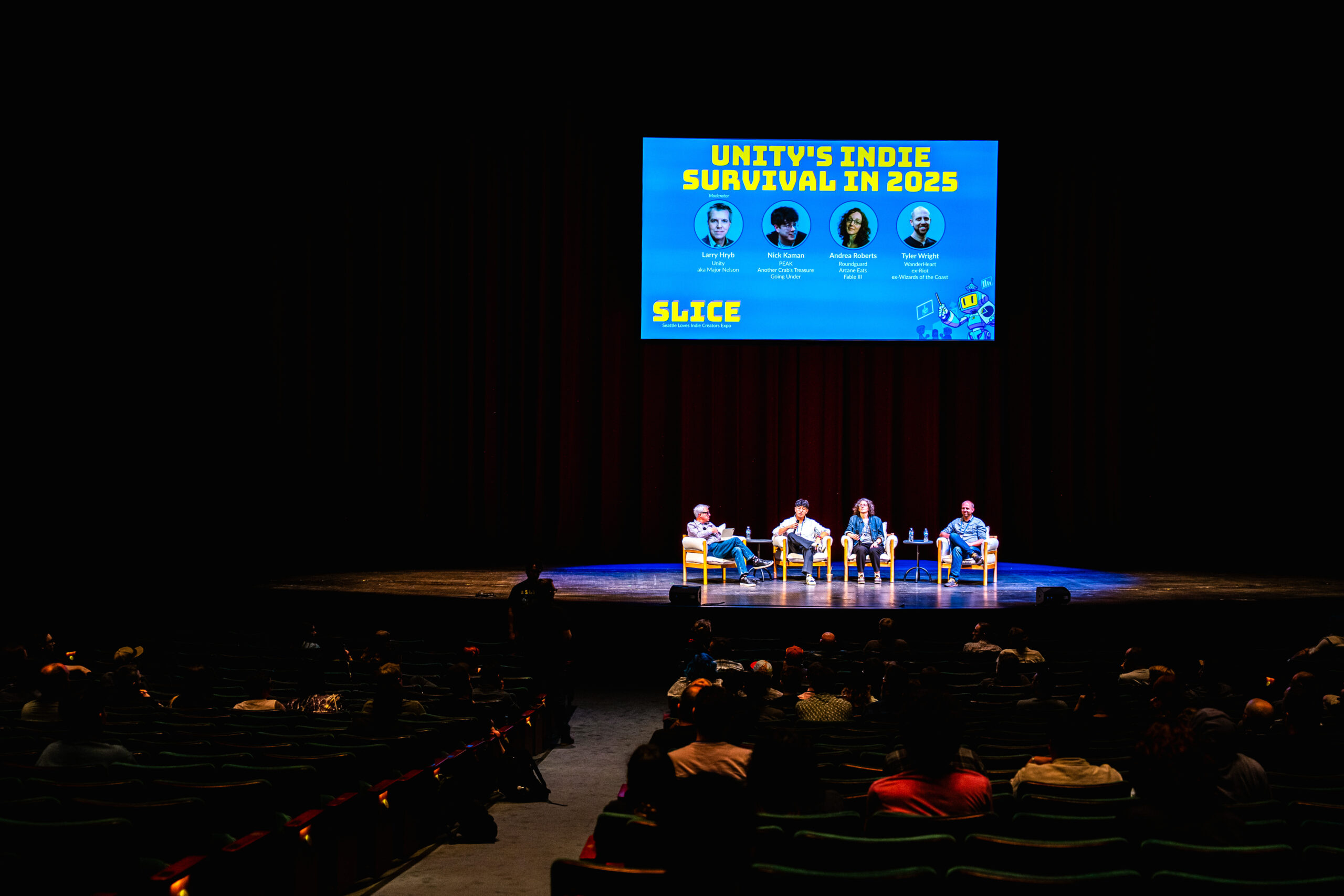
I had one more panel to attend before checking out one of the roundtable sessions: “Unity’s Indie Survival in 2025” with Major Nelson moderating the conversation between Tyler Wright, Andrea Roberts, and Nick Kaman.
Nick started this one out with a contemporary bit of advice (paraphrased): ‘There are too many good games. You’re not just competing with those, you’re competing with Fortnite and Netflix and going outside. You’re in the tough position of trying to be chosen for game shows or articles or getting streamed. Get good at the tools available so you’re not at the mercy of the gatekeepers of the industry.’ I can empathize with the constant struggle to be noticed, not to mention the added strain of whatever internal politics dictate the flow of attention.
The subject of AI came up again, as a rapidly-growing key factor of our lives as we know it. There was a little bit of a groan. Tyler started by stating the importance of understanding all the implications of it. Using AI to solve good game design, which hardly works, and not using generative AI but rather maintaining creator authorship and avoiding deliberately taking away opportunities. In other words, ‘finding a way to use AI without putting out questionable practices and output.’
Andrea added onto this, that as indies it’s important to keep an eye on how AI develops, recognize the unknowns.
Nick called AI “a plague upon this Earth.” He elaborated by describing how it comes with so many problems that the games industry now has to face, like generative AI making art and music, and it sucks. It’s not the experience studios should want players to have. Then he says something that succinctly encompasses the problem I myself have with AI: ‘Games are art and art is made by people and AI has no ability to make art. I play games partially because they’re fun but also because they’re made by humans and I want to see that experience, that’s why I listen to music and go to museums.’
In settling the topic of AI, Tyler goes on to say that if you’re going to use AI, to go deep and learn how to use it responsibly, don’t let it replace your craft and make you lazy. This distinction between responsible and irresponsible AI use becomes more deliberate the further that AI technology advances, and has been a prominent sticking point in most of these conversations I’ve been observing.
The rest of this panel is mostly spent on funding and marketing, the constant struggle within indie development obviously. There’s plenty of advice floating around, but a lot of it has to do with flexibility, networking, luck, sacrifice, and being in the right place at the right time. I think it helps to hear these stories to get that perspective, grow your own perception of what’s possible and probable, and to know you’re not the only one struggling to get funding or support. Some people are willing to go into debt, some people are willing and able to network their ass off, and so on. I feel like it’s about the same kind of sentiment I would hear when I used to ask people how they got into game writing and they would be like, “I saved someone’s life outside of a Panera Bread and it turned out to be the Narrative Director for Naughty Dog” or whatever.
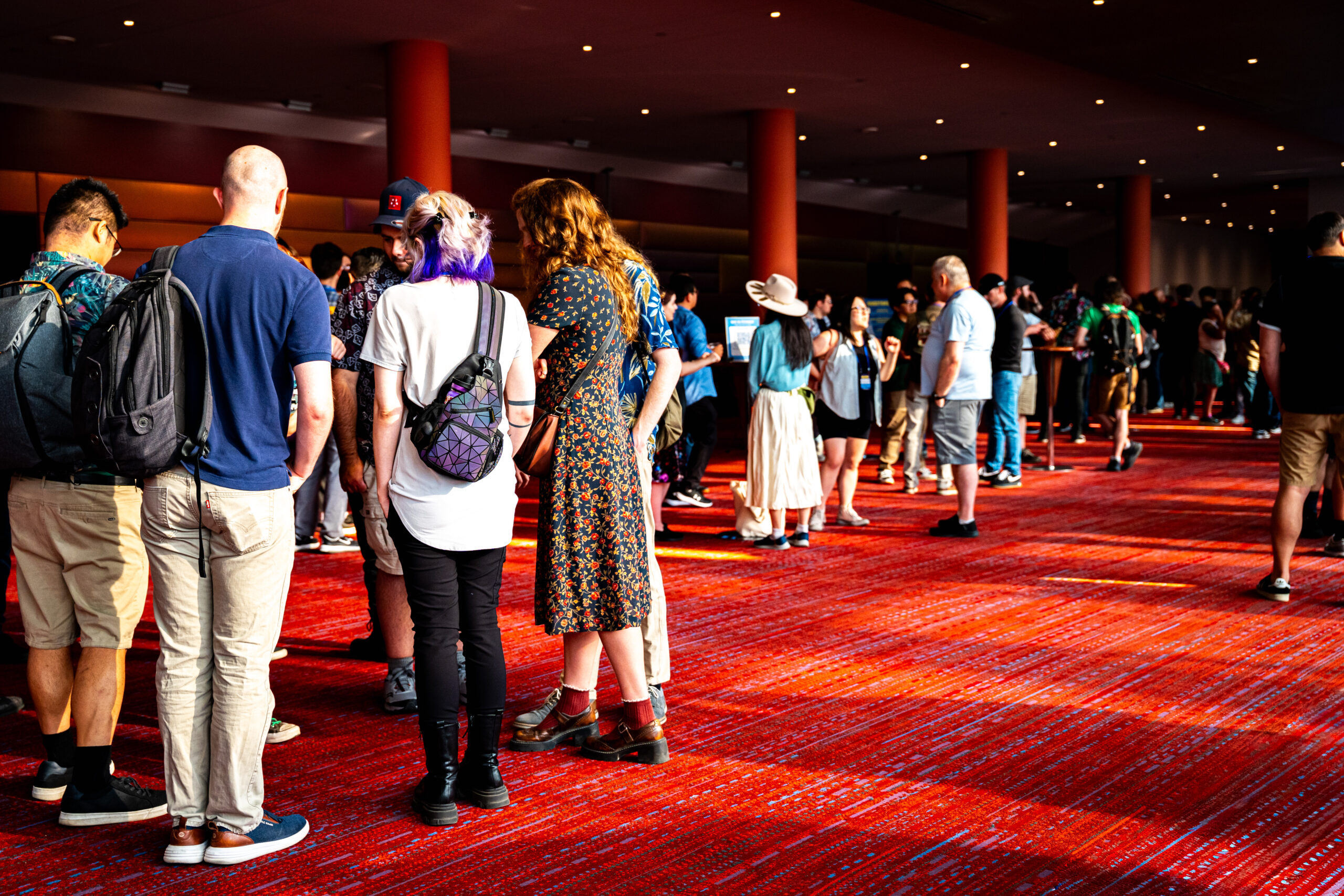
Toward the end of the day, I went to one of the roundtable sessions and, out of persistent morbid curiosity, I chose the one about AI. Specifically, “The Personal Ethics and Impacts of AI.” The moderator led us in a structured talk about the landscape and present moment of AI in games, and the livelihoods dependent upon and threatened by the expansion of it.
We started with a series of questions about how we agree on what is and isn’t AI and what is and isn’t permissible from individual perspectives. With the table full of extremely varied backgrounds, including one of the speakers from the earlier panel about AI, there was no notion that AI is a monolith, and the limits of personal taste diverged along many lines. Fundamentally, there’s a gap between generative AI and functional AI, the art-scraping hallucination machines versus things like algorithms, mapping, functionality, etc. Part of the issue presented is looking for the ways that generative AI can be ethical, like having an in-house engine trained on consensually provided art or assets, but the financial and energy burdens still remain.
Then we went into AI in education. Someone made the point that education is not about getting the right answer, it’s about learning the tools and reasoning to get to the right answer. Students that use ChatGPT to write their essays for them off of basic prompts, for example, lose out on the valuable processes of research, drafting, editing, and developing their own voice. The table discussed that while AI chatbots can sometimes be helpful in expert contexts where informed discernment exists, it’s more widely used at rudimentary levels and harms those early processes. A few unequal arguments were thrown around, at least one about not using electric cars simply because the charging ports aren’t common enough yet, so like many conversations about generative AI it went nowhere productive.
Overall, the roundtable didn’t really bring up anything surprising, and while a valiant effort at productive conversation was made, opposing viewpoints on the topic of AI will usually refuse to meet in the middle. Especially on the topic of generative AI, there will always be a fundamental difference in perspective and opinion on the efficacy and ethics of it. Personally, I do believe there’s a right and a wrong answer, but that dichotomy will exist for as long as AI does.
The moderator, at least, did a good job at keeping the conversation on-topic and meaningful, diverting away from arguments that were too personal or combative, and correcting genuine misinformation. He left us with the question: what do we want the future to look like in terms of AI? And my answer to that is: a portal back to the year 2018, but I digress.
After the panel, the moderator – a local technical designer at Big Company – and a DigiPen student and I sat down to continue the discussion, because we all felt a little unsettled by the roundtable. This conversation was one of the highlights of my day. It was so candid and we all found each other on equal ground despite our backgrounds being rather distinct from one another. I have no quotes or paraphrasing for this, but the topics ranged from AI, generative AI in particular, the culpability (or lack thereof) of AI especially in terms of chatbot psychosis and other formed delusions, and the specific example of therapy professionals using ChatGPT to help them with clients. We went from capitalism to venture capitalism, prisons and housing to mental health and art and socialism. We truly went all over the place, and yet in this conversation was the reality that everything is connected, from generative AI and the billions being poured into it, to your tap water and the price of your rent.
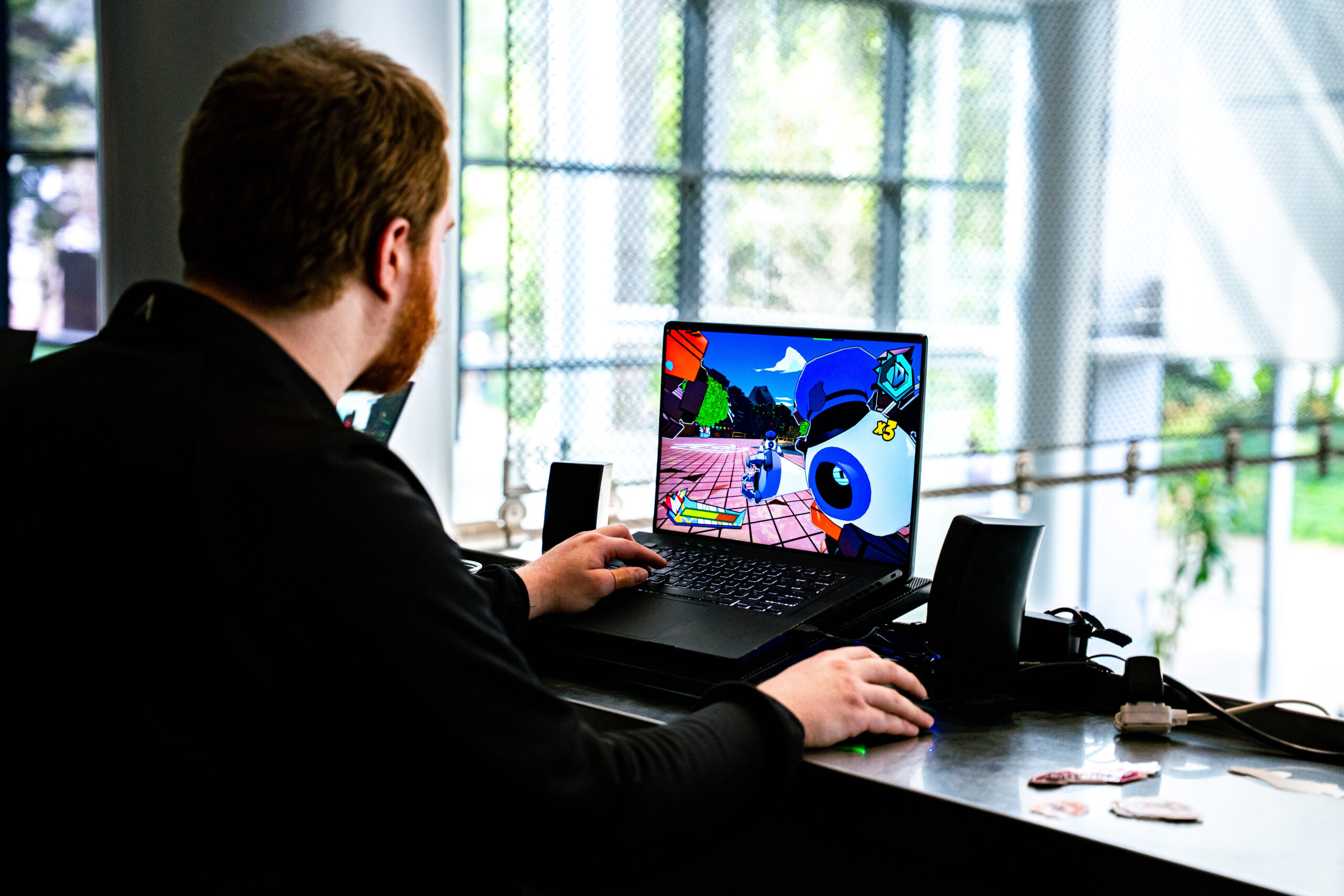
Not to be outdone by this growing discontent, I made my last stop at the indie game corner and talked to a couple of the developers about the expo itself and the Seattle indie community at large.
First I spoke to Gideon Moes from Ellensburg, developer of Night Spasm, a story-based adventure game that you play through every character in the story, to learn who they are and influence their decisions. The initial impression I got was this interesting blend of deep philosophical topics and unique omniscient gameplay with charming pixel graphics.
So, how was the process of getting into SLICE?
G: Oh, the process? It was pretty easy. At first there was a little bit of information that I wasn’t sure about, but that was later updated, but signing up for it, getting the tickets, and actually coming here and being able to do everything has been very easy to navigate exactly where I need to go for the events that I want to see, and overall 10/10 experience.
This is very much about not just Seattle but, you know, this general area of the PNW. What do you think makes games and game developers in this area unique, if anything?
G: This is kind of my first time interacting with a big group like this, and I’m noticing a lot of patterns. First of all, like most, they’re all very friendly, they’re all very passionate and whatnot. One thing, compared to a lot of the other developers that I’ve met is that they don’t seem too much in your face. Like I feel like so many developers just want to tell you exactly what they want and then they really let you go. But this has been a very flexible experience and I feel like that has to do with the kind of people around you since most of them are local to Seattle and I’d say that’s the unique trait I’ve noticed in this event from all the people gathering around.
Any other thoughts about SLICE, the area, game dev, anything like that?
G: Seattle is a much cooler place for this kind of stuff than I thought. I never really took it as kind of a tech or game place but once I heard that slogan of “it’s the Hollywood of game development” I was like ‘oh my gosh, they’re right.”
I also spoke to the folks – also known as Blue Comet Games – behind Magical Showdown, a team-based brawler full of vibrant magical girls.
So, tell me about your experience at SLICE!
C: So far it’s been honestly just very nice. This is the biggest showcase we ever have been part of. We are based out of Washington, but mostly have been showcasing this on the eastside at smaller events, but we’ve had a pretty good time here. I’m very happy with the turnout and the response to the game itself.
C: I will say this: Positives are a lot of nice talks. A couple of negatives, I feel like a couple of them may overlap a little bit, and early on I had some trouble figuring out that there was an upper area and a lower area to go to, and it almost felt a little bit out of the way. But overall, I would say I’ve had a very good time here, 8/10, easily 8.5/10.
Do any of the talks stand out to you in particular?
C: A lot of the fundraising and financial talks in general. Very very needed for like indie companies and they realize that when they were planning it. So, I can understand why they loaded up on those. But in general, a lot of these talks are relevant to indies and were very useful.
And you both are based in this general area?
C: Washington, yes, I’m out in Bellevue.
J: And I’m in Capitol Hill.
I’ve been hearing a lot about what makes this area special or unique? What do you guys think?
J: In my opinion, I just think it is both simultaneously big but also very tightly put together. Like in spite of its size, there are a lot of people that you can meet who are just like ‘hey I feel like I’ve known you for several years now.’ I’ve been doing a lot of these Seattle events for a little over 5 years now, and I think of a lot of these guys as my close friends. Doing something like SLICE makes me feel like I’m meeting a whole bunch of new friends.
A very tight, consistent community.
C: Yes, like it’s a blessing in that you constantly meet new people but you also meet people that you know. I’ve met at least a dozen people that I’ve known from other events and I’ve been able to come around and say ‘hey, what’s up’ to, it’s very nice.
J: It’s also a group of people that is always building other people up.
C: We support each other.
J: Like game development in general is very communal in that sense, but doing things like this in the Seattle Indies as a whole does nothing but put everybody up, makes everyone better.
That’s so good to hear, because especially in things like art can be so competitive. I’m in the pro wrestling scene here and it’s a lot of the same sentiment – you see a lot of the same people, build a lot of these deep connections, try to build each other up and have this robust community. It seems like the Seattle Indies group encourages that kind of community and SLICE is a reflection of that.
J: I just hope that SLICE could be just as big if not bigger than something like GDC, because it is really cool to have something like this so close to home.
C: This has already been fantastic. I’m hoping it gets bigger and better somehow, but so far SLICE has been great.
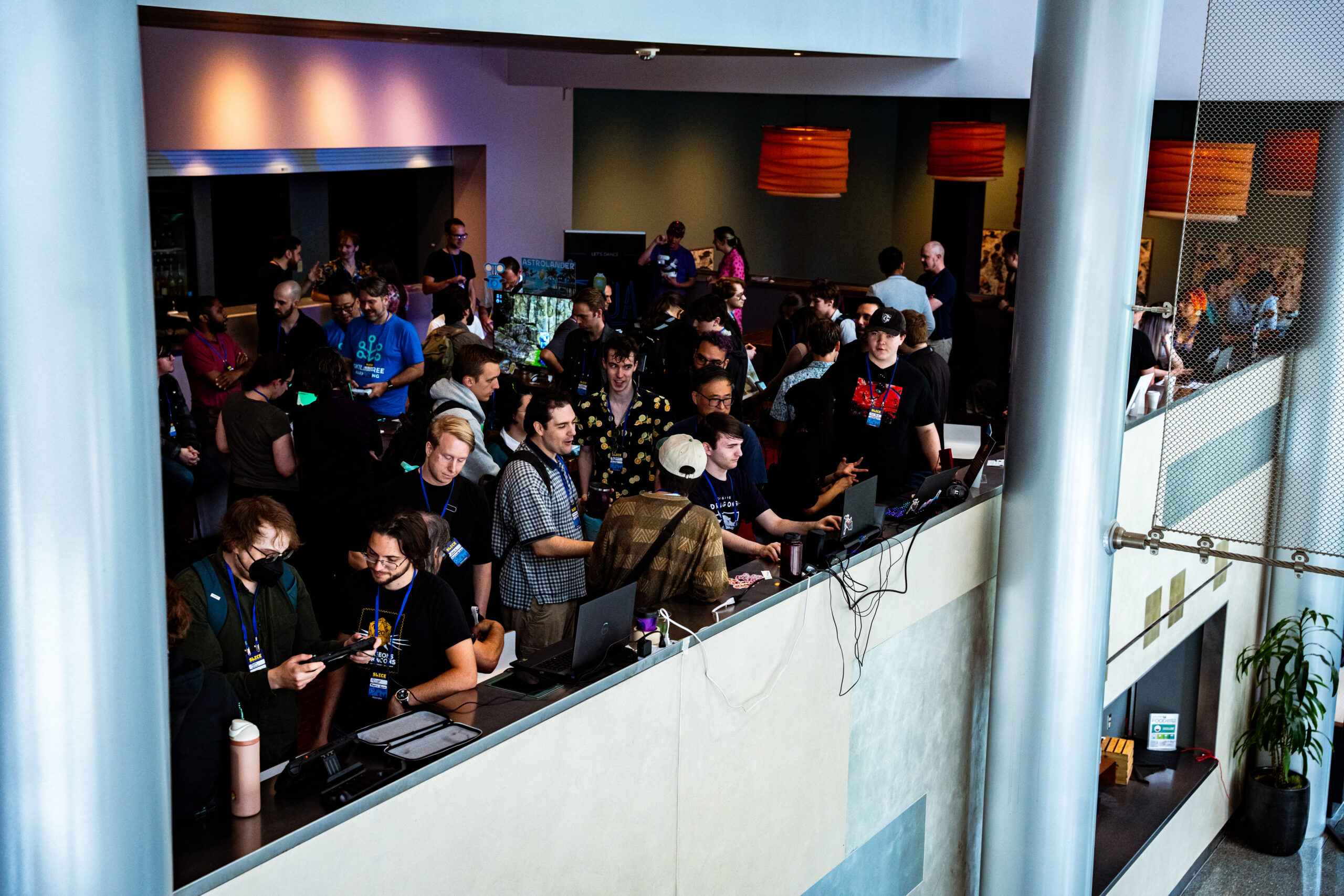
Seattle Indies did a great job in bringing their resources and philosophy to a bigger production like SLICE, even for someone like me who is not at all in the process of making any kind of video game, but likes to write about them from time to time. The span of experience and expertise within these panels and roundtables is welcome in an industry that still has so many unknowns and exceptions to generally well-trodden rules. It was communal too, though Seattle Indies hosts many smaller events, and gave a lot of creators room to share ideas and support.
Despite my animosity toward generative AI and its encroachment into artistic industries, it can be worthwhile to not hide exactly what we’re dealing with. Without the discussion of AI, especially from companies who are profiting from it, we’re missing a huge amount of context for these spaces. 2025 is clearly the year that this has become a forward topic, and over the course of my 6 or so hours taking in this event, even when I wasn’t seeking it out, AI and the inherently oppositional viewpoints organically came up over and over again. Although I don’t necessarily want the discussion thrown out completely at industry events like this, it’s important to adequately address the effects these technologies have on the very communities that they’re seeking to ingratiate themselves within. Remember the layoffs, remember the real, breathing artists and developers, and remember the reason anyone is doing any of this anyway.
While I was perusing the indie game corner, I overheard a woman talking to a colleague and something she said stuck out at me. “There are visionaries and there are executioners.” I would agree, even though we seem to still be debating about who is who.
