At this week’s PlayStation Showcase, we got a first look at the next entry in the God of War pantheon with Laufey, a story centered around Faye, the infamously dead wife of Kratos from the 2018 game.
The trailer shows a continuing focus on the “one camera” cinematographic presentation that Santa Monica Studios has been consistently proud of. Sequences seamlessly transition from gameplay, to quick time events, to minute-long cutscenes. This was one of the most talked about aspects of the 2018 game’s design, commonly referenced with the words “immersion”, “scale”, or “consistent”. This approach mostly works with the presentation of the game as a road trip-esque trek across a fantastical Scandinavia, mainly because Kratos as a character is built like a tank you literally could not stop. You don’t need to worry about time’s passage, fatigue, or moments of enforced rest when your character is the quintessential angry guy who’s going to rush his way through every conversation and situation.
It works a little less when you’re a woman who is alternating between resurrection, doing air combos on plant monsters, stumbling down hallways, and being imprisoned as she’s held down by enemies she’s going to unmake within moments.
This is not a problem unique to the one camera format of the post PS3 God of War games, and it’s not even a problem inherent to the AAA cinematic approach that Sony has made their bread and butter over the last decade and change. While Ludonarrative Dissonance is perhaps best known by its usage in discussions around characters like Uncharted’s Nathan Drake and his propensity to alternate between quippish “I’m just a little guy” routines and the slaughtering of dozens, it’s a problem continually plaguing games big and small year after year. In all the years since, this situation hasn’t improved in the slightest..
Part of this is caused by video games’ propensity towards violence. While every medium has expressions of conflict, video games—being a mechanical and heavily interactive format—are understandably dominated by replications of the most visceral form of human engagement. People have always yearned for the physical sensation of impact (take a look at any sport to understand this), and gaming functions as an extension of this. We yearn for the crunchy hit stop, and the particle effects of collision and destruction.
The other, more simple answer, is that in any creative field, people are going to rely on shortcuts or “standard” solutions to any problem they run into. We expect all fighting games to have a move list, so it becomes inherent to the genre; visual novels should have a text log; live service games demand a battle pass, and so on. Often these conventions are desired, but just as often we run into ideas that exist simply because it’s viewed as a necessity, e.g. the deluge of open world games adding loot systems straight out of Diablo even when designed to be static, or gacha games 1:1 copying the UI of Genshin Impact half a decade out from its release.
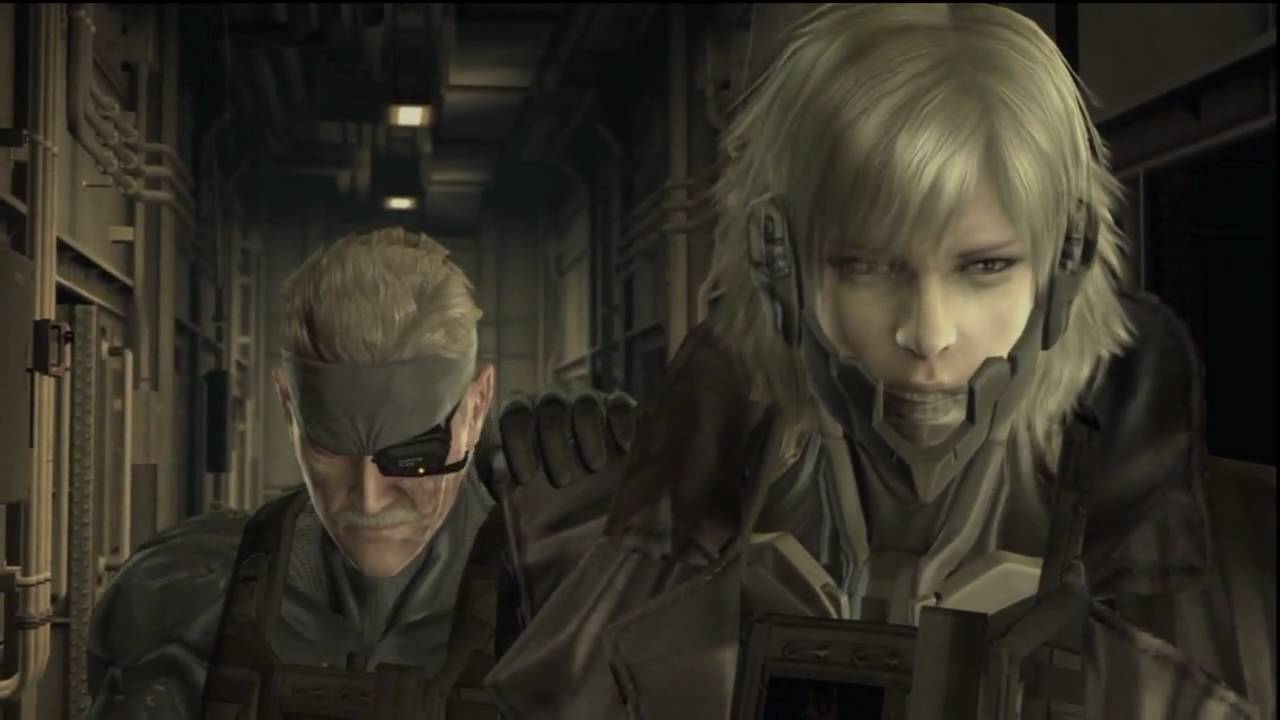
The most egregious of these obligatory concepts to me has always been what I colloquially refer to as “the microwave hallway problem”, after Metal Gear Solid 4’s scene where a suffering Snake pushes his way through a hallway that’s killing him with radiation, as the imagery jumps from perspective to perspective.
In Metal Gear Solid 4, this scene is about Snake, as an old man, pushing himself through absolute misery for a moment of heroism. MGS4 itself is a fairly slow game focused on stealth, so a paced and deliberate moment like this doesn’t feel too out of place, and matches the artisanal tone that director Hideo Kojima has historically gone for. It’s iconic and remembered for plenty of reasons, especially for its place in gaming at a time when the average storytelling for mainstream titles was done through a purely divorced cutscene and gameplay split.
Unfortunately, this concept has been used again and again throughout countless games in the decades since MGS4’s release, and typically without much direction beyond the surface level.
Cyberpunk 2077 is a game ostensibly about the dying V, a struggling mercenary whose brain is being torn apart by an entire other identity forcing its way through them. Aside from the consistent interjections from a ghostly Keanu Reeves, this fact is mostly removed from the player’s standard means of engagement, in favor of the expected techno-power fantasy… except for the random moments at ends of quests (and similarly-timed event triggers), where V will suddenly double over with a pixelated and messy screen, and start to move at 0.25x speed, before immediately regaining full and complete motor function without the slightest inconvenience.
On the surface, this is the visual and mechanical language we have come to expect from cinematically driven video games, many of which are often free-form and non-linear. Developers, of course, can’t plot a set course with moments of defined strength and weakness if they’re providing you a venue with which to do things in any potential order. At the same time, however, is anything truly being gained from these moments of appropriate tonal resonance amidst a sea of completely untethered gameplay? Are these moments of weakness displaying a peek into the intended narrative, or are they showcasing just how limited the language of the common game is?
Countless games follow this format. There’s Red Dead Redemption 2’s concept of tuberculosis that involves the occasional cough and hallucination in between hundred-man slaughter sprees. There are several Resident Evil games that do this, but most notably this year’s Requiem, where Leon Kennedy’s T-Virus infection temporarily makes everything slow, blurry, and blue, before restoring perfect parry and suplex potential almost instantly. Even Kingdom Hearts 3, a game I broadly love for its absurdism, isn’t immune to forcing Mickey Mouse through a slow moving facsimile of the microwave hallway.
To reiterate: what do we gain from these moments of control? Indeed, putting the player behind the wheel of an ailing character is a powerful tool of empathy and connection, but when you jump away from that almost instantly, does that empathy persist beyond a fleeting moment? Does the dissonance not showcase the cracks and limitations of what you’re trying to do with the medium, and fall back on the base expectations of what a video game is rather than what you want it to be?
It’s easy for me to armchair game design over here from my ivory tower of gaming critique, but we don’t have to conceive of new and innovative ways to fix these problems, when they’ve been executed on in multiple games since the genre’s inception.
The Fear and Hunger series has a constant potential for characters to lose limbs and abilities as you face down the many horrors of that world. Kenshi, or freeform sandbox games like Dwarf Fortress and Caves of Qud, are able to showcase all sorts of gameplay systems related to loss of power by changing the means of engagement in a tangible and permanent way. Action oriented titles like Sifu or Eternal Sonata are able to demonstrate the gain and degradation of stamina and means of engagement as their characters go through various stages of life. Hell, many FromSoftware games are predicated on the concept of an “unpowered” or “hollowed” form that can only be temporarily salved. Even games like Final Fantasy IV, a mainstream RPG from 1991, work with the concept of mechanical and narrative intertwining through the character of Tellah, an old man pushing himself to the brink with dwindling stats on each level up.
Indeed, an argument posited against many of these examples in the wake of their larger budget contemporaries would be that they’re more elaborate or hardcore games for niche audiences, despite games like RimWorld selling over 4 million copies, and persisting in popularity many years down the line. Another could be that these moments of disconnect function fine as abstraction; surely the core act of playing a video game is abstraction from reality enough that we can accept these limitations (this one I’ve seen in opposition to discussions on ludonarrative dissonance consistently).
Regardless of reasoning, I believe these limitations come not from the medium of games, but from the nightmarish production management of many modern titles, as well as the expectations of capitalism; from operating under the belief that the market is truly something that exists, and not an artifice propped up by manufactured evidence and stubborn belief.
When we look at how games are made, especially when it comes to titles with larger budgets, the creation process reinforces this issue. That need for a common language—a blueprint that can easily be executed on—becomes a requirement when we think about how many games are being created by contract workers.
Looking at something even midscale in budget such as last year’s Clair Obscur: Expedition 33, we can see that hundreds of contractors were hired temporarily to work on things like art, rendering, sound, and quality assurance. If we look at Halo Infinite’s development, we have consistent reporting that workers were limited to 18 month contracts and then placed on a 6 month cooldown before being re-hired, to suit arbitrary leadership requirements and skirt labor laws that would afford these employees more rights in their workplace.
It’s not hard to imagine the difficulties faced by these contract workers in a broad sense, especially when it comes to getting to grips with the project they’re working on, or asserting creative agency over it. They have to learn the toolsets, the project outlines, the deadlines, where the last contractor was forced to leave work unfinished… so on and so forth. In the process of all this, there’s also the unending fear that they could be laid off on a whim, so there’s not going to be much of a desire to shake the boat with more radical creative interjections. From the side of more stable employees as well, things are consistently in a state of flux from the hands working on a project having to be retrained, with pipelines consistently altered like the Ship of Theseus.
Taking all this into account, it’s easy to understand exactly how so many games end up eerily similar, or formulaic to a fault. Sure, this applies to things like Unreal Engine 5 becoming dominant throughout the medium as workers are able to pick up that shared understanding of how something works, but it also applies to how these works end up being made. If you’re pushing through a logistical nightmare, why wouldn’t you rely on the most commonly used or easy to understand tools? Why wouldn’t you frame a scene as so many other scenes have done before because that’s what’s easiest to convey to your detached creative team? Management has to be appeased as well, so there is a pressure towards showing them something that wouldn’t feel out of place in another successful game, matching the tone of another rather than cultivating it organically through the creation process.
This is made worse through the intersection of marketing, management, and manipulation. When we talk about the artifice of things like focus testing or evaluating what an audience might “want” (an unrealizable notion, given that the “audience” isn’t a real group of people, but rather a handy abstraction of guesswork), it’s not an exaggeration to refer to it as an “unreality”. There are lessons to be learned through experience and inquisition, but they cannot be done through the means of our current economic and creative climates, lest we continually repeat the sins of things like the hastily edited ending to the theatrical release of Blade Runner.
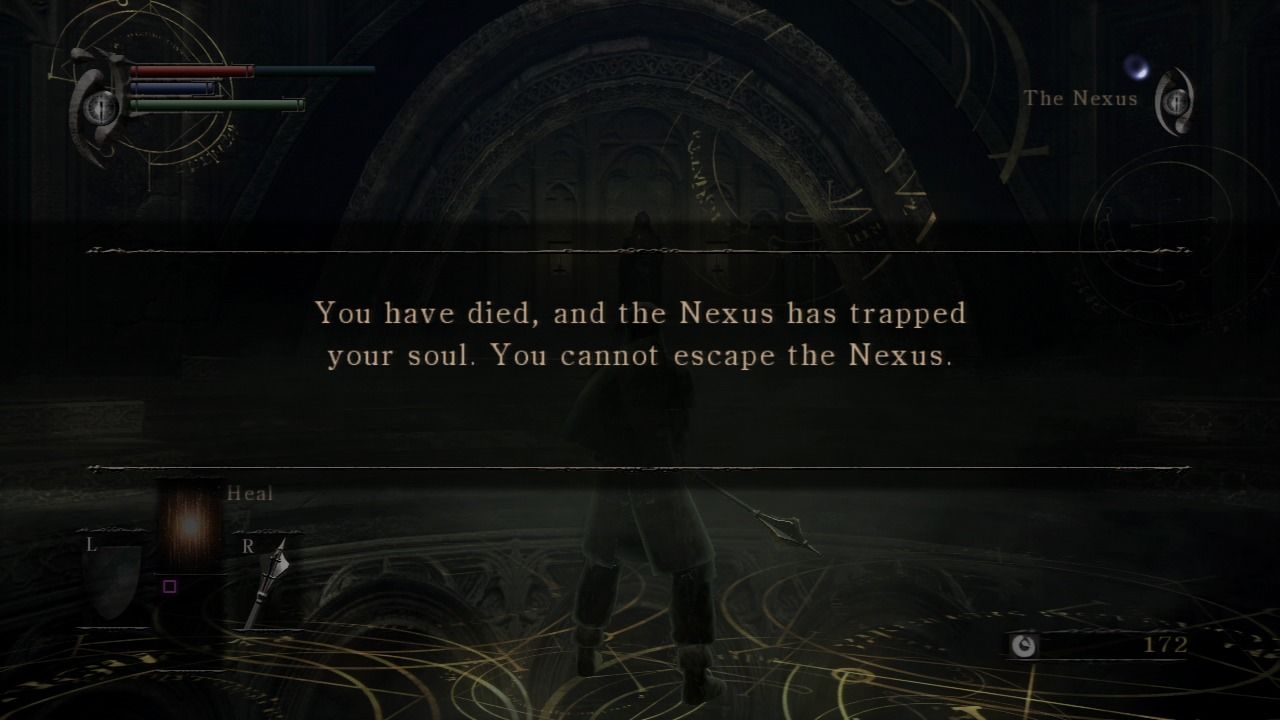
When we surrender to the idea that games should be more than pure idealized “fun”, or more accurately, when we give in to the notion that fun can only be defined by unlimited player control and power, we limit the ideas of what the medium of games can be. Fun can be had in planning around and experiencing things like a dismemberment in Fear and Hunger. There’s joy to be found in those moments of overcoming the challenges of a game like Demon’s Souls. Not everything is killstreaks and SSS combos; sometimes a power fantasy can come from overcoming incredible odds, situations, or indeed even the way we control a video game.
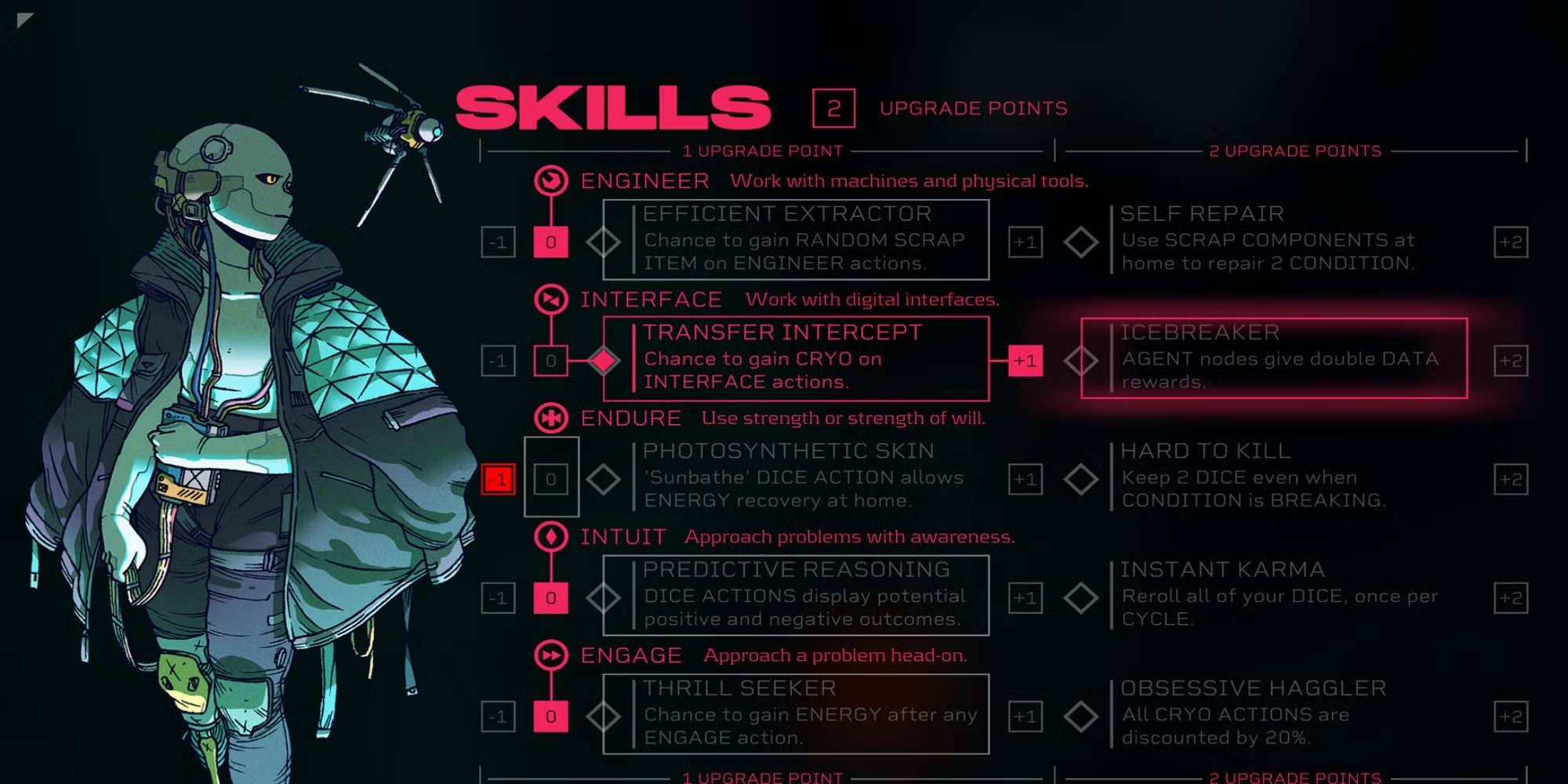
A few years ago, I had a lot of fun with the presentation of Citizen Sleeper; a sci-fi game about functioning as a being trapped within a proprietary and expensive robotic body, trying to make ends meet and solve problems inside of an old space station. The conceit of the game is great—balance the needs of your mechanical body (allegorical of chronic illness), the needs of your community, and the imposition of societal pressures working against you—but in practice, it unintentionally becomes this oddly weightless and almost dismissive work.
Within an hour of starting the game, the idea of balancing meters, or struggling against any sort of representation of chronic illness, can be thrown out the window with relative ease. Minigames let you play the stock market and gamble for infinite money. You can get a trait to start repairing your body infinitely with very little effort or risk, eliminating any chance of experiencing the detriments of disability. You can solve the issues of every NPC you meet, and complete the main story without friction or fear. On a certain level, I admire the game’s willingness to take the conceits of an economic manager and try to instill the idea that it’s all artifice and can be changed with luck, but it’s also limiting and ineffectual as an experience.
I don’t expect every game to be Marathon—a complex and punishing game wherein the core experience is determined by a mechanical conceit that suits the type of narrative they’re trying to tell—but we can do better than serving (and in some respects, outright conditioning) an audience that exists in our most insecure assumptions. It’s understandable to rely on what’s easy and known, but we show the most interesting parts of ourselves when we mold what’s known into something only we can.
There will always be abstraction and ludonarrative dissonance in video games. There will always be that struggle to separate what a character should be able to do within the bounds of the narrative versus what makes an engaging and interesting game to play. However, this does not mean we should accept the absurd compromise that these patchwork microwave hallways provide. The medium of games allows for collaboration between creatives and viewers in ways other art forms could only dream of, and we should be trying to cultivate that charm, instead of abruptly ending the dialogue out of convenience.
