A lot of pop culture right now is seeped in nostalgia. I understand why, to an extent. The economy is rough, and new ideas are a bigger financial risk than established ones. The public yearns for a simpler time, which usually just means an era when they didn’t have to pay bills, so people my age and older want to think about the cartoons that were on when they were kids to spark that nostalgia. It’s a coping mechanism, and it’s one humans have used in any time period. Contemporary capitalism has just caught on, and figured out how best to exploit it.
I am not angry about this, even though I’d rather things be different; art can thrive in any condition. I think there have been good revivals that play to the past, and reboots that interpret characters and stories through a modern lens. However, the ones that don’t work are the ones that don’t bother to reinterpret, purely playing the hits instead.
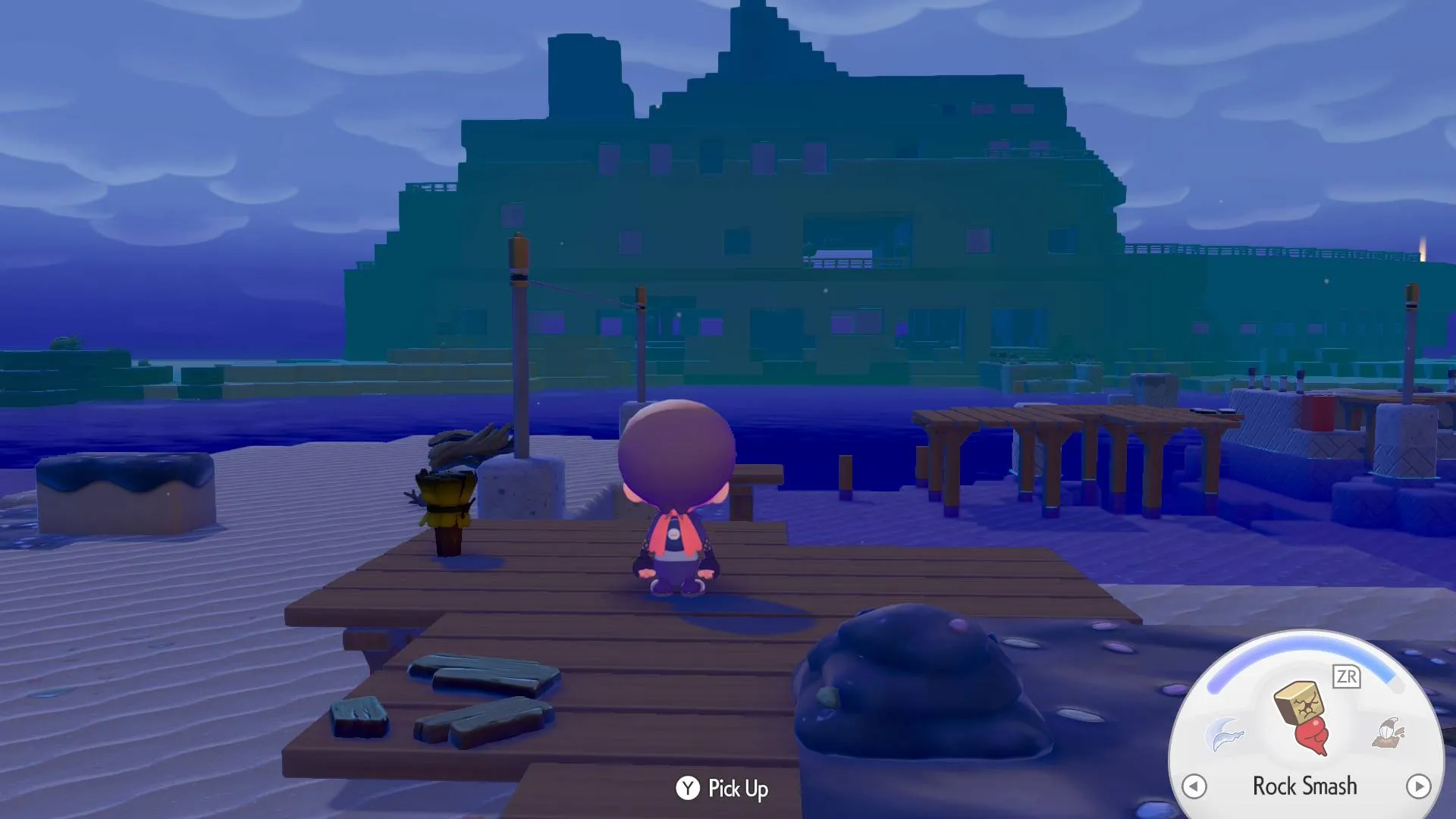
When I played Pokémon Pokopia a few months ago, I knew there would be callbacks to Red and Blue’s Kanto. Folks online had looked at the maps of each area and lined them up with cities in Generation One’s landmass, and the story in-game quickly told me that this was a Kanto, nay, a Pokémon world ravaged by some form of climate catastrophe that left the land bereft of both humans and Pokémon. When the player character, a Ditto that just so happens to be freed from its Poké Ball, begins to rebuild the land, Pokémon return and begin to emulate human society in a hope that people will also come back.
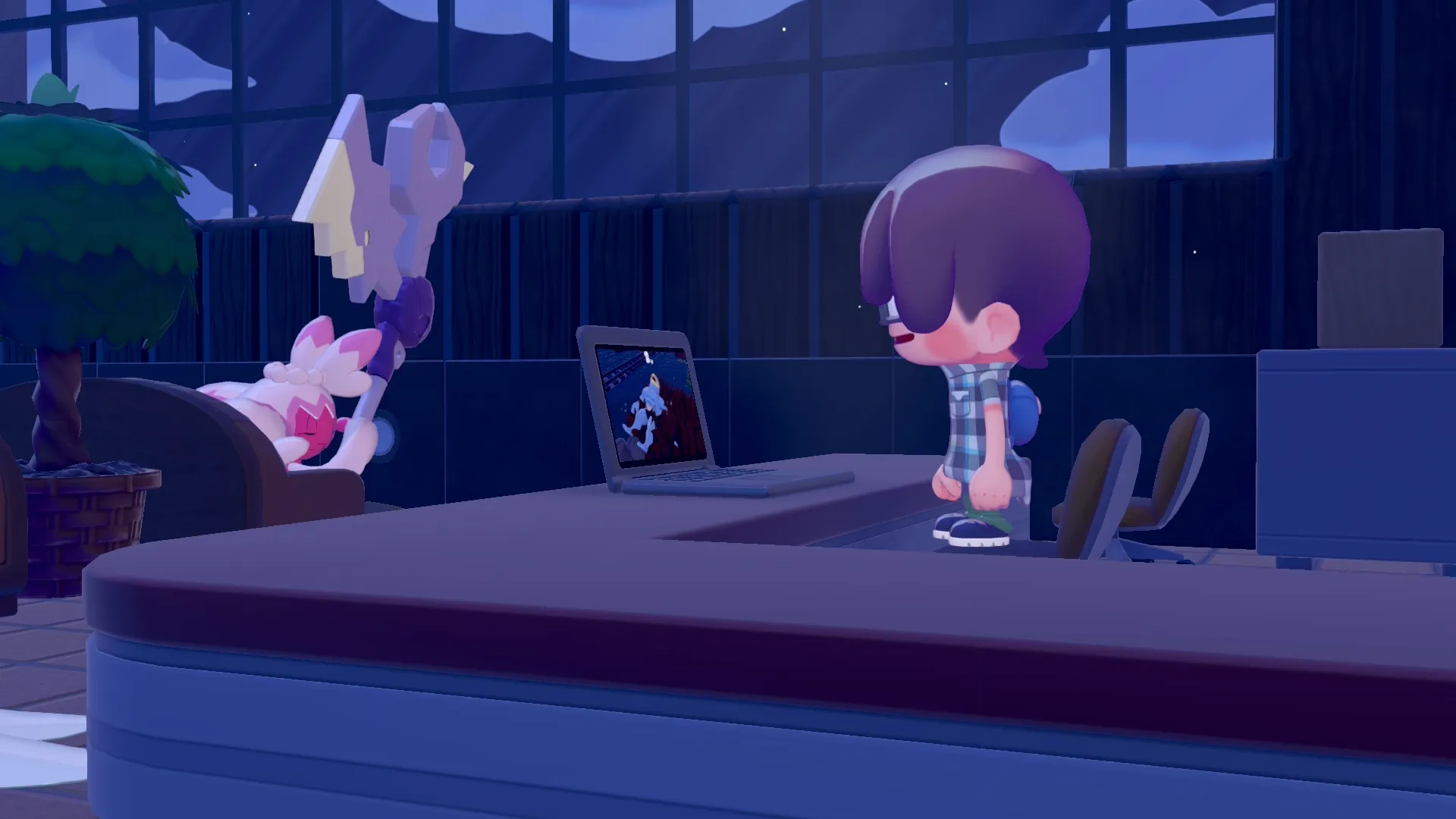
The Pokémon are interacting with the world in a way that emulates the past, yes, but they are also bringing things forward. You aren’t tasked with re-creating the cities as they were before the disaster (you can if you want, but there’s no real guidelines). Instead, the Pokémon are inspired by what they remember from their lives with humans and want to show how capable they are by their own means. They want humans to feel comfortable if and when they return, but the Pokémon have their own needs, and request amendments to the cities to fit their likes and dislikes. The Pokémon are characters in themselves, and many of them act very differently to how people have always imagined them. There’s a reason the valley girl/gyaru Bulbasaur and Southern-drawling Kyogre stand out so much. It’s novel!
If a remake of a game retreads the same roads with little deviation, it is not for those of us actively interacting with the media. It’s there only to court those searching for a cheap hit of nostalgia. Pokopia posits that building on top of a foundation while introducing new things for new inhabitants will still appeal to those returning.
There was a moment about a week into my playthrough where, even though I was already immensely enjoying the game, Pokopia became something special. I had created a good amount of homes in the Withered Wasteland, the starting area where Fuchsia City once stood. I got my little town of Pokémon to around environment level six or seven (shh), which means the residents were on the path to absolute contentment. For the whole game, a unique set of tracks played for each area, mostly original save for the Pokémon Center healing jingle as a common motif.
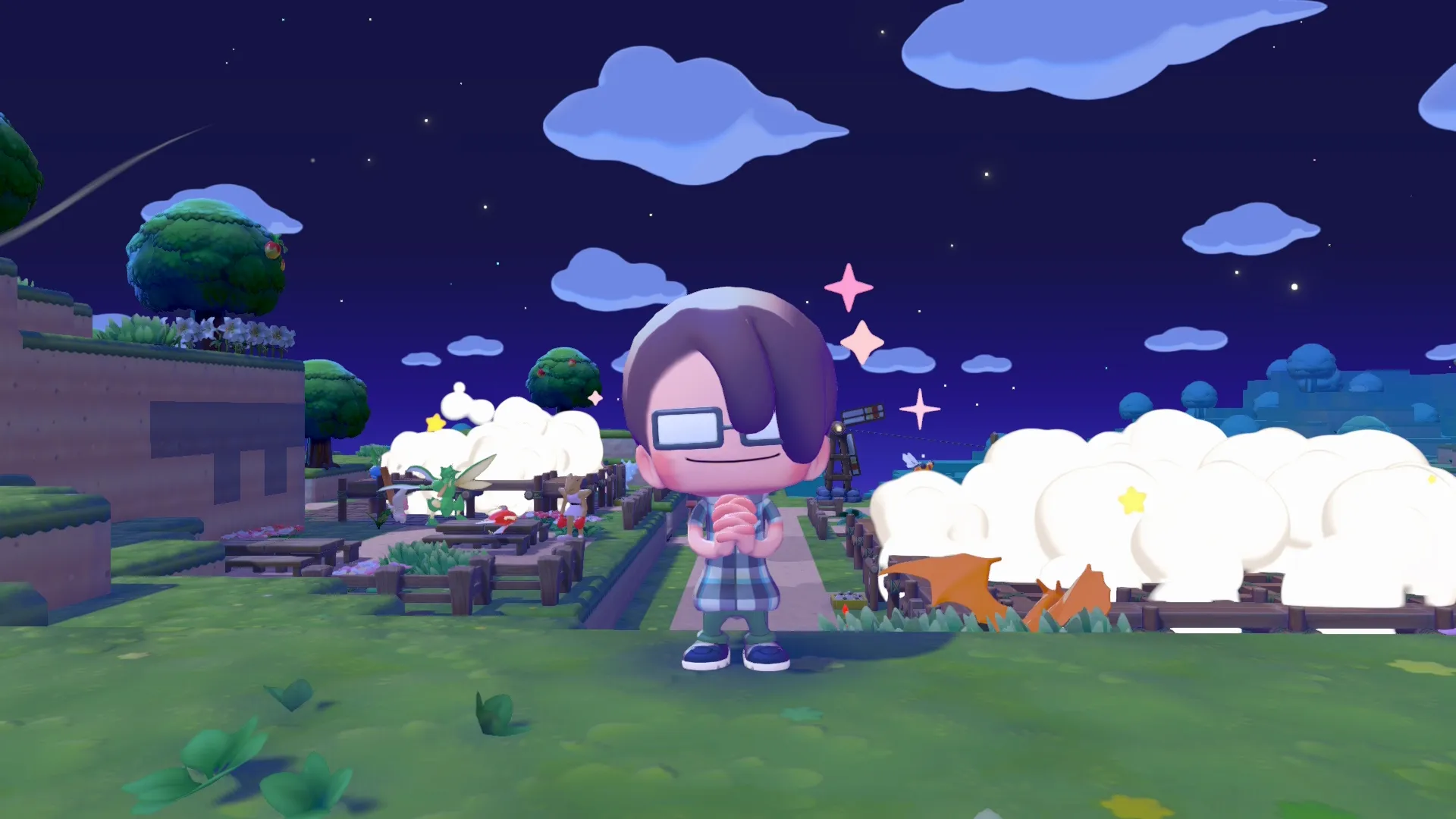
Suddenly, without drawing attention to it, the music shifted to a new remix of the Fuschia City theme. It took me a moment to realize what had happened, and as soon as I did, I broke into a fit of sobbing. I don’t exaggerate here, I didn’t just tear up a bit, I started bawling. The use of an old piece of music, of setting this game in that first Pokémon world, was artistically resonant and moving. It wasn’t the song itself, even though it is a nice melody and I had memories of it playing in past playthroughs of Kanto titles, but it was more about what was being conveyed in that moment. No longer was this a Withered Wasteland, unfit for people or Pokémon. Ditto had brought life back to this area. This was Fuschia again, but in a new form. Sure, I may be a bit weak to Pokémon as a concept, it has always been a special interest of mine, but this was a use of expectation, subtlety, and the medium of video games that still impresses me. I was initially confused as to why Pokopia was the only big Pokémon release during the series’ 30th anniversary, but it’s not a mystery to me any more.
Compare that to the other ways the Pokémon franchise has celebrated “milestone” anniversaries. We got a game that respectfully and lovingly reflects on the past while stepping into a new territory for the franchise for the 30th. For the 25th, there was the incredibly bare-bones and outsourced Brilliant Diamond and Shining Pearl. Okay, we also got Legends: Arceus, which made me feel similarly to how Pokopia did! For the 20th, Sun and Moon on the 3DS were excellent games and a huge step forward for character writing in the series, but this was also when Red, Blue, and Yellow were put onto 3DS Virtual Console at a higher cost than any other Game Boy game on the eShop. I’m not opposed to remakes or re-releases from a moral standpoint, but I will always prefer a new take on concepts over a retread.
The first time Game Freak brought us back to Kanto is still the best, and it’s because of limitations and remixing. In Pokémon Gold and Silver, a limited version of Kanto is explorable, with a handful of areas slimmed down and the gym leaders all at the same power level, as the player can reach any of them at any point. These limitations can be frustrating at times, and Generation Two’s slow level curve is criticized for good reason, but things such as Cinnabar Island’s volcano erupting and forcing the people of the island to a new location does far more to expand the Pokémon world than Let’s Go Pikachu and Eevee ever did. It moves the world forward instead of arresting its development to avoid rustling the feathers of those only looking for safe stasis.
When I watched the 1986 film True Stories for the first time a few nights ago, I was immediately enthralled. David Byrne spends an hour and a half talking about the concept of the Texan from as many angles as he can muster, and he loves every single one of those angles. It felt like an episode of Tim and Eric Awesome Show, Great Job!, but with a bit more affection for its characters. Afterwards I poked around at some of the special features on the Criterion Collection Blu-ray. One that stood out to me as a frustration, a short film called No Time to Look Back, in which filmmakers Bill and Turner Ross travel to the locations where the fictional town of Virgil, Texas was set. The Ross duo drive around and recreate a few shots from the original film, quoting it along the way. At one point, one of them says something like “David Byrne hates nostalgia, but we’re allowed to do this!” Yeah, dude, you are. It’s still really boring! They speak to almost nobody from the area, and when they do it’s either basic platitudes or straight up telling them “we’re visiting because a movie we like was shot here” met with “oh that’s cool” by the locals.
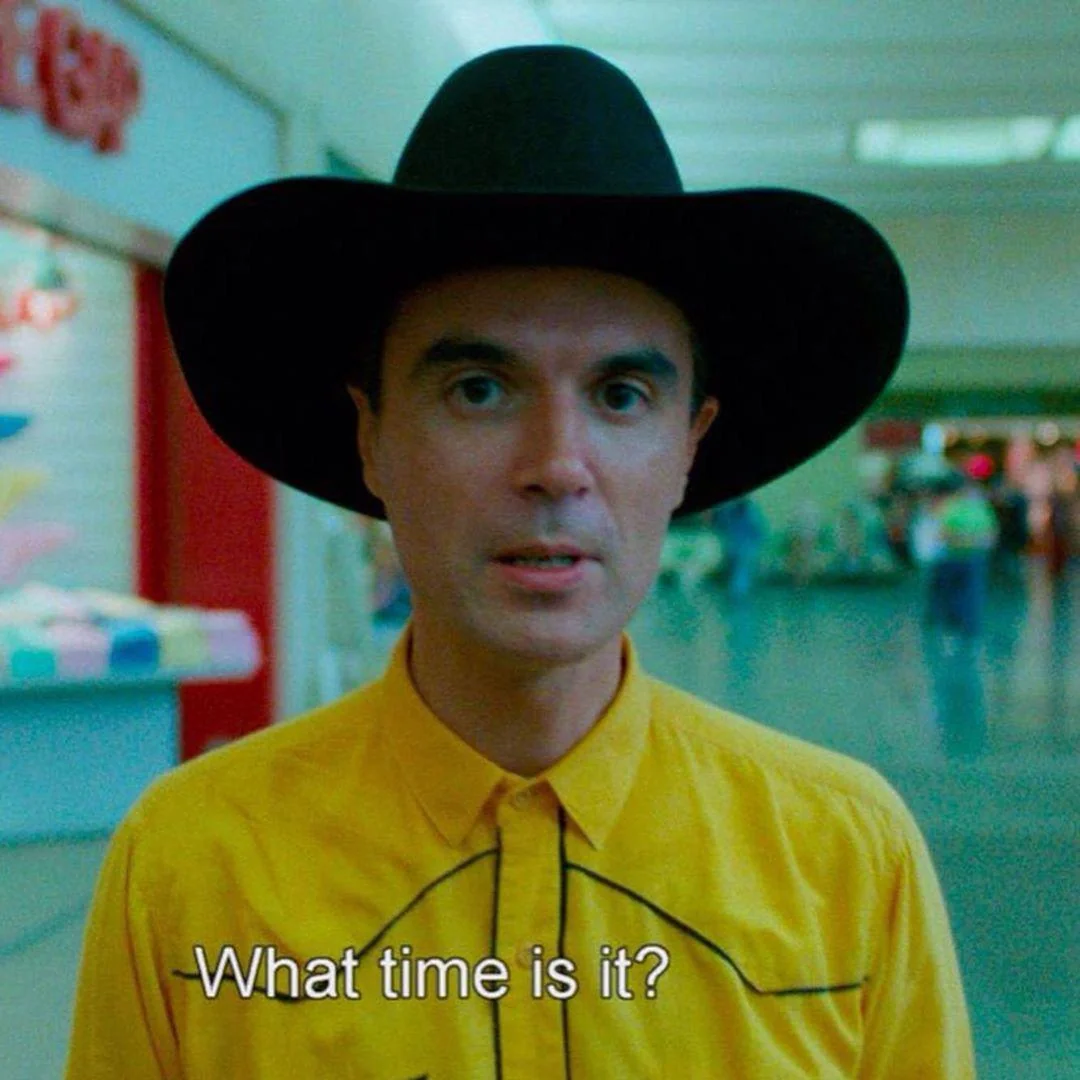
This short’s title is a quote by David Byrne’s Narrator character from the film, said while exploring a mall and commenting on how shopping centers replaced the town square. Comparing this truth to today’s truth of the dead mall and the lack of third spaces notwithstanding, this walks in tandem with how I feel about nostalgia. It is an acceptance of a world moving forward while considering and incorporating the past. It’s an understanding that the world often rhymes and echoes, but letting it fully repeat leads to stagnation. While the Narrator says there’s no time to look back, I disagree. We can look back, but we shall not move back. We must take this information with us to forge the new.
There’s another scene in which the Narrator speaks on revisiting things that holds far more truth to me. “I really enjoyed forgetting. When I first come to a place, I notice all the little details. I notice the way the sky looks. The color of white paper. The way people walk. Doorknobs. Everything. Then I get used to the place and I don’t notice those things anymore. So only by forgetting can I see the place again as it really is.“ What the Narrator posits as forgetting is experiencing something in a new light. It’s novelty, it’s finding something new in something familiar. Creative Pokémon fans prove this every time they make a ROM hack that improves on the original game or creates something completely new in that framework. That same passion is palpable in Pokopia, and it’s why Ditto’s journey means something to me, and a re-release of FireRed and LeafGreen on the eShop doesn’t. I’ve gotten very used to Kanto in that form, and Pokopia finally helped me forget what I knew.

Really lovely article. I probably think about nostalgia stuff a bit too much, but this is a much healthier way of considering this kind of thing.