Toward the end of February, in the midst of a cold snap ruining my life, I was in a slump. My most recent plays had been either emotionally draining, a long-form expansive journey, or something reduced to a series of muscle memories—familiar, and thus, boring.
I often find myself in a similar rut between games. Not everything can sing to your soul; trying to find the importance in something you don’t give a shit about just makes you feel fraudulent. So I found myself in familiar trappings: games which weren’t breaking new ground but felt like I was doing something. I did my Final Fantasy dailies; I dallied with Monster Hunter; I tried out Marathon—the new one, not the original one, we live in Hell. While fun, none of it filled the void in me demanding satiation.
You can imagine me, head on desk, various drink cans piled upon my noggin, making sounds reserved for cats and bored games writers.
I found myself thinking about speed, about motion, the primal building blocks to my satisfaction. I played through all of Pseudoregalia, a free and flowing platformer. I wrote several drafts worth of thoughts on it; all of them found their way to my recycle bin. I replayed the majority of Super Mario Sunshine thinking about our long-standing relationship, a game which has followed me though all of the stages of my life. Those thoughts didn’t even exit my head; they were too abstract and sentimental to encode into something worth reading.
The groaning exiting my mouth and the grinding sensation in my brain intensified. I wanted something quick, something which could accelerate my heartbeat and make me feel alive again. I wanted competition, my primal darkness which compelled me to hunt down fellow gamers.
I scrolled through my games. Dead faces stared back at me from digital blue-grey tumulus with resounding goose egg player counts. Games, once played, interred in silicon graves; Ozymandias’ trunkless legs standing in the midst of a vast digital desert.
A dark miasma coiled around the room, pouring out of my monitor and clouding my thoughts. A nightmare more frightening than anything a mortal could imagine presented itself before me: Counter-Strike 2. It batted its eyelashes at me from my Steam library.
“You could always give it another try,” it said. “You’re probably still halfway decent.”
Beads of sweat collected on my forehead.
“Hey. Unreal Tournament 2004 is having a comeback,” said my partner from across the room.
“Oh shit, for real?”
A Shock Combo with Twenty-two Years Lead Time
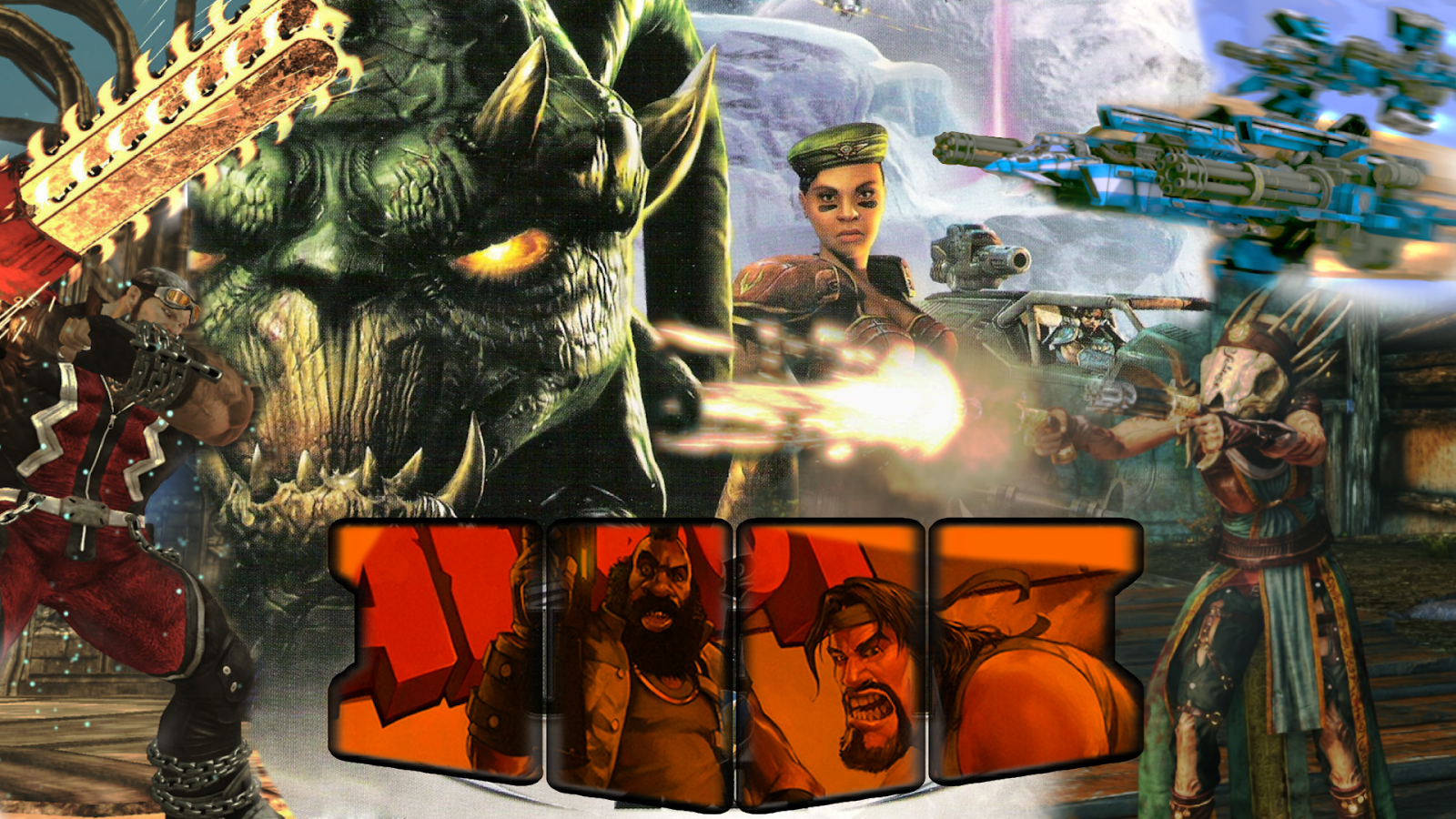
Unreal Tournament 2004 in 2026 was a fascinating experience. It is both timeless and dated in a way only an arena shooter is capable of. The music pounds with an early 2000s industrial trance beat, immediately hypnotic yet non-descript. The weapons are these obtuse, strange things constructed by a gamer mind only obliquely aware of how a firearm works. Movement is sublimely clunky yet flowing; side-hops chain into momentum-boosting double jumps, which chain into exploding into meat because you fell into a spiral of cluster rockets. UT2004 is the only—non-pornographic—game in recent memory which could force me to read the sentence “Memphis was carved up by Cleopatra’s Green Shaft.”
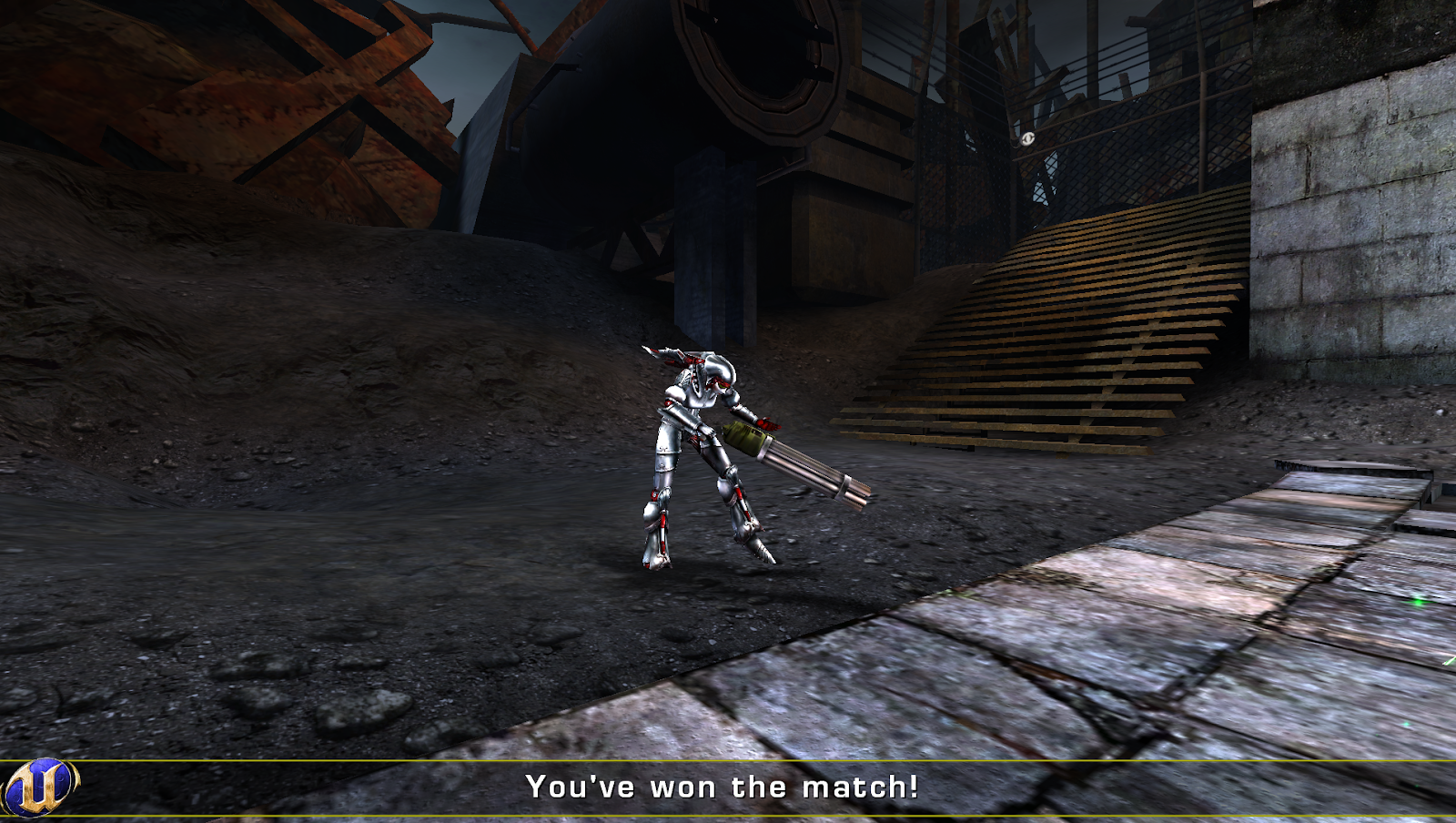
It was a beautiful and sublime crystallization of a time I never got to experience new. CTF-Face is a map I only ever got to see as a pseudo-nostalgic drum and bass playlist on YouTube and now I got to see it in-engine; it felt like some kind of inevitable prophecy coming to its final act.
Yes, I write this with zero nostalgia of my own, playing only as a person seeing the game for the first time. That being said, I was fascinated by the differences in game design ideology between then and today. The game is feature complete, with no battlepass, and no promise of additional characters or skins in the content pipeline. All maps are either in the base game or provided by the community. New game modes are invented in real time out of a robust suite of “mutators,” modifying the standard gameplay. This game is finished, “dead” even in the eyes of some, yet we’re still playing it. This is the product of a twenty-two-year long resurrection made by a loving fanbase.
My partner and I played into the wee hours of the night, roleplaying as 800kb/s internet wielders listening to D&B while vaporizing one another into piles of cartilage. It was, in a sense, a playable museum, albeit one where a rejected Transformers design can coldly say “Die, Bitch” in a way definitely intended to sound hard to a demographic devoid of maidens. Yet, even as I raised an eyebrow at the misogyny of yesteryear, I was fascinated by the return of this “dead” game.
Back in the modern world of gaming, it’s dire out there. Games are announced, cancelled, and expunged from memory within a year of release. A community might call a game dead when comparing its player base to its contemporaries, because it doesn’t have a “content” pipeline which suits their tastes, or in some cases, simply because a YouTuber told them so. Yet, are such proclamations truthful? I still sit in a lobby with other people, twenty-two years after the release of this game, and it has the audacity to still exist. Old Unreal is easy enough to find, easy enough to download from, and off you go; people cared, and so the game is allowed to exist.
Many other games haven’t passed this test of time. My Steam library is a veritable graveyard of games which haven’t received the same love or attention. Strike Vector, Loadout, dozens more. Those games died despite all the happy memories contained within. Most people, it seems, just take it on the chin; this is simply the fate of all online games. One day, the lights go out, and the game dies.
Is this truly necessary though? We see this game make a return to a fanbase still willing to play it even if they only number in the hundreds. I believe, genuinely, that as long as there is someone to keep the lights on, someone to pass the torch along, there is no reason a game as a piece of art can’t live forever. How many apocalypses has something like Team Fortress 2 weathered? Yet the fanbase continues trucking along, for better or worse.
Ultimately, games only truly die when they are killed.
Trash Decade
In a less healthy period of my life, I played a lot of Call of Duty: Black Ops 4—Black Ops 4? Black Ops IV? Black Ops IIII? Who is responsible for this?
Anyway, I was playing a lot of Call of Duty: Black Ops 𒇹 in a state not dissimilar to how I described myself in the first segment: I was between games and desperate to satiate some dark urge inside of myself for murder and violence. Humble Bundle delivered unto me this piece of shit, which would take over my life for approximately one summer but no longer.
The game was ever so slightly more textured than the usual CoD fare. There were still killstreaks, but this foray was hero-based, and made you heal for yourself instead of sucking your thumb until the screen stops being goopy. The game was hypnotizing, dreary yet intoxicating, like the last 4 to 5 cm of a tallboy. The content, the battlepasses, even my fellow players meant very little to me; I was just here for something to jolt my brain and remind me I was alive every now and again.
Yet despite my criticisms, it was not by my own hand that I ceased playing; that decision was made for me. I was queuing one day, as per usual in my apocalyptic spiral to avoid checking what day it was. I was queuing. I was queuing for a very long time. This, I felt, was an exceptionally long time to queue, even for a game like Call of Duty: Black Ops 𐍆𐌹𐌳𐍅𐍉𐍂—this is the last time I’ll do this joke, I promise.
My frustration mounted but I kept waiting. It was only after getting up and forcing myself to live in my own thoughts for a while that I realized no game was coming. I exited the queue and stared at the loadout which had ferried me to something resembling catharsis. A phantom image of a dying horse begging to be put out of its misery popped into my mind, a decidedly not normal thing to think while staring at a firearm. I left the multiplayer menu; a jovial popup informed me it was time to purchase the new Call of Duty, to replace the old Call of Duty I was already playing. I made a throaty sound, roughly like a parent discovering a child entering the house past curfew, and exited the program. I have not opened it since.
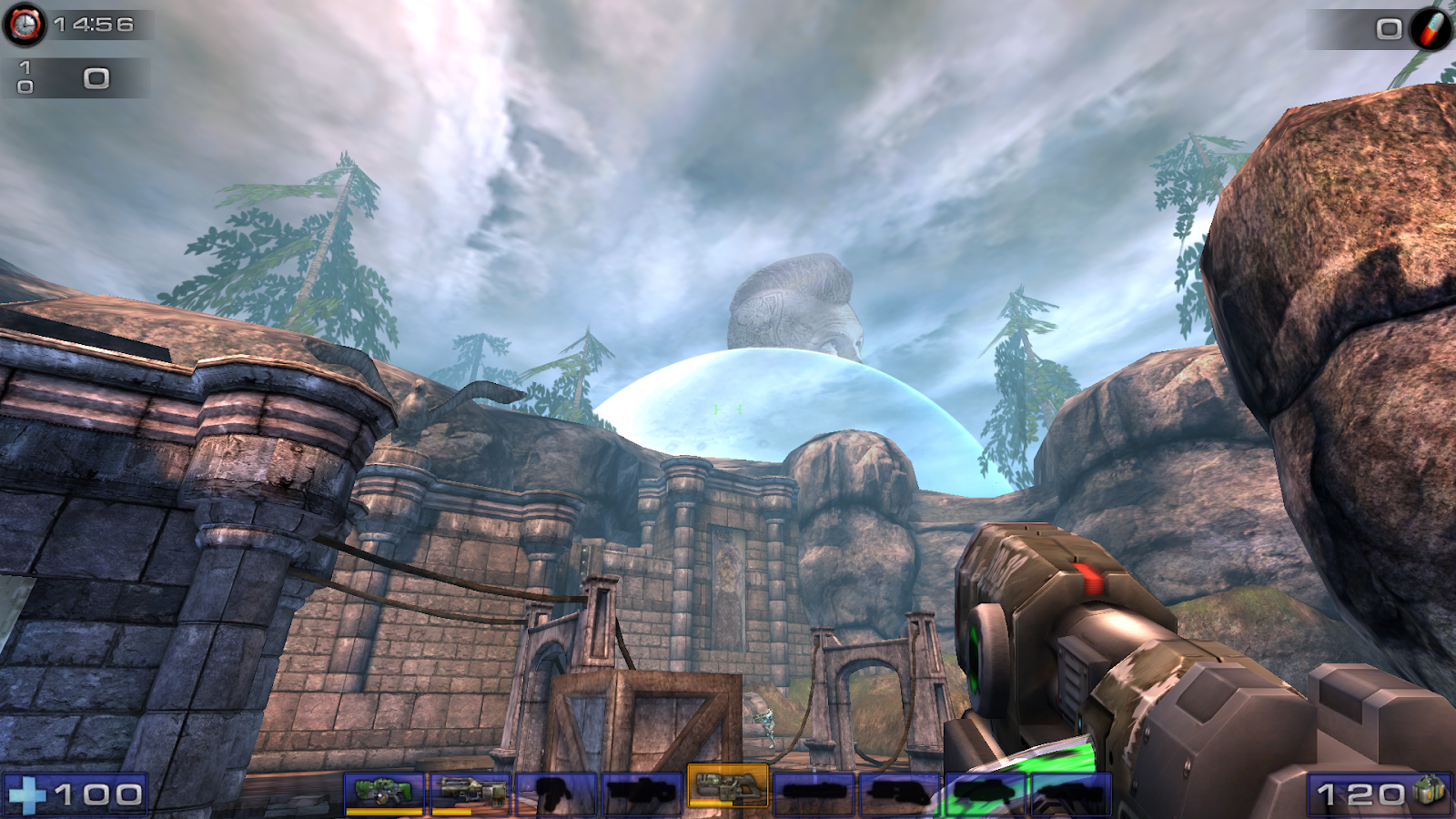
I feel like the experience I just described is familiar to most gamers. We play multiplayer(or just online) games until we get distracted and find the doors closed, or we watch horrified as they unbuild themselves from underneath us. It is rare to decide your relationship with such a game has run its course, as there is no fixed narrative conclusion. We use it up until it is gone, or gone from us.
But it’s not solely on the consumer in such cases. Obviously the most guilty persons in the room are those who turn games into nothing but products. A game can live but must die because there is no profit motive for allowing it to stay living. A server browser might confuse your audience, after all; you have to handle the queuing for them. Sometimes 200 people isn’t enough to make a single game; you can only deliver the highest quality match. You cannot simply hand over the rights to run it off to the fans; think about your brand! It is childish to assume that these things can live forever, eventually the servers just need to come down, says a sales rep interested in selling you your dreams.
There is a learned helplessness, or at least an apathy, which emerges from such eventualities. We cope with the terror of the things we love being snatched away from us by pretending it is all inevitable—just move on to the next thing. This works ideally for the executioners of games: those who continue the commercialization of an art form into discardable toys, disposability with intent to incentivise more purchases. Live service games fill you with anxiety, a terror of losing out which manipulates your behavior to be more receptive toward choosing a single game to rule your recreation time; that is, until the game meets end of life and all of it was for naught anyway.
“Buy the new game”, a helpful prompt in the menu says underneath an end-of-life banner, flickering like a halogen bulb in a soon to be bankrupt grocery chain. “It’s all the same shit with a longer number at the end.”
Graveyard Planet
Being in the industry of games sucks right now. Discord sucks right now. Credit card companies would still really like for you to not be able to buy completely legal material. Your genuine attempts to preserve art will be met with a cease and desist orbital strike.
This is not, however, the inescapable fate of things. It is useful to call these trends unpleasant and to bring them to other’s attention. Knowing one’s material conditions are not acceptable is only the first step, however. Being able to imagine a better existence is the next step to building it, and while one pithily stating that something sucks and everything was always fucked since before you were even born might be attention grabbing, it doesn’t need to be the truth. It cultivates despair, but it should drive you to action, not simply angered capitulation; you do not have to simply accept that the things you love will be taken from you and then sold back to you in glorious, fucked up DLSS5.
Unreal Tournament 2004 still lives past its expiry date. Even the aforementioned Black Ops 4 has a modified client enabling play years past the expiration of its servers—I didn’t even know that, I discovered it while writing this essay, crazy right? Even the previously mentioned Strike Vector and Loadout have fan servers!
People have a tendency to always look for what is new, for the next new dopamine hit. I get it. The world is a really stressful place and we’re constantly looking for a feeling as big as the first time we ever loved something. A lot of my own personal attempts to find a new thing to light my heart on fire have been fruitless, but there is just as much beauty to be found in old things as new. The last essay I wrote was about how I looked backward and found something to love in things I missed, and just as often I could keep digging.
There are more games than I could ever learn and play in a single lifetime. I could play through the entire NES catalogue and find things nobody ever talks about. I could go on a quest to dig through an obscure console and find beautiful gems overlooked by people whose entire childhood was the PS2. I’m not insulting people who don’t go off the beaten path; I think there is much to value in even the more obvious places. Yet, cultivating a taste beyond what is obvious will open doors you never knew existed. Who cares if they’re dead; you, the player, are the one bringing it to life!
The old will always outnumber the new. The more you allow yourself to appreciate things outside of the immediate era, the more you can bring life to things beyond the year you live in. You don’t have to simply end your choices with the things sold or advertised to you. If MOBAs have gotten stale, try learning about where their inspirations emerged from. If you don’t enjoy the current extraction shooter trend, play the games from before they emerged. You will likely be surprised that other people still play them, or could be convinced to play them, if you’re insistent enough.
Nosgoth, a peculiar asymmetric team-based shooter entry of the Legacy of Kain series, has been resurrected; it can be played with the assistance of a modified client and a Discord server, if you’re so inclined. Anarchy Reigns, an often forgotten PlatinumGames online beat ’em up, has returned in the form of PS3 emulation, online functionality restored. All returned because people cared enough to gaze backward.
A sense of curiosity can foster a change; incuriosity often puts you at the mercy of those most invested in making a sale. Digging deep in forgotten places, in the areas which aren’t immediately appealing, can lead to great discoveries, and in turn bring vital blood back to the origins of the hobby. A little care and attention can resurrect the dead.
As long as people continue to care, a game can continue to exist. Modders will make custom clients, emulators will enable old games to live on new platforms, and even the most passionate will take server architecture into their own hands. The Concords and Highguards of the world are dispiriting, yes, but as people who care for this medium of art, it is our duty to take the things we love and carry them with us. A corporation preserving the things they make should never be the expectation, especially when they are financially disincentivized from doing so. Preservation is not impossible; we can love the things we love, provided we hold on tightly and refuse to allow them to be taken. Doing the work is hard but I think the effort is necessary.
A lone server in a game’s server browser, for those who will play can be enough. A person developing a website which enables others to remember that old things still exist can be enough. A person with a following and a curiosity in dead things can inspire others to pick through this graveyard with them.
So, won’t you go graverobbing with me?