This list has only one 2025 release, but these are all games I played to completion for the first time in 2025. Every game on this list is something I played alongside other people, be it through direct online multiplayer, streaming to others, watching someone stream to me, comparing scores through screenshots, or just talking about it after asynchronous play sessions. I still play plenty of games all by myself, but when compiling this list I couldn’t escape the conclusion that games are just more meaningful to me when they’re at least a little bit social.
If I truly only cared about my own reaction to games, I would keep a private journal. Instead, I post my thoughts online so others can read it. Actually, I’m more likely to post about a game that I played by myself, because that means I haven’t gotten to talk about it with someone else yet. Even if you only read this article, I have still communicated to you. However, I’d love it if you said something back to me in the comments form below.
11. Collective Unconscious
Collective Unconscious is currently unavailable for online play, but it’s the Yume Nikki fan game I spent the most time with friends in on Yume Nikki Online. Honestly, I don’t think I could distinguish one Yume Nikki fan game from another; I just appreciate coexisting with others in odd little RPG Maker maps with ethereal music.
I don’t like pressing the run button in Collective Unconscious, nor do I ever want to have a full understanding of every world and secret. I like walking slowly and making lots of stops and sitting on a bench to quietly chat. Games can be toys, but they can also just be a pretty interactive screensaver for Discord calls.
10. Demon’s Souls
My haughty intelligence-type royal came to Boletaria to plunder the secrets of sorcery from the demons, and mercilessly slaughtered all who opposed her quest for greater power. Some have quibbled over the placement of the apostrophe in the title of Demon’s Souls, but its meaning is clear to me: I am the singular Demon, and I am gathering Souls. There is little vagueness to the story of Demon’s Souls: the truest narrative of a game is what you do in the game.
At the lowest point of the Valley of Defilement, beyond a lake of piss and shit and whatever other disgusting byproducts an animal’s body can produce, dwells an immobile Archdemon who dares to absorb the impurities of those who have been abandoned by God. Like all other Archdemons, you must slay her and take her Demon’s Soul, so you can turn it into a spell, or a sword, or a couple points of Endurance.
There are few highly-technical boss fights in Demon’s Souls, as there are in its descendants; bosses are mostly characterized by a single gimmick or setpiece that demands patience, not skill. The greatest challenge in this game is carefully navigating through dangerous terrain where your footing is unsure and darkness obscures the distance. You must judiciously prepare your limited inventory to endure a whole level with no checkpoints, which makes any shortcut enormously valuable. Dark Souls III remains a fan-favorite because it’s a smooth fast-paced ride from boss fight to boss fight, but Demon’s Souls constantly asks you to slow down and observe. That might give you enough time to think about what you’re doing.
9. The Endless Forest
The Endless Forest is a social screensaver, as described by its developer Tale of Tales. You’re meant to leave it idling in the background, which many of the long-time members of this 20-year old community do. When I played this game with Ava, we found numerous deer sleeping peacefully in the forest, each in their own little spot. There’s not much to do in this really-quite-compact forest, but there is a lot of ambience to absorb.
We were just about satisfied with our time in the forest, when one of the deer woke up and started casting appearance-altering spells on us. There is hidden magic in this forest, and this veteran player was excited to share it with us. More deer arrived to greet us, and we danced and ran and rested at all the places they were excited to show us. New players don’t seem to come too often, and I was immediately identifiable as a new player because I started with a fawn character, rather than a fully-grown deer.
There is no voice or text chat in The Endless Forest, only movement, expressions, and spells. There is, however, an active forum filled with art, writing, and friendly conversation between the dozens of veterans of this niche community. I’ve never felt more like a tourist than reading the beautiful detailed character profiles people write for their deer, or reading reminisces of years-old holiday gatherings in the forest. It’s not my corner of the internet, but I’m really glad I got to visit it.
8. Combat
I played Combat in online netplay with three different people who had never tried the game before, and it was a hit every time. Decades of increasingly complex shooter design have been unable to match the pleasure of curving a bullet around the edge of the screen to hit your friend from behind and hear them say “Holy moly!” Forget left-trigger-right-trigger, forget reloading, forget aiming at a distant target on the z-axis. In Combat you have one screen, one button, one enemy, and it made me wonder why I ever desired anything more.
7. R4: Ridge Racer Type 4
Style goes a long way. Every run through R4 is the same eight tracks in the same order, with the same thin visual novel storyline per difficulty setting. It’s a joy to play through every time, because the whole game looks and sounds like that. It’s so much easier to play an amazing 1-hour game 50 times than to play an uneven 50 hour game once. Especially if you have a rival to motivate you.
6. The Chrono Jotter
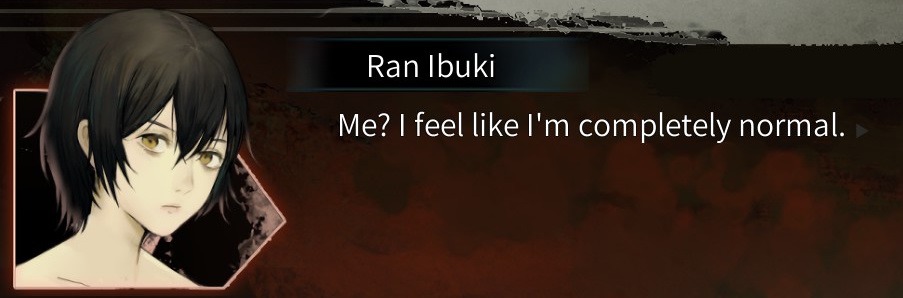
Even in a world filled with horrors, you still have to go to work. Ran Ibuki’s situation is even worse, because she hallucinates horrors that feel as real to her as the actual horrors. Her most meaningful relationships will not make these hallucinations go away, nor will her work as a cool paranormal detective. She must simply persevere, for the sake of the most important thing in this world: complicated love between women.
Even so, Ran is a gloomy and untrustworthy character. She isn’t easy to love. She will crash out for reasons the people around her do not understand. She gets angry at people who try to help her in the wrong way. She has unsettling habits, like eating pages out of a diary that feels like her girlfriend’s skin. In other words:
5. Peak
I’m often disappointed by environmental challenges in video games. Death Stranding is supposedly a game about keeping your footing in unsteady terrain, but it never actually made me sweat. Climbing in Assassin’s Creed carries no risk of falling, unless enemies throw rocks at you. Peak made me seriously think about how the hell I’m even supposed to make progress, and it was willing to harshly punish me for being careless with my movement. I lost my grip at crucial moments, I fell off cliffs, I slowly starved until I no longer had the stamina to climb.
My favorite memory is spending too much time in a dead-end cave with KB, to the point where we could no longer escape the creeping fog that was coming to kill us. We went through all the stages of grief before finally accepting our fates, and we sat together and talked while waiting for our destined death.
That bittersweet despair is also balanced by frequent moments of faith and friendship. Hand-holding is a major mechanic, and many seemingly-impossible jumps can be made, to my surprise every time, by simply reaching out my hand to the friend who is reaching out to me. It’s equally thrilling to be on the other end, assuring my friend that they can make that jump if only they trust me.
I’ve played a ton of Final Fantasy this year, a series that can’t tear itself away from themes of hope and despair, but none of them have been half as effective at communicating those themes as surviving a grueling climb to the top of a mountain to roast marshmallows with the people who helped you get there.
4. Seabed
Seabed loves the tiniest mundane details of life. I don’t know how many sentences I read exhaustively describing every step of making dinner: deliberating over what ingredients you want, going to the store, buying the ingredients, going back home, chopping your ingredients, cooking them, eating them in the proper sequence, and washing the dishes.
I doubt I would have made it to the end if I played Seabed alone, but reading it with Isabelle over several months provided a stable ritual of using all these mundane details as a springboard for conversation. How do you make dinner? Where do you like to visit? What do you think of the San Francisco Fisherman’s Wharf crab sign in front of the Applebee’s? Life is a string of small moments, not dramatic events, and those moments become memorable when they’re shared with a loved one.
3. BS The Legend of Zelda: Ancient Stone Tablets
Ancient Stone Tablets is simultaneously a 50-minute score attack version of Zelda 3, the secret precursor to the NPC schedules of Majora’s Mask, and a testament to the magic of ephemerality. In its originally designed play experience on the Satellaview (one 6pm-7pm broadcast per day over four weeks, with a new episode each week), Ancient Stone Tablets does not give you enough time to fully dissect it. What secrets could be hidden that you simply missed before the timer ran out? Once the broadcast season ended, months would pass before you got a chance to play a rerun, and one day it was simply gone forever.
Due to the efforts of many dedicated fans, I was able to approximately simulate that original play experience alongside Cameron and Monica. We played one episode per week, with the additional constraint of one play session per episode, and gathered afterwards to compare our scores and experiences. I don’t remember who got the highest score, but I remember the way these conversations recaptured the enthusiastic wonder of discussing video games during recess.
The 50-minute clock really does make Hyrule feel bigger, denser, and more mysterious than it actually is. As the hero, you are tasked with completing two dungeons in that time, and it’s very possible to fail your objective if you’re not taking it seriously. (I was genuinely worried I wouldn’t even see the final boss!) The dungeons are not any more grueling in terms of combat or puzzles than any other Zelda game, but combination of haste and impermanence make each second you spend on a screen more meaningful.
Since I was competing for a high score, I also felt the tension of finding as many items and exploiting as many scheduled events as I could. If you look at a walkthrough, you can see that there isn’t really *that* much to find in this world, certainly far less than any modern-open world game. But where those games suck away the hours with the dull hypnosis of a gameplay loop in a world of endless content, Ancient Stone Tablets both magnifies the world and keeps my brain engaged simply by adding a time-cost:score-reward analysis to every treasure. I can’t afford to waste this much time thinking about how to get that heart piece, especially since I only have 30 seconds left to get a discount on the Zora’s Flippers!
Ancient Stone Tablets is a portal fantasy where your avatar in The Town Whose Name Was Stolen, the hub world of the Satellaview, gets transported to Hyrule for one hour of “Zelda time”, only to be transported back at the end of each episode. After defeating the final boss, I had only a few minutes left to be Hyrule’s Hero of Light before my little project with this game ended permanently. I spent my last minutes saying goodbye to my favorite NPCs, thinking all the while how much better it feels to visit Hyrule than to live in it.
If you’re interested in another simulation of the Satellaview experience, I highly recommend the Satellaview+ project. It has not yet been able to live-broadcast Ancient Stone Tablets, but you can explore the hub town that changes seasonally and download a scheduled selection of broadcast games. It’s cool!
2. Final Fantasy VIII
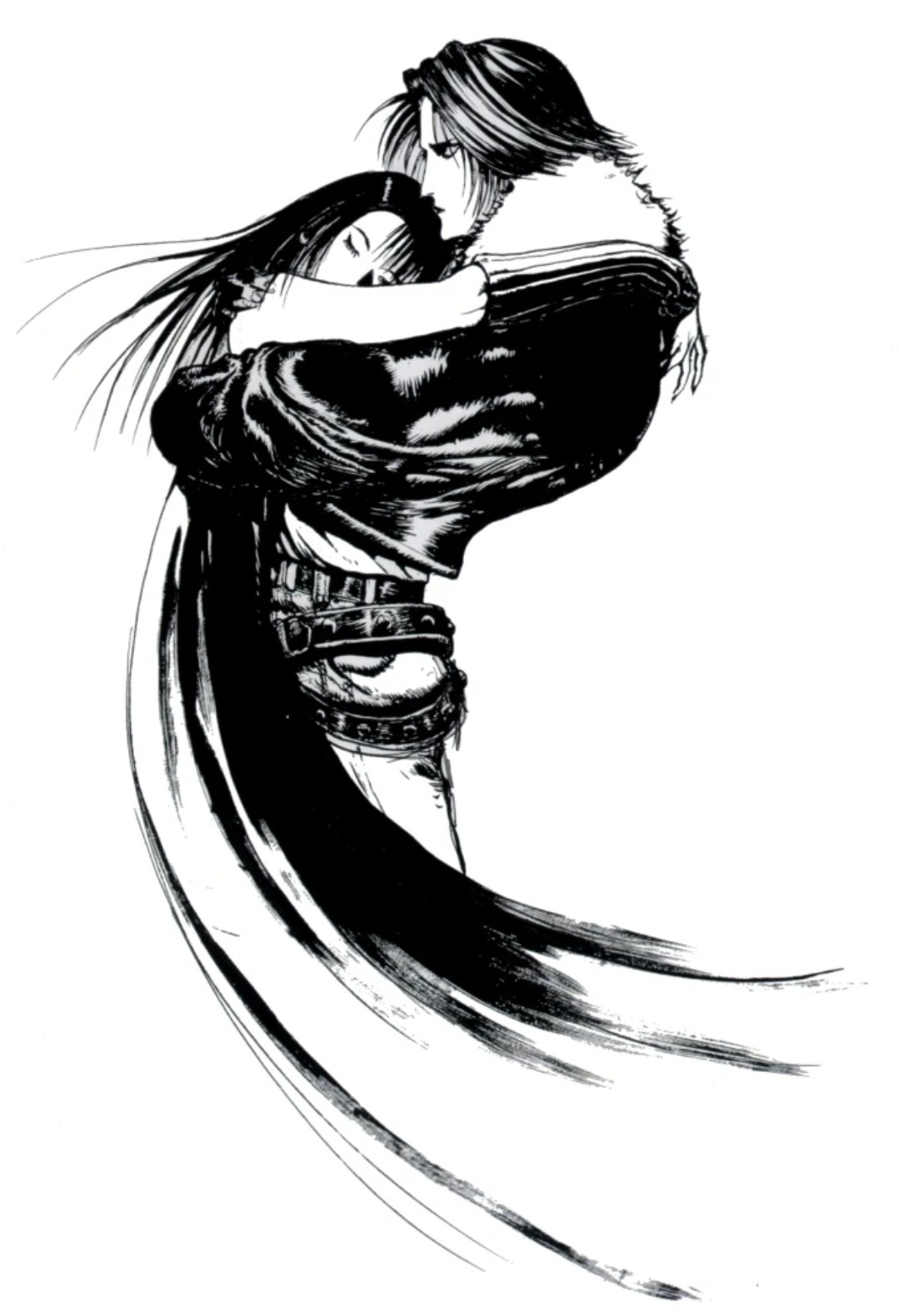
Squall Leonhart wears a necklace of his lion OC that inspires him to be strong. He loves to project a stoic demeanor while resentfully ranting in his thoughts. Squall’s the kind of guy who locks in at work and then cries in bed as soon as he’s alone.
Squall loses himself in trying to live up to his lion OC. He forgets crucial details of his life, but the vivid memory of his childhood abandonment persists through the fog. He often flashes back to this old trauma, emotionally regressing to his child self, as if all time and space has been compressed into that moment. He can’t escape it, no matter how hard he thinks about it, not by himself.
In a moment of true romantic connection, time feels frozen. You might want it to last forever. Perhaps the world around you disappears as you daydream about that moment. Its warmth is always there for you, no matter how cold the world gets when your lover is gone.
A beloved memory carries with it an impossible wish: what if you could compress all time and space into that beautiful, final fantasy? Perhaps it would look something like this:
1. VRChat
As you may have understood from my inclusion of Collective Unconscious and The Endless Forest, I love the quiet ambience of a virtual space. Few games offer as many virtual spaces as VRChat. I’ve continued to explore and socialize in VRC quite a bit since hosting A*RAVE, and the psychological influence of virtual embodiment has not lost its effect.
Videos, music, and conversation are just more engaging in VRChat. There’s something to the glow of a television softly illuminating the environment, or the spatial processing on music and voices, or seeing yourself and another reflected in a mirror as you talk on the couch. There’s an intimacy to it that I didn’t think was possible to achieve in screen-mediated interaction, and nothing is more valuable to me than intimacy.

Your descriptions of VRChat are definitely the strongest factor making me consider trying it.
Hey, I played Collective Unconscious with Crystal 😀 Out of all the Yume Nikki fan games, it definitely feels the most social by design, even down to the title. It’s the only one with emotes, there are puzzle rooms that feel like RPG Maker versions of Fall Guys. Yume 2kki is the other community made Yume Nikki fan game, but that feels more like a community art expo compared to Collective Unconscious’ virtual world vibes. In a good way, playing it with Crystal and Izzy made me feel like I was playing Club Penguin again.