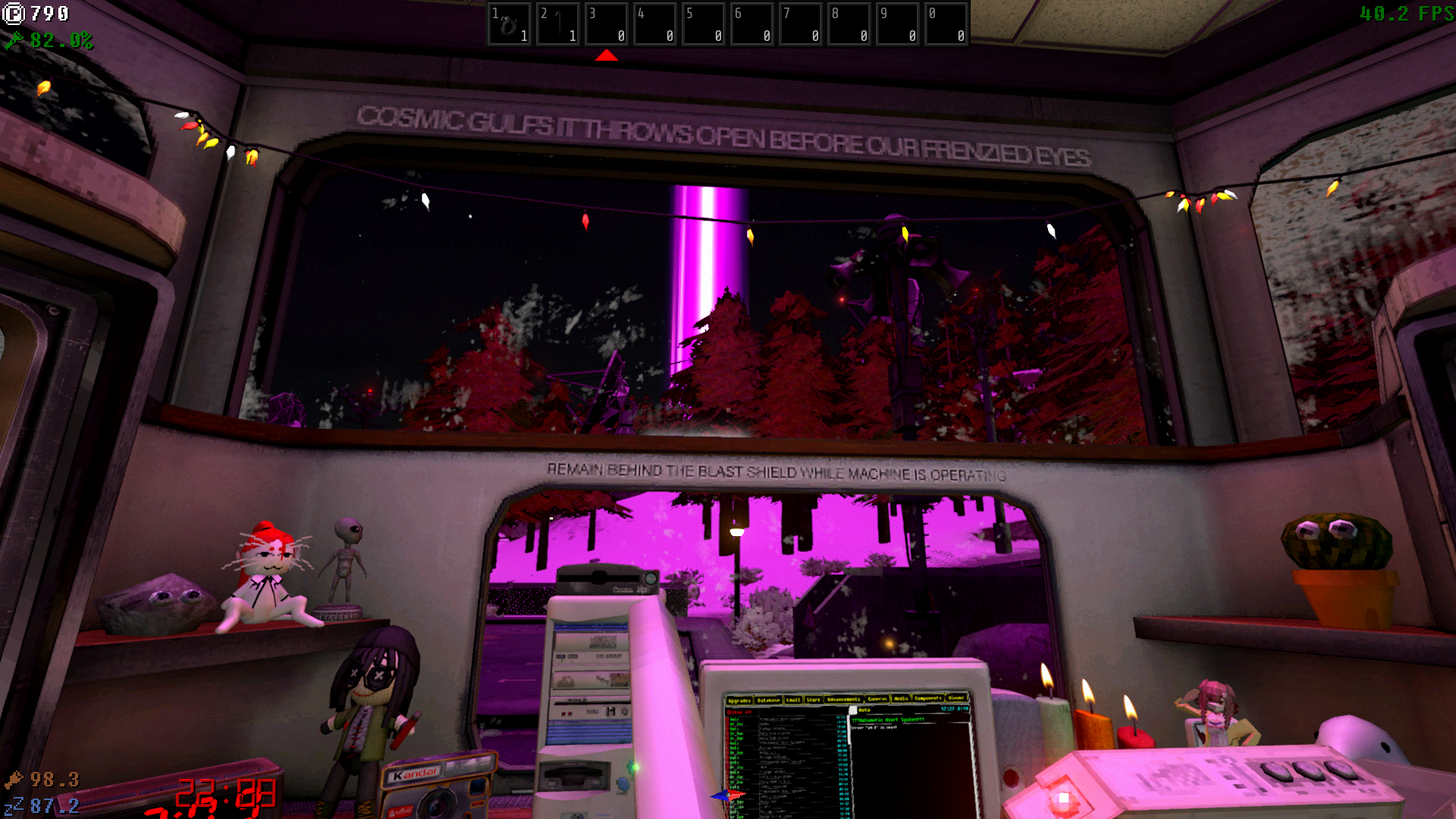
What spooks you? What gets you twitchy and checking to make sure there’s nothing unexpected behind you? What gets you second-guessing noises and reading intent into ambience? When you’re stumbling through the woods at midnight and stumble upon an abandoned, overgrown graveyard, does it make your heart beat faster? On your way back do you find a rotted house, detached from any streets, leering down from a hilltop, and feel a shiver down your spine? What about the space between?
The environment and the potential for horror is my favorite thing to examine. The time between beginning the walk and sighting the graveyard. The tension that’s building, the steady feeling that every second you come closer to something happening, and the infinite moments that pass lacking any sort of release from a vague dread. This is a feeling that Voices of the Void carries perfectly.
You’re in the woods, ostensibly alone. But the noises around are constant, unceasing, never quite familiar enough to become inured to. Had a pinecone not fallen right before my eyes with the accompanying sound of a twig snapping, I would’ve jumped at every sound in the night. I still jump at most of them. The noises and strange sights are the backbone of the game, everything else built upon flickering, single-frame figures and glances of things that appear at the edge of your view. The very first night in the game, as I stumbled over a barely visible road with a narrow flashlight beam failing to pierce the darkness, I saw a flash of green light at the corner of my eye, shifting between the trees and leaving me unsure if I’d seen it at all.
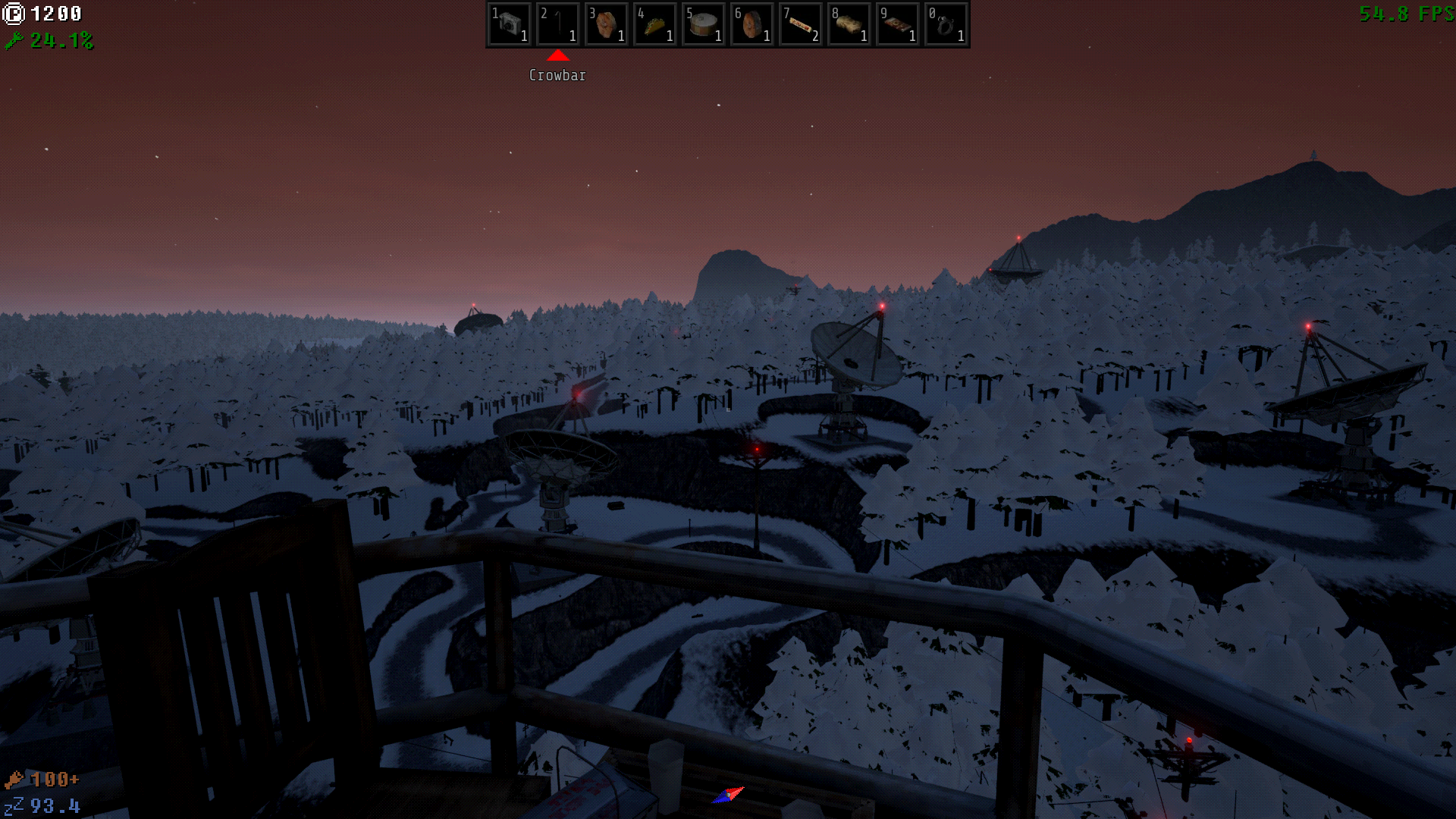
This is the defining experience of Voices of the Void: things don’t happen for a time, and when something does, you’re left confused, unsettled, and unsure what to do. The strange alpha state the game is currently in makes it more unclear what could simply be a physics engine causing props to interact in a strange way or what could be something else inside of your home base.
The loop is designed to make you drive the fragile ATV over the hilly landscape, encouraging you to see and engage with strange sights. In the beautifully designed map of a Swiss forest, the lowest explorable point is the center, where your research base and home are, and all powerlines across the woods lead back to it, allowing for easy navigation before you invest in duct taping a map to the ATV. Even in daylight, hurrying to finish tasks, strange events occur. Abandoned building doors get smashed in while you cower in a corner, an intimidating roar echoes across the map as you crest a hill, and the signs left by previous employees’ attempts to explore and understand the woods creep into your sight.
Tension and fear aren’t successful without the lulls, though. The breaks and the beats of peace where you feel at ease, the sunrise and powerful hum of the ATV beneath Dr. Kel, make morning runs for satellite data much less frightening than the just-past-midnight arrivals of a drone carrying the day’s supplies. The accomplishment of figuring out how to fix the oven, put together a mushroom pizza ingredient-by-ingredient, and escape from the monotony of stale MRE crackers completely washes away the struggles to reach that point. After it all, secure and confident in your home, horrors seep up once more to return the undercurrent of tension. Attempts to demystify and clean the basement of the base instead accidentally revealed a hidden room, concrete poured and a metal plate placed to stop entry. Within is an empty space, and a staircase that gradually morphs into tiling and shallow water reminiscent of the liminal pool rooms the tutorial took place within. Something alien and out of place that makes your growing knowledge and familiarity with your base suddenly feel all too small. It still haunts me whenever I stand in that stairwell again.
Despite the unending stream of horrors, everything starts to feel like home. A small bloodstain inside a satellite’s room is a reminder of you running full speed into the closed door and ragdolling to the floor. Nightly Christmas gnome visits offer a beautiful range of ways to decorate and make a space your own: furniture, nuclear waste products, and “a plush of GIR from Invader Zim but red I guess”. Figuring out the flow of the game and the way most interactions work doesn’t remove the fear, despite the gradually growing knowledge that there’s few things that could hurt you more than you can hurt yourself—by, say, running full speed into a door you’re sure you could’ve gotten through before it closed. That knowledge, instead of lessening tension, increases it, because the things that don’t involve hurting you can become much stranger and frightening. Shadowed figures, entrapment in an empty, utterly silent version of the station, warnings to not open lockers. The relief of grilling shrimp on the small balcony while savoring your temporary peace never lessens, never weakens the overall mood.
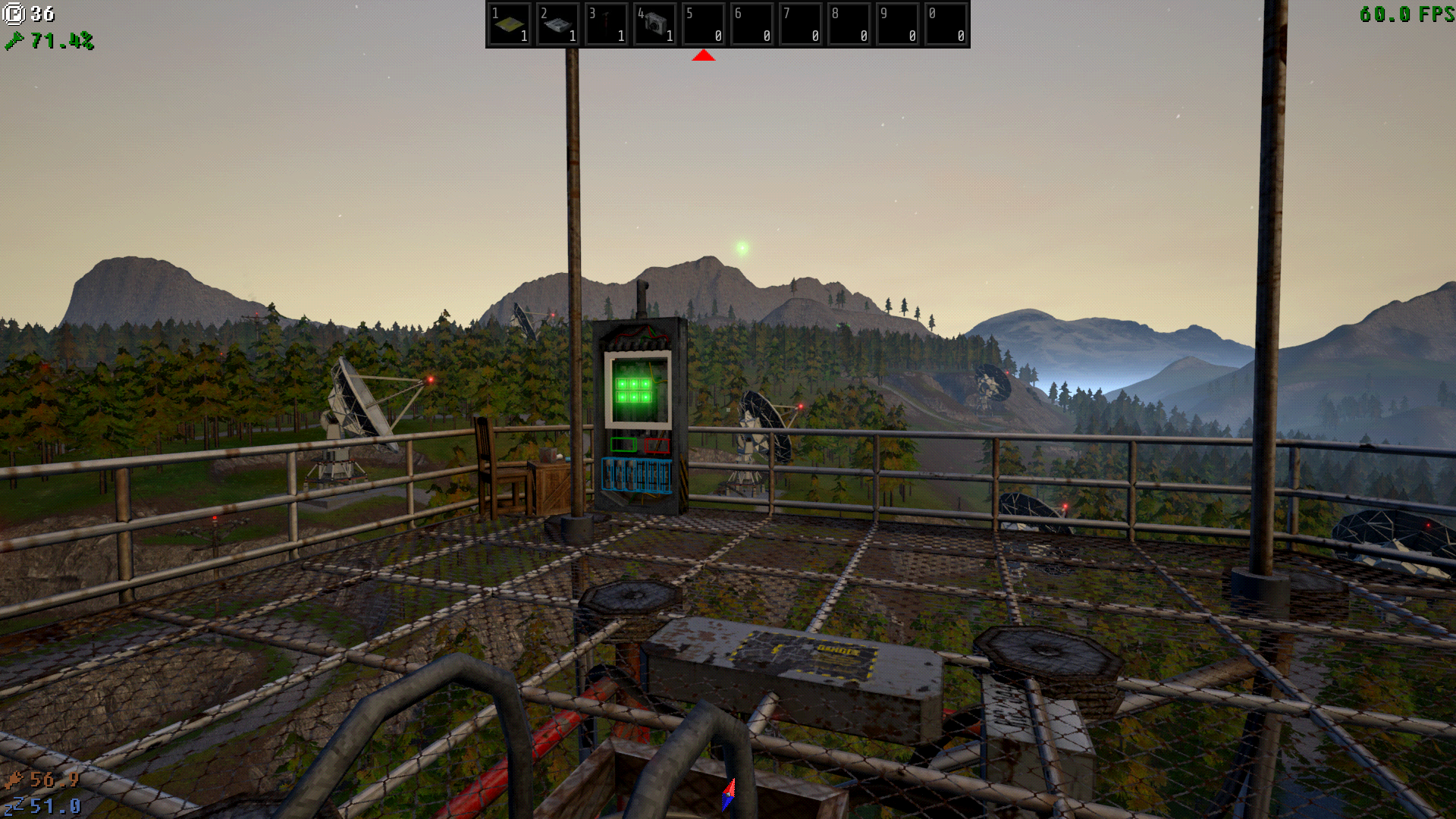
There is a beautiful strangeness in the way a growing understanding of Voices of the Void can lead to you pushing at the scares more, running at strange events instead of fleeing. Some become more benign—a frightening beam of light leads to a strange bit of exploding alien technology and a cute plushie for your bravery. But in other places the game understands how the urge to push further, to find the limitations and slip past boundaries of a space, can compel players. Warnings about lockers and censored things that crash the game upon getting too close. Skeletons appearing behind you and falling into a heap of bones at your feet. Locations reminiscent of the backrooms in their mazelike, unending nature.
After stumbling and carving my own awkward and incomplete path through the .9a update as my first experience with Voices of the Void, I finally turned to the forums of fans to find more interesting avenues to explore—and was shocked at the frequent expression that the unstable test version was a poor way to experience the game. Sure, story events and some alien encounters wouldn’t trigger, and forgetting to remove a floppy disk from a system would gradually occupy the base with massive, glowing ERROR signs, but I had been enraptured by my experience nonetheless. Playing the more recently unveiled .9b and .9c versions, which fixed these issues in a trade for introducing more, I appreciated the new events and allure of the Roadside Picnic elements added by the company of sightseeing aliens with a taste for shrimp—but even more beautiful to me was all of the little, random touches and occurrences that were different. Events I remembered defining my attitude and interactions with the systems never occurred; on a previously peaceful, quiet night, everything went dark and I caught sight of a pair of glowing eyes in the woods, separated only by the console’s blast shield—and I felt unprotected. A power outage and nighttime trek to one of the transformers brought me to a wooden upside-down cross buried in the road, taunting me with its presence upon a trail I’d walked across dozens of times.
Voices of the Void feels immense and ever-expanding, capable of being and doing just about anything it wishes, and integrating that into the whole without any struggle. Beautiful to play and enjoy the ambiance of rain and fog while keeping you on edge the entire time. Every single piece of the game, no matter how disparate and strange, feels right. Weird science and archaeological projects in all directions occupy your time and force you to brave the forests around, instead of hiding inside the base all day completing different paths of building, changing, and making the space your own. An immersive sim in the truest sense, with an incredible talent for making the world itself into a beautiful, conflicting painting that unites so many disparate feelings and events and thus feels confident and proud in everything it puts forward. Seek out the fishing rod bequeathed to you from a mysterious note in German. Crack a safe meant to remain sunken and forgotten at the bottom of a lake. Make sure to keep your shrimp in closed, refrigerated containers.
Voices of the Void is unstable, buggy, and at some points held together at the seams by duct tape and nails. It’s the best game I have played this year, and I haven’t been able to stop thinking about it, even after playing as much as I can for a few months. Despite the horror and isolation, it’s not a lonely game—it feels more alive and more vast every time I sit down to play through a few more days. And it hasn’t ceased surprising me and putting a smile upon my face yet.
“Cosmic gulfs it throws open before our frenzied eyes.” A Lovecraft quote, emblazoned above the massive windows you’ll spend much of your time staring out of and cleaning off—and one that encapsulates the feelings that Voices of the Void surfaces.
Now they just need to add some more meat to the apiary mechanics and it’s the perfect video game.
KB wants you to read Emptiness Effigied.