I’m starting to seriously question whether I like Video Games at all anymore. To be clear, there are plenty of games I love, several of which came out this past year. But capital V capital G Video Games? I’m not so sure. More and more all the time, mainstream video game culture seems to be drifting further and further away from my tastes, and in some cases even my morals. This isn’t really a new development, but 2025 has felt like the worst year for it yet.
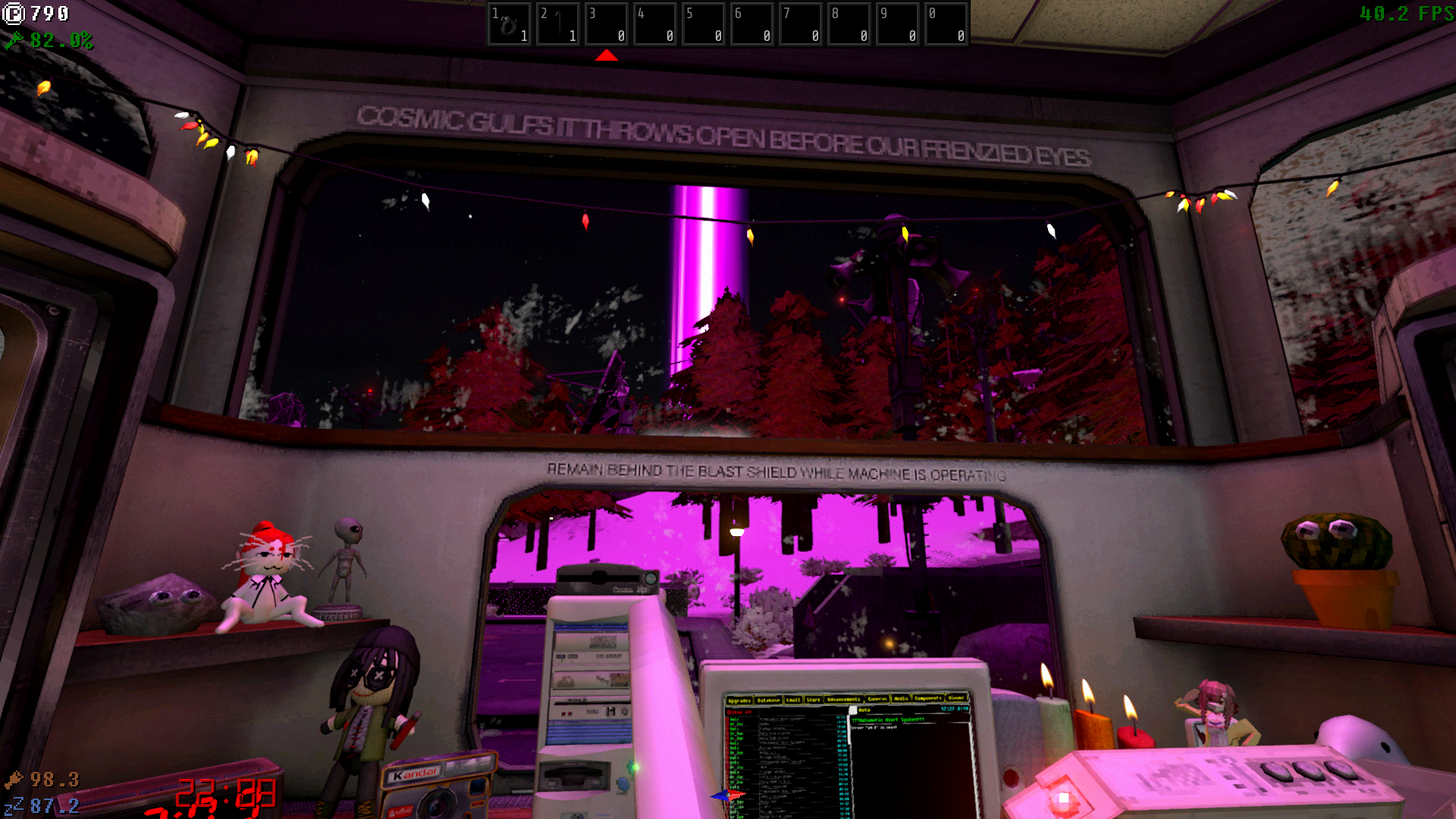
Before sitting down to write this, I looked up a list of AAA releases from the past year because I truly could not name a single one, and it took checking Wikipedia to remind myself that I did, in fact, play Death Stranding 2 for a full 60 hours. I never would have guessed that anything could make me miss the original game’s infuriating mess of a story, but at least it was able to inspire some emotions in me, unlike its sequel. Sony barely released any other titles this year, and I didn’t even bother checking what Microsoft has put out because their ongoing support of the Palestinian genocide ensures that I’d never play their games anyway. I’m a lifelong diehard Nintendo fan and they released a brand new console this year, so I should be over the moon, but both Mario Kart World and Donkey Kong Bananza are the latest in a depressing trend of the company releasing games that manage to be much, much more boring than they ought to be, despite their gorgeous art direction and excellent gamefeel. Mario Kart was at least able to produce a few fun evenings on the couch with my wife, but a pack of playing cards could’ve managed the same for a fraction of the price. Fifteen or even five years ago, I would’ve preordered Metroid Prime 4, loaded it up at midnight and played it straight through til morning; I haven’t even bothered to buy it a month out, because I’m too worried about it disappointing. Corporate consolidation, ballooning budgets, and the pursuit of toxic trends like the constant struggle to turn every game into a Fortnite-deposing “forever game” have resulted in vanishingly few major game developers that are capable of making something that captures my heart.
Reading back the above paragraph bums me out. I sound like a grump and a whiner, and I suppose that I am. I wish I wasn’t! I wish I felt more optimistic about the state of things, I wish developers were putting out more games that sparked my curiosity and investment and joy. I wish anybody could push a game out the door in less than seven years. I wish the industry wasn’t being propped up by virtual slot machines full of guns and jpegs of anime girls. I wish I could fuck around with the Tony Hawk 3 remake without indirectly supporting the bombing and mass starvation of people halfway around the world. I wish that when I opened up my word processor to reflect on my thoughts about 2025 in video games, my first impulse wasn’t to be a big wet blanket. This is a Game of the Year piece, it’s meant to be a place to gush about great works of interactive art! I probably played enough new releases this year to flesh out a full top ten, but out of that list, I only enjoyed four of them enough to bother including here, and none of them came from a major developer.
(Shout-outs to Unbeatable and Deltarune Chapters 3 and 4, two games that I’m sure I will enjoy plenty once I make some time to sit down with them.)
Anyway, that’s enough complaining. I felt the need to explain why this list was so short, and unfortunately none of the reasons are very fun. But with all that out of the way, it’s time to stop moaning about what was bad about games this year and start celebrating what was good. The bright spots have been few and far between, but that doesn’t make them any less bright.
4. Skate Story
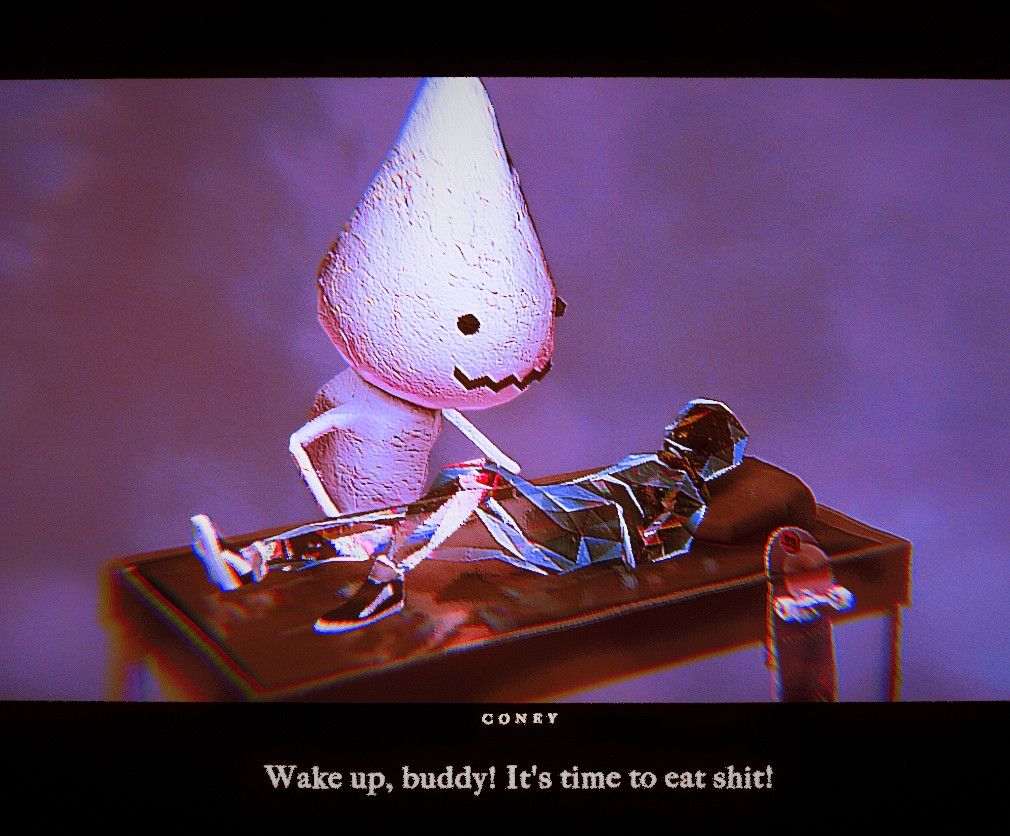
It is often pretty easy to get me to cry, or at least to get my eyes misting up. I got a lump in my throat just hearing the elevator pitch for Skate Story back in 2022: you are a demon made of glass, who has no choice but to skateboard through Hell to win your soul back from the Devil. It’s such a beautifully cruel concept, forcing a creature so frail and delicate to do something that famously causes injury, and it immediately got me right in the heart. I couldn’t help but imagine the game you’d build around this concept, something like Celeste by way of Tony Hawk, a brutally difficult skateboard platformer that would punish you viciously for every missed rail and failed trick, would put you through Skateboard Hell to finally give you catharsis and relief when you escape it.
So, with that vision of the game in my mind, I was surprised at first by the final product. Skate Story is not particularly difficult. Sure, you’re a glass demon that can shatter easily, exploding into fragments if you so much as approach a curb at the wrong angle. But the checkpointing is extremely generous, there are no penalties for bailing other than a few seconds of lost progress, and you can also just… slow down. Brake heavily through corners, go around a pit instead of trying to kickflip over it. Most of the time, you can even just get off your board and stroll leisurely to the end of the level. Some stages have time limits, but taking them slower is probably more efficient than going at a breakneck speed, dying and respawning over and over while the clock ticks down. Much of the game is set in wide-open hub areas that are more about roaming around and chatting with fun, quirkily-written NPCs, where there is no particular impetus to pull off risky skateboarding tricks. My initial reaction to all of this was disappointment. The gameplay felt like it was letting down the central metaphor of the premise, the difficulty much too low to make me feel like a creature made of glass and pain. The writing is fun, the soundtrack is excellent and the visuals are the most breathtaking I’ve seen in a good while, so I really couldn’t be too mad, but it just wasn’t delivering on what I had presumed to be its core promise.
But, as I kept playing, I started to respect that decision more and more. Skate Story isn’t interested in brutal difficulty. It’s not interested in wallowing in the angst of The Skater’s tortured existence. It’s not about being forced into a task that’s too dangerous for your fragile body. Instead, it’s about willingly embracing the danger, about the freedom of throwing yourself into the unknown with reckless abandon. Of course you’ll break, of course you’ll shatter, but it’s worth it for the sensation of flying through the air, kicking with practiced precision to send your deck spiraling beneath your feet. Sure, you could get off your board and walk to the next level… but why would you? Who cares if you could avoid crashing by just taking the corner slower, isn’t it more fun to figure out how to navigate the turn at full speed? In the end, Skate Story is a game about hanging out with your asshole buddies in the middle of the night in an abandoned city square. It’s about getting hassled by the cops for just trying to have a little victimless fun. It’s about the tedium of your day-to-day life and breaking it up through the joy of motion and momentum, even when you embarrass yourself by missing a jump and slamming into a concrete wall.
In other words, it’s a game about skateboarding, capturing emotional truths about it that the arcadey Tony Hawk and the technical skate. games never could. It’s not a flawless masterpiece—boss battles often start exciting and end a little one-note, and the pacing gets a bit long in the tooth in the end—but it’s a game that left me with immensely warm feelings, and it’s worth experiencing for the visuals and music alone.
3. Blue Prince
What a weird, special little thing Blue Prince is. Right from the beginning it’s not quite like anything I’ve played before, a mash-up of Myst-style adventure games and the kind of esoteric board games that only tabletop nerds like me play. It’s Betrayal at the House on the Hill, but with the ability to explore each room tile thoroughly for secrets. In many ways, it’s two games in one. The first is a story-light, mechanics-heavy roguelike where you have to explore a constantly changing mansion to find and unlock a path to the secret study at the back of the house. Exploit the effects of putting different rooms adjacent to one another, gradually earn permanent upgrades that make subsequent runs easier, make it to the end goal in a dozen or two runs, and congratulations, you’ve finished the game! Roll credits, thanks for playing!
…And then the real Blue Prince starts. Reach the final room a second time and you’ll be rewarded with a list of clues leading to a set of 8 keys, some of which you might have stumbled on already if you’ve been exploring thoroughly. Those keys open rooms with giant mechanical puzzles, which can only be solved by learning about the fictional geography of the game’s setting, and solving all of those will get you a set of postcards you can use to deduce the solution to a puzzle about the route your great uncle took on a trip around the world decades prior. Poke and prod at every corner of every room and you’ll find eight safes requiring eight different combinations. Dive deep into every scrap of hidden history and lore and you’ll learn why things seem to come in eights so often throughout the game, along with your family’s relationship to the fascist regime that’s seized control of your country. The randomized rooms of the house become completely immaterial, the board game rules of the top layer of the game bending to your will as you scour every inch of the manor for clues, and no matter how many puzzles you solve, the reward seems to always be yet another layer of puzzles. I played this game alongside my wife for over one hundred hours, trading theories, puzzling over math riddles, and cursing at the game with a smile as it endlessly revealed more and more hidden depths.
Even now, I’m only pretty sure that we’ve seen everything that Blue Prince has to offer. There’s a couple lingering tangents that we never quite figured out what to do with, but Googling any of these potential clues gets you nothing but endless threads of obsessives theorycrafting increasingly obtuse solutions to puzzles that they don’t even know exist. But, on the other hand, some of the puzzles in this game are pretty damn obtuse, so for all I know, the post I just read about crafting an electromagnet and using it on the rivets in an industrial tunnel under the mansion, since one of the unused clues is an anagram for the phrase “NO RIVETS NEEDED,” might just be onto something!
In any case, no game this year was quite as unique as Blue Prince. It’s taking a lot of old, familiar ideas, and remixing them in exciting new ways to make something that feels wholly new and fresh. Even if you only play through to the end of the first layer of the game, I can’t recommend it enough.
2. Hollow Knight: Silksong
I just wasn’t expecting it to be so Catholic, y’know? I knew full well that Team Cherry could deliver a world-class Metroidvania; prior to this past September, I would’ve called Hollow Knight the pinnacle of the genre, and now it’s second only to its own sequel. I knew they’d make a beautiful 2D world full of endearing NPCs, vividly hand-animated monsters, and precision platforming and combat that feels better than just about anything else you could play. I didn’t know the game would be so damn big, but with how long they’ve been working on it, that’s not much of a surprise. In most respects, Silksong is exactly what I expected it to be, and since I was expecting it to be a new entry in my list of all-time favorite games, that’s fantastic news.
But what I wasn’t expecting was for it to be so Catholic, to be so much about Catholicism and the evils of organized religion. Hollow Knight’s narrative certainly has a bit of thematic heft, but in most respects it’s a pretty unapologetic riff on Dark Souls, getting a lot of juice from juxtaposing themes about light and darkness and lost civilizations with cute bugs rendered in a cartoony artstyle. Silksong has much more pointed and specific concerns, depicting a ruined kingdom of insects ruled by a religious order of spiders; the metaphor writes itself, with Grand Mother Silk luring naively devout bugs into both her literal and figurative web. The game world consists of a series of resource-depleted colonies and extinct or dying people, abandoned workshops littered with work orders to deliver more and more resources to the towering golden Citadel on the mountain above. And for all its pillaging, the Citadel now stands abandoned, covered in dust and cobwebs as its goddess puppeteers the corpses of her old congregation like marionettes, using them to search out more and more distant lands to raid to continue sustaining herself.
I never really know how to talk about writing in video games. I’ve read and listened to my fair share of games critics, people whose work I generally like and respect, move quickly to dismiss the quality of game writing. “Pick up any random book and it’s better-written than whatever game you think has a good story” is a refrain I’ve heard for years. And like… sure, I guess? I don’t know, I’ve read some pretty shitty books. I get where this comes from to a degree; when mainstream gaming culture can’t stop screaming about how mindblowingly amazing stories like The Last of Us are, I completely get the impulse to take some air out of that balloon. But at the same time… yeah, I don’t know, I think some games have pretty excellent writing! Silksong’s not exactly a James Joyce novel or whatever, it’s a story about funny little bugs that’s full of action and written at a reading level that a young teenager could get through easily. But honestly, that just demands the writing be even sharper. It’s a game that can only support elegant, efficient dialogue, because you don’t want to stand around talking for too long when you’ve got secret breakable walls to find and upgrades to unlock. The metaphors are evocative, the themes are provocative, the characters are instantly endearing and the arcs they go on are emotionally satisfying, and it accomplishes all of that with excellent pacing and economy of storytelling. I don’t know what to call all that other than good writing, and I’ve definitely read my fair share of books that can’t check all of those boxes.
Also good lord is the soundtrack full of wall-to-wall bangers. Widow’s theme has been playing off-and-on in my head for four months now and I don’t think it’s stopping anytime soon.
1. jinteki.net
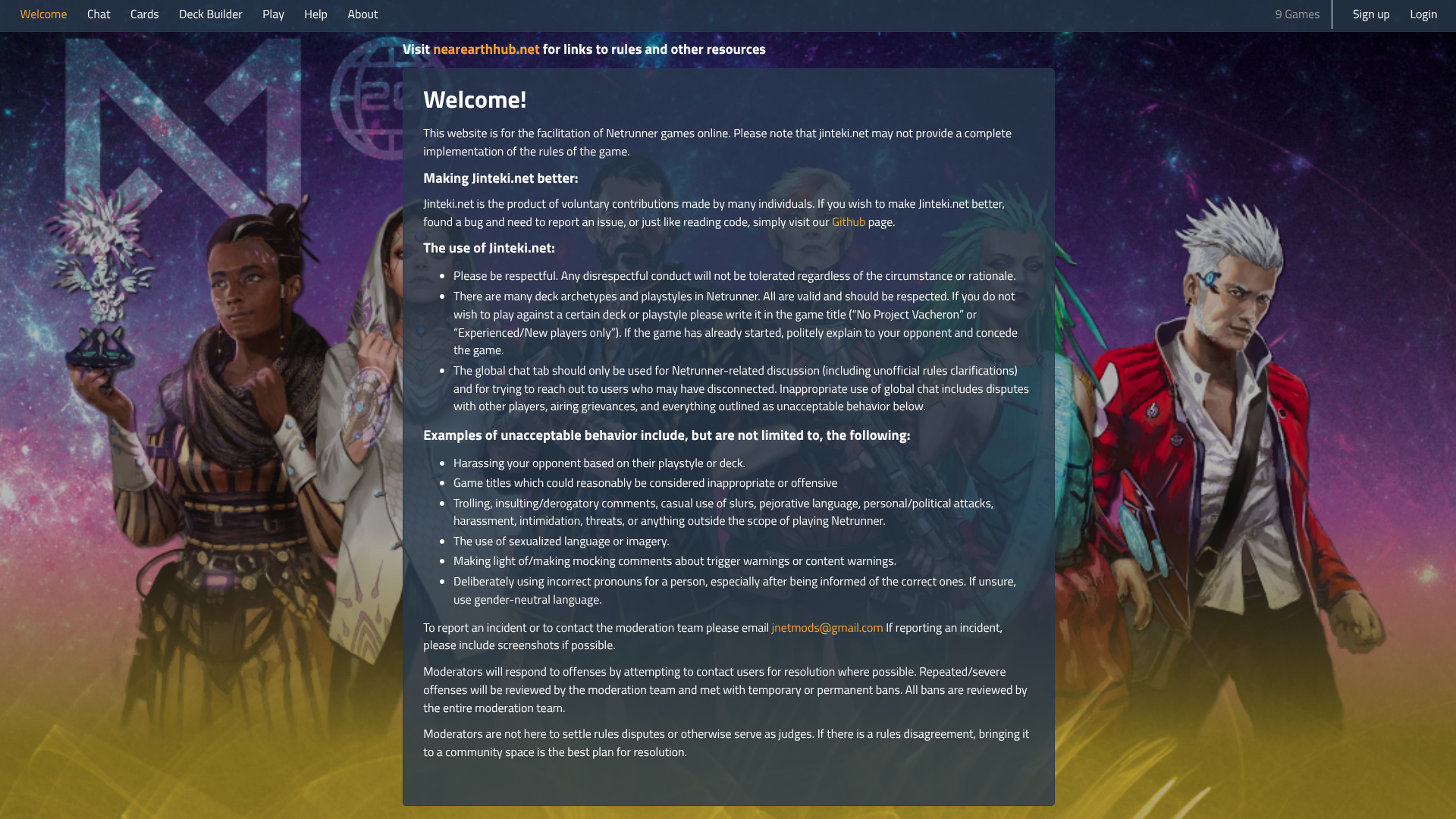
Now I could just say “Netrunner” here. That would be more accurate. But I’m a stickler for rules, even and especially arbitrary rules that no one cares if I break. This is a list of my favorite video games of 2025, and that means that if I want to include a tabletop card game, I need to do it by pointing at the digital version of it. It’s the Skate Story thing; sure, I could just say “fuck you, my favorite video game this year wasn’t even a video game,” but why would I do that when I can argue a stupid little technicality? Why did I get up this morning if not to argue stupid little technicalities?!
For those who are unfamiliar: Netrunner started off as a card game designed in the late 90s by Richard Garfield, the original designer of Magic: The Gathering. It was a TCG set in the world of the Cyberpunk tabletop RPG, the same RPG that Cyberpunk 2077 is indebted to. They released two sets and then canceled it, which is what happened with about a million other TCGs during that timeframe. Over a decade later, Fantasy Flight Games licensed the rights to the game, redesigning it from the ground up. This version, called Android: Netrunner, is basically the single coolest collectible card game ever designed. Unlike Magic, the game is asymmetrical, with one player taking on the role of an evil cyberpunk corporation, and the other taking on the role of a Runner, a hacker working to pull a digital heist on the Corp’s servers. Corp decks contain about 6-10 Agenda cards, cards that represent crucial new developments in the Corp’s business strategy, and which provide them with powerful in-game effects when advanced. The Corp wants to find, play, and score seven points worth of these Agendas, while the Runner wants to steal seven points worth of them before they can. The Corp can also choose to go on the offensive, foregoing their Agendas to instead focus on murdering the Runner.
Corps are broken up into four factions, representing the four megacorp parent companies that run the world. There’s Jinteki, a bioengineering firm that has a hand in everything from medicine, to agriculture, to clone labor forces. There’s Haas-Bioroid, a robotics company who directly competes with Jinteki for control of the labor market. My personal favorite is the Weyland Consortium, a conglomerate of banks, private armies, construction companies, and deep-space exploration firms. And finally you have NBN, the corporation that controls the world’s media, doing just as much harm as the other factions by shaping culture to their liking. Runners, meanwhile, are broken up into three factions. Anarchs are angry, violent, and usually politically motivated. They want to destroy the Corps at any cost and often don’t care who gets hurt in the process, themselves included. Criminals are generally much less ideological, and are more interested in leveraging their hacking skills to make a quick buck. Finally, Shapers are just in it for the love of the game, they’re artists and computer nerds that break into corporate servers just because they can.
Netrunner is everything you could want out of this style of card game. It’s flavorful, it’s mechanically dense and strategically rich, and unlike Magic, Riftbound, and basically any game not published by Fantasy Flight, it doesn’t rely on random boosters. FFG billed Netrunner as a “Living Card Game,” and what they meant by that is that instead of buying pack after pack of trash commons to find a card you need for your deck, before just breaking down and spending a hundred bucks on it on eBay, you simply make one single purchase and get a full playset of every card in a set. The first time I bought a pack of Netrunner cards back in 2014, I immediately felt like a sucker for ever having played a collectible card game, and I’ve never gotten into a game with random boosters since then.
In 2019, FFG was making plans. Netrunner had been slowly but surely picking up momentum over the seven years since its revival, and they were gearing up to start making a big marketing push for it. And then, the wheels fell off the wagon. Wizards of the Coast refused to re-up the licensing deal that made Android: Netrunner possible. No one really knows exactly what happened, but WotC are a bunch of assholes that do a bunch of asshole bullshit all the time, so even though it was devastating news, it didn’t really come as much surprise. I’d been out of the game for a couple years at that point, the game shop I played at having closed down, but it was still an extreme bummer to see one of my all-time favorite games taken behind the woodshed like that.
But the thing is… Netrunner didn’t die. A dedicated group of fans came together to continue managing organized play events, and even began making plans to start printing new cards. At the time, I respected their enthusiasm, but I’ve been around the internet a long time, and I’ve seen a lot of fan projects fall apart. I didn’t really think it would go anywhere… but it did. Null Signal Games is a non-profit organization run almost entirely by volunteers, who have now released five complete sets of brand-new Netrunner cards, with the sixth due out in a couple months. The world championships last October was one of the biggest Netrunner events of all time, surpassing even some FFG-run events.
The buy-in to the game is even more reasonable than it was under FFG; since NSG is a non-profit, they pretty much sell the cards at-cost, or welcome you to just print your own, with proxies legal at all levels of tournament play, up to and including the grand finals table at Worlds. An awesome knock-on effect of this is that it’s created a whole little cottage industry of fan artists designing their own alternate art for cards, which are completely legal in official tournaments as long as they adhere to a few formatting rules.
Netrunner has become a success story of the kind that you just don’t usually get to see. Corporations tend to get their way in matters both serious and frivolous. Elon Musk gets clowned on a few too many times on Twitter? Great, he bought the website and ruined it. Square-Enix over-invests in Final Fantasy and it blows up in their face? Awesome, offload the blame to their western studios that put out consistently good work. Wizards of the Coast decides they’re bored of a beneficial business arrangement that helps a minor competitor to their near-monopoly of the TCG space? Well, they’ll just kill the game… nope. Not this time, assholes! Netrunner is, in so many ways, the antithesis of all the trends I was bemoaning at the top of this piece, a labor of love by a dedicated community of designers, artists, and players, to keep something alive for no reason other than the world is better when this silly little game is a part of it.
I’ve been going on and on and on here and I’ve barely even touched on how fucking fun Netrunner is. It’s a game based heavily on hidden information, with the Corp playing their cards face-down and forcing the Runner to make calculated risks about how they spend their limited resources. Is the card the Corp just set on the table a winning agenda? Or is it a trap that will both damage you by forcing you to discard cards from your hand and also leave you “tagged,” opening you up to even more damage on the Corp’s turn? Ah, it was neither, nothing but a cheap utility card they used to force you to waste one of the limited number of actions you get to take each turn. That’s fine, because you can spend the rest of your turn on a haymaker punch, hacking into their deck itself (or as it’s called in Netrunner, R&D) to see the cards they’re going to draw before they do, and stealing any Agendas they might have coming up. A-ha! you stole a Basalt Spire for 3 points! just one more point and you win… oh. Wait. That lets them retrieve a Measured Response from their discard pile, a card that will kill you unless you can pay eight credits to negate the damage. And you just spent the last of your money on that R&D run…
I only got back into Netrunner at the beginning of 2025, and in many ways it’s been an odd year to do it. In spring, NSG released a new set, Elevation, and with it they declared that they were officially retiring all cards printed before they became the stewards of the game. The pool of legal cards shrunk by more than half overnight, leaving the game in a somewhat awkward position. This is the smallest cardpool the game has had in a decade, meaning that deckbuilding options are more restricted. It’s much easier to “solve” the game at the moment, with top players all zeroing in on a pretty small number of dominant decks that are difficult to compete with. It’s a necessary growing pain that NSG were going to have to contend with sooner or later, and it’s not all bad; in some ways it’s made it a great year to learn the game, because there are much fewer cards to learn. It’s also maybe not as much of a solved meta as it would seem. After nearly a full year of people bemoaning that NBN was dead in the water until more cards got printed, the faction went on to win the world championships, using an ID from two years ago that had been completely dismissed at release. Even with a smaller field of play, Netrunner is capable of surprising even the people that dedicate the most time and mental energy thinking about it.
It’s an endlessly rewarding game, and that would be enough on its own, but getting involved with my own local Netrunner scene has been a true joy over the past year. I’m socially awkward in my best moments, I work graveyard shifts, and making friends is famously difficult the further you get into adulthood, so having this card game as an excuse to go out and meet people and enjoy the face-to-face company of others has been nothing short of a blessing. I love this game, and if you think you might love it too then you gotta give it a shot. In addition to the low cost of entry to the physical game, the link I led this section off with will take you to Jinteki, a web-based online Netrunner client where you can play with other folks completely free of charge. YouTube is full of great resources for learning the game (I recommend Metropole Grid, a terrific streamer with lots of knowledge and enthusiasm for newcomers), and if you want some more personalized coaching, the Green Level Clearance Discord server is full of folks that would love nothing more than to talk your ear off about Netrunner even more than I have here.
Luke Varner is a podcaster and tabletop game designer. Check out his RPG, EIDOLON , as well as his actual-play show Eidolon Playtest!