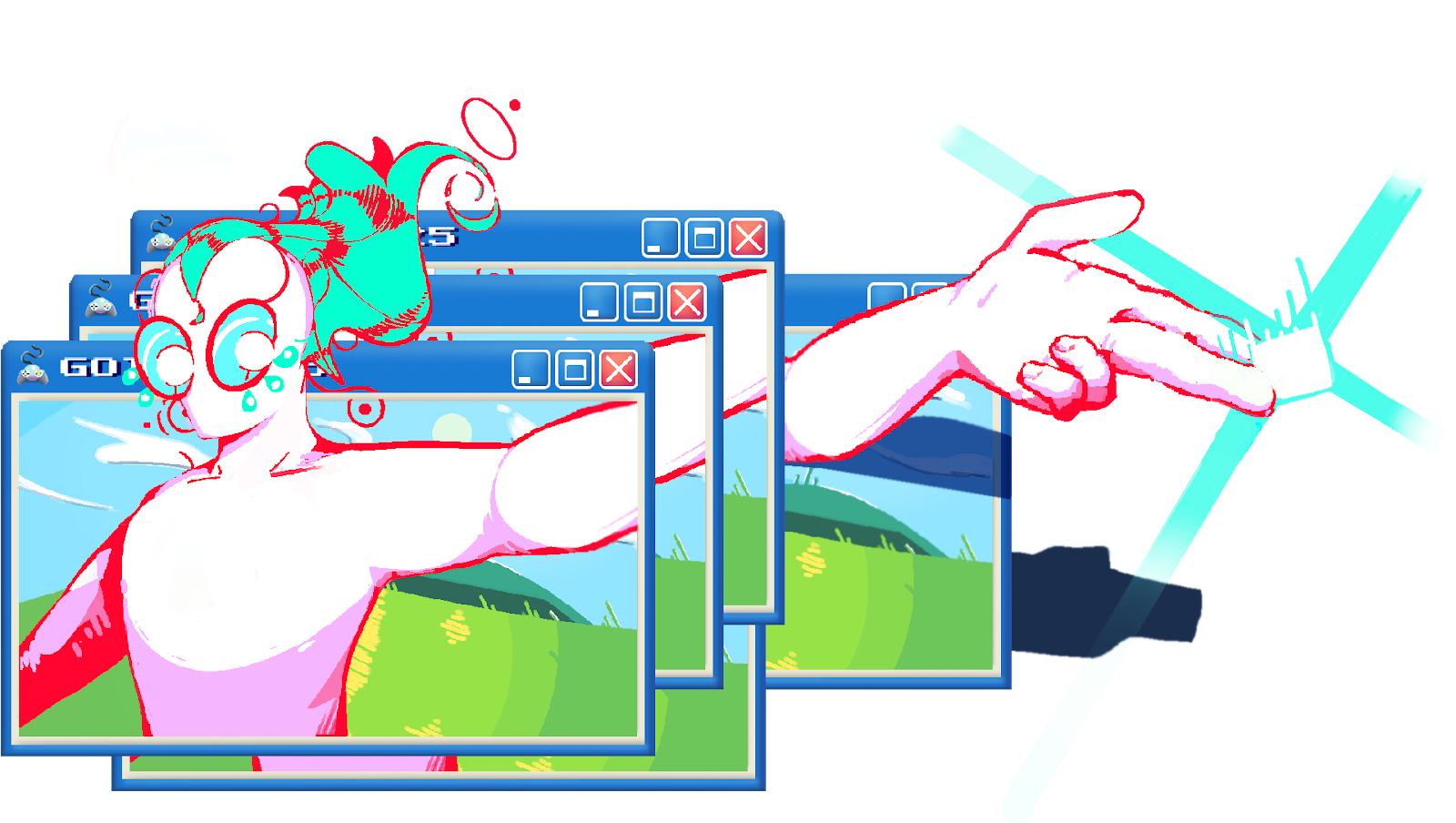
Part 1: The Year in Review
I’ve hit a threshold with video games. It’s hard to place why, but I just play them less these days. Maybe the shrinking pool of games journalism makes it harder to find what really hits for me, perhaps it’s the dour mood of watching the games industry, could be I’m just not good at playing games anymore.
It’s not cheap to love games, money or time-wise. I like to have beaten a game before I pass judgement. But thirty, fourty, one-hundred hours… It can be a lot when you’re juggling a job in labor and creative pursuits.
But games are nothing if not a rascal of a medium. Their hurdles, quirks, and mechanics can turn the smallest detail into a whole story. How was I supposed to anticipate I would spend all of September going over my Silksong route again and again in my head? Or that a brief detour into VRChat would turn into me and a friend hosting a whole party? When games work for me, they straddle the line between escape and obsession. I can’t always handle the obsession, but I can’t deny the passion.
I also played a metric ton of Old School Runescape, but you can follow me on socials if you want to hear about that.
Part 2: Maybe Next Year
Nine out of ten times, I’m going to wait until a game is finished before I play it. I don’t want to spoil my appetite with a version of a game I will eventually lose to the development cycle.
But the independent video game is not always a safe investment for your patience. While it was always possible an early access game would never come out, it feels like these days one must be on the lookout for next year’s hopefuls in case they get cancelled early. (Oh Dreamsettler, I would have pre-ordered a $100 deluxe edition if I had known!)
So this year I swallowed my pride and tried some games before they were completely finished.
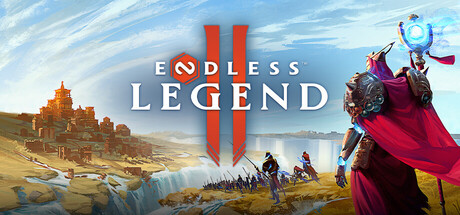
Endless Legend 2 was my favorite of these. The first Endless Legend turned me around on the concept of 4X games entirely, and the original ideas that made Endless Legend special are developed even further in 2. The game suffers from visual clutter and some systems (like the hero relationship system) that feel severely undercooked, but I loved digging into this game’s factions. The Necrophages especially were both visually charming and a fun, high momentum take on a militaristic 4X faction.

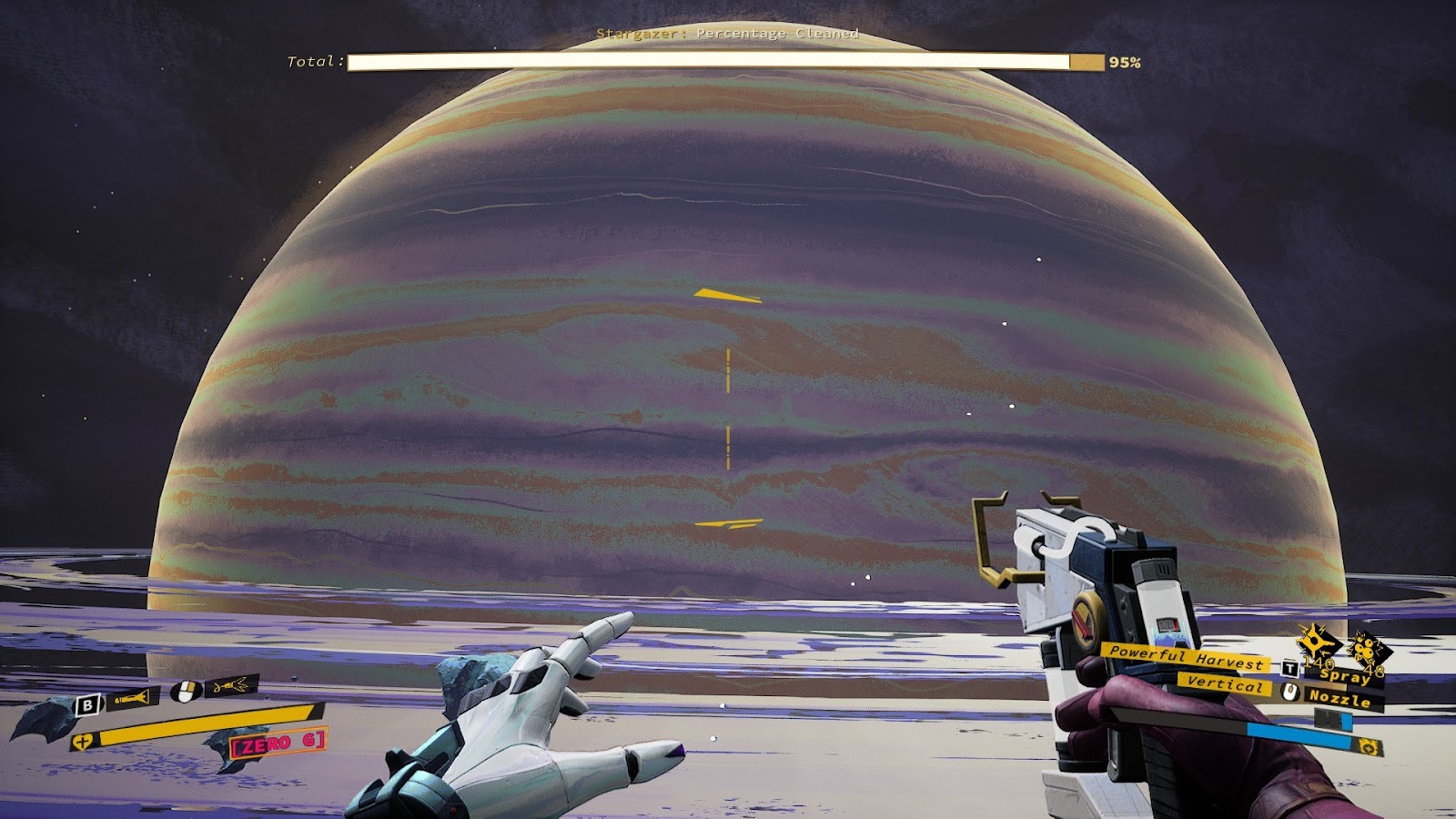
Ambrosia Sky Act One had the benefit of being an “Act One.” The promise that the story would keep moving forward made my few hours with the first act feel meaningful. And I’m glad I took the chance, because this game is really special. It’s lovely and interested in dark, sad themes. I’ve written deeper thoughts here, but this quick and rough peek into the story has me really excited for the next two acts. Also Ambrosia Sky had the best looking hands in a video game this year.

Ratatan gives us a taste of a modern, roguelike take on Patapon. While I don’t think the roguelite angle is a great fit, I can’t say it’s all that far from doing missions for supplies in the original Patapon. Otherwise, the character designs are still incredibly charming and it’s easy to zone out to the rhythm mechanics. Here’s hoping they take out the mobile game-esque weapon upgrade system.

Deadlock is definitely calling to me as a former Dota 2 player and Team Fortress 2 dabbler. I’ve played it enough to know I like the style and am really into its arcane (magically and mechanically speaking) MOBA design. Here’s hoping it comes out before they sap every female character of their butch energy.
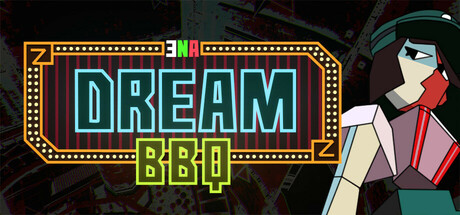
Ena’s Dream BBQ offered some truly amazing animation at the cost of some incredibly hit or miss dialogue. It’s not exactly my thing, but I’m curious how it’ll turn out. If you’re a Newgrounds fan who also likes Slave of God, this is probably the perfect game for you.
Also some more Deltarune chapters came out. I liked them.
Part 3: I Got the Rhythm In Me
We like rhythm games again, don’t we? Perhaps it was the explosive popularity of the free-to-play Newgrounds finger dancer Friday Night Funkin’, but this year seemed to see a small but spirited return to the genre.
Early in the year we saw Rift of the Necrodancer, whose claim to fame was its mix of Guitar Hero and roguelike mechanics. After four years in early access, we got Rhythm Doctor, which offered challenging rhythm minigames with only one button. December saw the release of Bits & Bops and Unbeatable, the former being an independent take on Nintendo’s Rhythm Heaven franchise and the latter being akin to a rhythmic One-Finger Death Punch. I haven’t played those last two as of writing this.

I enjoyed my time with Rift of the Necrodancer and Rhythm Doctor, though undoubtedly more so with Rhythm Doctor. Rift of the Necrodancer absolutely has a ton of charm (and in my opinion the better soundtrack) but the whole experience suffers from high cognitive load. I had my fun, but after the credits I felt so exhausted by its numerous mechanics I couldn’t really bring myself to boot it back up.

Rhythm Doctor, with its singular button, was much more chill and easy to enjoy. A flow state feels necessary for enjoying a rhythm game, and it was pretty easy to get into here, at least at the start. Near the end of the game you start to get a lot of audio cues to listen for, and while it takes longer to feel overwhelmed, it will happen. What makes it work in Rhythm Doctor is the clear intent to overwhelm: handling the stress fits the mechanics and themes of the game.
These are great games, despite how their design philosophies bump up against the way I like to play rhythm games (semi-catatonically). But there was one rhythm game that I kept coming back to this year, a rhythm game for playing dumbly and still feeling great… and that game is Fortnite Festival.
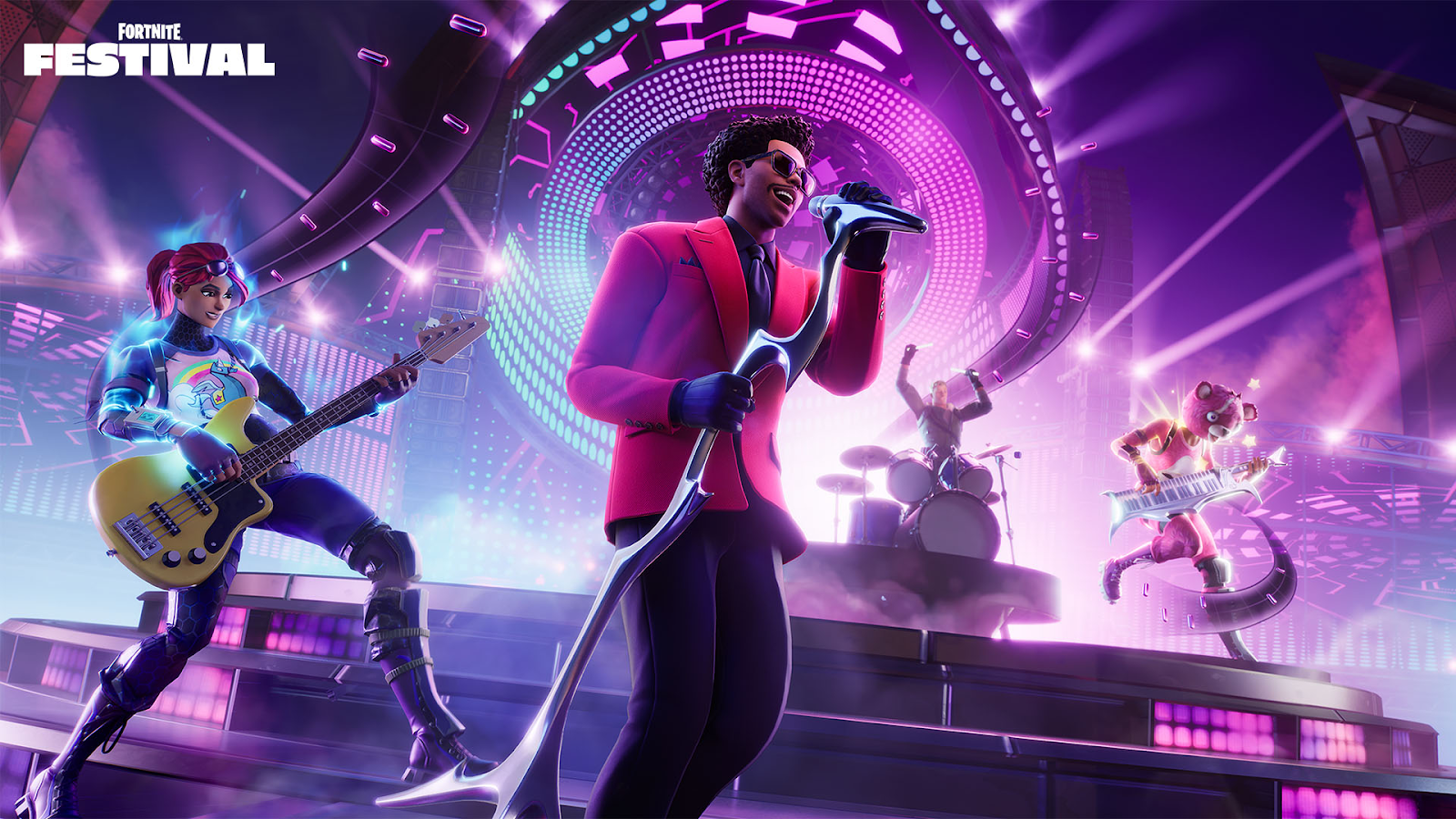
Fortnite is admittedly in the doghouse right now because it’s doing Harry Potter skins, so when I talk about this game I want you to rest assured I did all my playing before that announcement, I have cancelled my subscription, and I don’t endorse playing it at the moment. I’m not proud that Fortnite won me over for so much of this year, but my hope in talking about its musical game mode is that we can extract what’s worth learning from it.
Fortnite Festival is the result of Epic Games acquiring Harmonix, a studio who are very knowledgeable in music games and also fairly in touch with pop culture. I may be rightfully smeared for this opinion, but my favorite original music in a rhythm game this year was the music produced for Fortnite Festival. I genuinely enjoy some good pop music and EDM. I think Rhythm Games are sort of drowning in “gamer power metal”: fast, hype songs that aren’t really compelling outside of their energy.
Also, for anyone familiar with Dropmix or Fuser, they put on-the-fly mashups in this game! You can go into Fortnite Jam Stage and watch DJs or make your own low-effort mixes with other players. One of my most unforgettable experiences this year was joining a lobby and finding someone who was hidden away from everyone else mixing like a god damn fiend. It was an incredible social experience that made me feel like I stumbled into an underground show.

I couldn’t talk about this game without bringing up the way it makes the controller feel. I played Festival on a Dualsense and made an incredible discovery: when you time the release of certain notes, the controller gives haptic feedback on press AND release. This is game-changing. Not only does it just increase positive feedback, but the lingering feeling of the controller still vibrating after you release creates a unique sensation, like an instrument still thrumming from your touch. It’s a good use of haptic feedback that should absolutely spread.
Anyway don’t play Fortnite. It didn’t come out this year so it can’t go on my Game of the Year List anyway.
Part 4: Game of the Year List
This year, I’ve got five games I’d love to tell you about.
#5: Formless Star by Splendidland

Formless Star is a game about discovering animals on a weird little planet. I don’t wanna get too into this game because it’s free so… you should just go see the animals yourself. Rest assured, Splendidland is an amazing artist and well-versed appreciator of little guys, so the visual quality is certainly not up for debate.
What may surprise you is this game’s other charms: its characters, its humor, its secret interactions. What made this game become one of my favorites is its ethos about creating art. Formless Star is a shapeless, constantly changing planet that wants to connect with you. It’ll never stop changing, but that’s what makes it so important to see for yourself.
#4: OFF (2025 Remaster) by Mortis Ghost & Fangamer
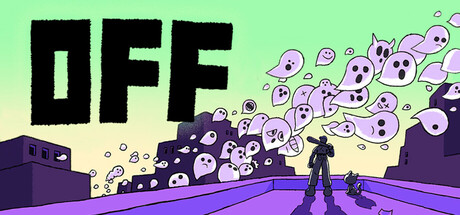
I did not think this would be here. When I picked up OFF this year I mostly did it out of a sense of historical curiosity. I had played a bit of OFF during its first renaissance back in 2013, but I was an eighteen-year-old without much patience for puzzles or random encounters, so I never finished it. Skip to 2025 and suddenly OFF is exactly my kind of shit.
Puzzles had me breaking out the notepad. Combat encounters impressed me with their music and alarming enemy designs. And every scanned .jpeg of an old garment factory to accompany the game’s weird worldbuilding was a chef’s kiss.
First of all, the OFF remaster is considerably more like its original form than say… Persona 3 Reload, but the differences they made are very smart. The original art that charmed me back in the day is untouched, but the user interface is greatly improved. I love the new critical hit effect especially, in which the turn you crit tells you you’re going to crit and also arrives faster than your usual action cooldown. I like that enemies get the same effect, giving you a chance to go “oh shit, here it comes” when their turn meter is on fire and filling up twice as fast. It’s not a difficult game by any means, but the combat system kept me on my toes and wiped my party a few times.
The thing about OFF that makes me feel so positive about it even now is that I genuinely just wanted to keep playing it until I beat it. Even the parts that seem super corny and dated transformed into something charming through OFF’s earnest appreciation of its ideas. Its 4th wall breaks and blunt themes are softened by the way they are balanced, it wants to impress you while still being silly. OFF’s irony is dramatic, the game’s impatience and fourth-wall breaks never felt like insecurity, rather they were novel forms of characterization.
I like to go back and appreciate old creepypastas from time to time: the horror texts of old internet forums. Broadly, creepypastas love to shock readers through distorting the world they feel comfortable in. A common trope of the genre is a video game mascot like Sonic or Mario either being badly hurt or hurting others, often paired with graphic descriptions of violence. OFF plays in the same space, it’s about a callous and cruel protagonist with a shocking indifference to violence. My favorite creepypastas are never the bloodiest, or the most shocking, they’re the ones where the writer wanted to share something with me: their fear, their anger, their sadness. Despite OFF’s clear love of meat, smoke, trash, and other gross things, its final moments aren’t visceral, they’re empty. Your crusade doesn’t leave the world bloody, burnt, or broken, it leaves it white. When I saw the most shocking things OFF had to offer I didn’t cringe or wince, I just felt empty. I felt like I was sharing someone else’s emptiness.
OFF hits all the same beats, without second guessing itself. Playing the bad guy in 2025 isn’t the same as playing the bad guy in 2008, but rather than lamenting my own familiarity with genre convention, I had fun slipping into a familiar role.
#3: Hollow Knight: Silksong by Team Cherry
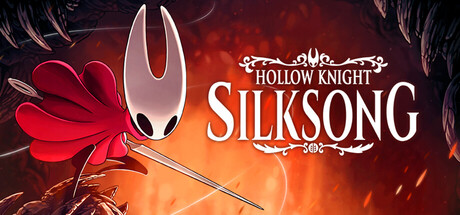
The gamer mantra often used in the face of adversity is “get good.” Anyone who goes into Silksong with this sort of mindset will quickly find themselves struggling against a trap designed to punish them. Silksong, with all its intensive gameplay loops, runbacks, and grinds, pushes back hard against brute force. So, in my time with Silksong, I ignored the bullheaded logic of turning bosses into loops of death, and instead taught myself how to feel zen in the face of these odds. It may sound backwards, but in its cruelty, Silksong taught me to be nicer to myself.
I never expected to beat Silksong. I only really picked it up because it looked visually incredible and was pretty affordable. “It’ll be a miracle if I beat Act 1,” I said to myself. After spending two hours dying to the Savage Beastfly, I felt like my prediction was coming true.
After seventy-four hours, I rolled credits on Act 3.
The early game of Silksong was probably the hardest for me. “Persistence is key,” I thought. “If I can’t beat the chumps down here, how can I expect to finish it?” It was only after giving in to my pride that I realized I was playing the game self-destructively. The region after a boss wasn’t the prize for beating it, but another challenge: how can I use the gameworld to salve the burn of its more difficult encounters?
I eventually went on to beat Sister Splinter, the Last Judge, Skarsinger, and even the game’s final boss, and while my skill improved, the thing that made it actually doable was learning not to torture myself. In contrast to Elden Ring’s Stakes of Marika, which seem to encourage as many attempts as you can stomach, Silksong’s runbacks are a built-in speedbump for these spirals.
I no longer did the game’s side quests as soon as I got them; I made sure there was a healthy stack of content waiting for me if I ever got stuck on a boss. I stopped turning every boss into a gauntlet, but rather treated them as check-ups. I learned the bosses through little dates and used the game’s world as a distraction when they became too much. At night, sleep would reinforce muscle memory.
This was probably the most fun I’ve ever had dealing with a game that required such fine motor control. Not only did I learn to reduce my own frustration, but I got something I always wished for in a punishing game: I never got good. I was never eclipsing the bosses. I was never overwhelming myself with information or a need to practice. I got to enjoy the game as a champion masochist. I got my ass kicked and smiled.
Silksong is a one-of-a-kind game. Maybe one of the greatest ever made. It’s beautiful, sorrowful, mechanically tight, and none of its content feels like “the bad part.” For me, the soreness with Silksong comes from it simply being very big. I played it for a month, and while I could critically say all that gameplay was good, I still wanted to go home and do something else. I am also on record saying I don’t like the ending of Act 3, I think at the final moment they turn away from their tight, character-based story into the realm of lore and self-reference. But it’s still a game I really adore.
#2: Eternal Strands by Yellow Brick Games
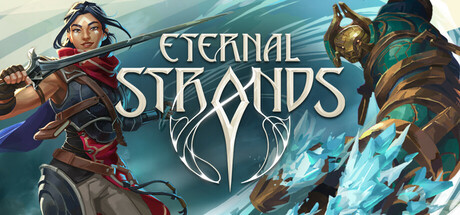
While I may have gotten to the point of Silksong where I was too full to have anymore, the entire time I was playing Eternal Strands I never stopped wanting to read every bit of writing I could. I’m sure I missed some item descriptions or text somewhere, but for the most part if a character said something I sat my ass down and listened.
Eternal Strands does not seem like my kind of thing upfront. It has that sort of young adult high-fantasy vibe of The Dragon Prince or The Stormlight Archives, so at first I thought I would bounce off this game. Months after beating it, I feel like one of its biggest fans.
Eternal Strands pulls heavily from Dragon’s Dogma and Shadow of the Colossus, but throws in some physics toys from The Force Unleashed and various Source Engine games. These procedural systems worked together in ways that let me write the encounter as the player. I had eureka moments in this game like nothing else this year: using the ice wall ability to freeze a dragon’s face to the ground while it breathed fire so I could climb on its head is what games are made of. It is honestly what I thought games would be like one day as a child.
Eternal Strands is very good about pitting you against an insanely huge dude and just letting you figure it out. The game’s spells have a wide variety of applications, and your instructions on how to use them is “have at it.” I got to enjoy figuring out the bosses with little-to-no intrusion from the game, but when I did have moments of uncertainty the game’s bestiary had the information I needed. It hit a good balance of not letting me get stuck without breathing down my neck. Even though you are getting watched remotely by your party members, they’re polite enough to not be overbearing.
This game can also be a bit grindy; trust me when I say this excites me. It made the circumstances of the game feel dire, like I needed to be looking out for opportunities, finding ways to make myself more efficient. What makes these grinds work is that you can outsmart them. Early on you’ll be fighting every little mob one-on-one in swordfights, and they do become redundant eventually. At this point you have two options: groan that this game is such a grind OR… open your spellbook. One of the fundamental abilities in this game is picking things up and throwing them. The moment you’ve gotten all the drops you need from a generic mob, the name of the game goes from “how do I beat you with my sword?” to “where’s a hole I can throw you in?” Once you trivialize the underlings, missions get faster and you get more time to focus on the large boss monsters who drop better upgrade materials.
The upgrade materials feed back into your elementally aligned arsenal. Defeating arcane monsters grant you the ability to telekinetically lift, push, and explode, sending yourself and enemies flying, fire monsters let you spew flames in various forms and call upon explosive minions (that you can then throw yourself), and ice enemies let you coat the level and yourself in ice. The open application of these abilities feeds back into the game’s navigation. When faced with clouds of poison gas, I could use my ice armor as a hazmat suit. Large gaps could be conquered by building bridges of ice or throwing yourself haphazardly with telekinesis. I let my explosive minions distract my foes when I needed to focus on objectives. By the end of this game, there were no enemies or obstacles I couldn’t outsmart.
But what drives you to plunge back into this big magical city time and time again? That would be the game’s extensive cast of characters. This is where the game goes from a fun toy to something I’ll always remember. I loved the arcs these characters had, they were dramatic, well acted, messy, and felt distinct from each other. There were characters in this game who were mean, who made mistakes, who had difficult, ugly breakdowns!
And that’s what I wanna see in video games.
#1: Citizen Sleeper 2: Starward Vector by Jump Over the Age

Citizen Sleeper was one of my favorite games of 2022, but ask anyone how they feel and they are quick to say “I liked it but it got too easy.” About six hours into my second run of Citizen Sleeper 2 I was stuck on a derelict space station, slowly starving as I scrounged for enough gas to make the jump back to society. Not only that, my computer brain was glitching out because a union uprising I had just taken part in went bad. It was one of the most stressful moments in a game I’d played this year, it was also easily my favorite.
Citizen Sleeper 2 did eventually become easy for me, but it was only the moment I had finished one-hundred percent of its side content. While I would have liked it even harder, for about a dozen hours I had to really think about all my resources and the route I would take across the Starward Vector.
Remember when I mentioned this was my second run? That’s because the first one died. Just completely failed. I beefed it before even leaving the first area of the game. This first failed attempt acted as a sort of tutorial for the full game, but it also worked as a story in microcosm. My first run I was cagey, untrusting, and mean. And I paid the price.
My second Sleeper was much more patient.
When I briefly looked at the Steam reviews of Starward Vector there was a very common sentiment: “Oh, this game is fun, just follow these very specific instructions first!” Disregard all of those. Go in scared and uncertain, just don’t get too attached.
It’ll be worth it because being in this game is pure beauty. The visuals and soundtrack create an atmosphere that surrounds and crystallizes you, leaving you in the perfect emotional state for the story to wreck you.
I think I may have teared up a bit during Silksong and Eternal Strands, but this game made me cry. I’ve heard people say they prefer the writing of the first game, and while I think the first game is a sharper narrative with fewer stumbles, the narrative of Citizen Sleeper 2 just resonated way more with me. When playing Citizen Sleeper 1 you meet a lot of characters, but you aren’t a permanent fixture to them; unless you commit to one of the game’s endings that follows that character’s storyline, you will only ever be a ship passing in the night. It’s an impactful part of the first game, but it’s also how the sequel distinguishes itself. In Citizen Sleeper 2 you are entangled in this world, people are counting on you. You have a crew who are a mix of shady characters and close allies, after running errands and high-pressure missions you start to form a bond with them, in the same way I would feel an emerging bond with an XCOM squadmate that did particularly good or bad. While Citizen Sleeper 2 is built around a singular ending as opposed to the original’s multiple, the action of ending the game felt like a more crushing commitment than picking from one of many.
While I think Citizen Sleeper 2 leans a bit too hard on rewarding “doing the right thing,” there are definitely still tough choices and times when the best thing you can do for a character is not what they want from you. It creates plenty of situations where I actually had to sit and think, “what the hell am I going to do?” Some of these choices even ended up being the tougher path, but I still stood by them and was happy I took them.
While I had to work up the courage to give Citizen Sleeper 2 a second try, I am so glad I did, because once that second run started I played it obsessively until I saw everything I could. I still listen to the soundtrack very regularly, thinking about drifting through space on that rig and seeing the faces of the characters I ran missions with.
I feel like I got exactly what I needed from Citizen Sleeper 2, but I am still intensely curious to see what Jump Over the Age does next.
Ava is a writer and illustrator that draws colorful robots and writes gross, visceral literature.